
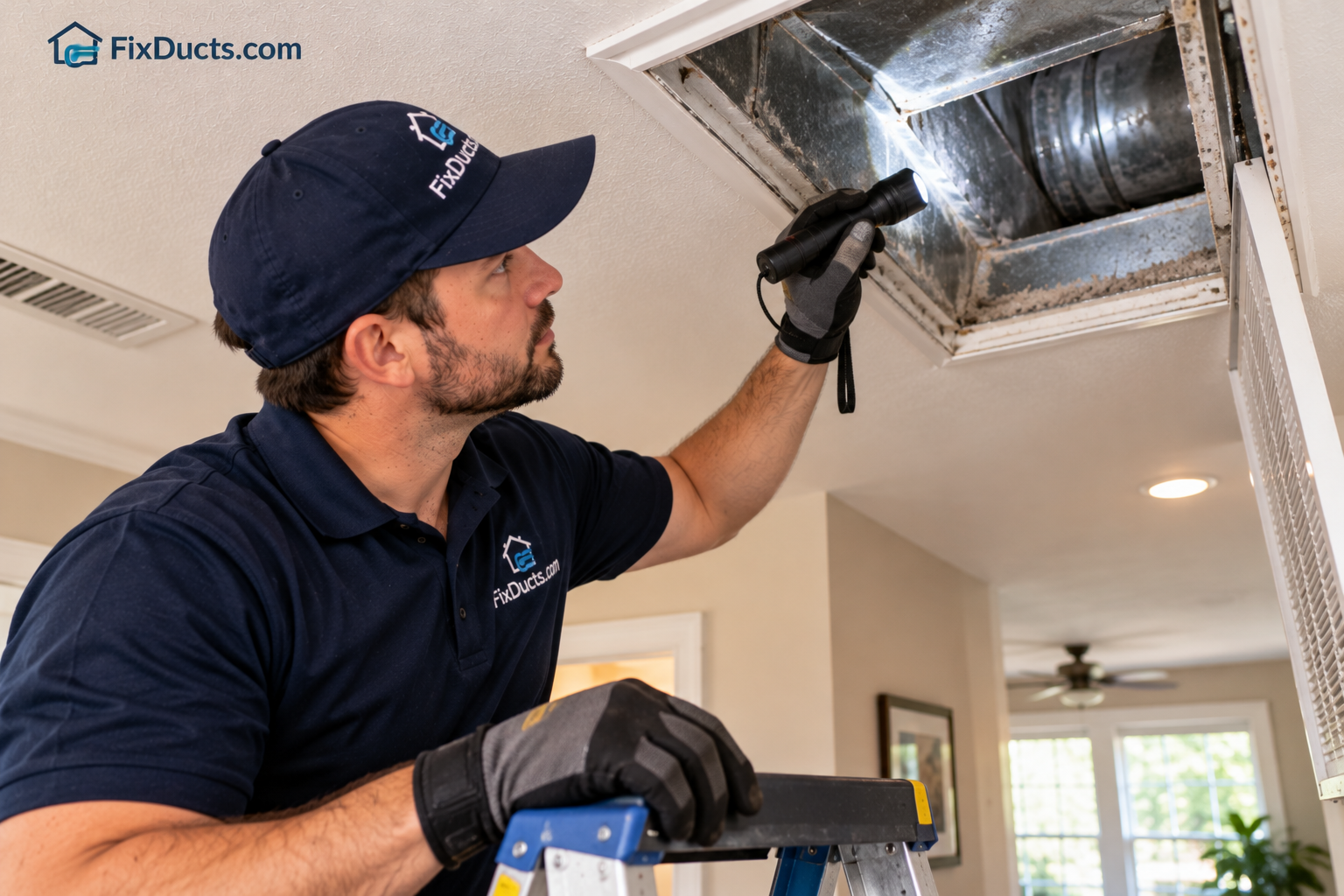
If you are wondering how often air ducts should be cleaned, the answer may be less frequent than you expect. Although dust naturally accumulates inside residential HVAC systems, that does not automatically mean your ductwork needs professional cleaning every year.
The appropriate cleaning schedule depends on the condition of your duct system, the presence of contamination, and the circumstances inside your home. Some homeowners may need professional cleaning because of a specific problem, while others may not need it at all.
In this guide, you will learn how often air ducts should be cleaned, which warning signs to look for, what factors affect the timing, and how to decide whether professional duct cleaning is worthwhile.
How Often Should Air Ducts Be Cleaned?
There is no universal schedule that applies to every home.
The U.S. Environmental Protection Agency (EPA) does not recommend routine air duct cleaning for all households. Instead, it advises homeowners to consider cleaning when there is evidence of a condition that makes it necessary.
For example, professional cleaning may be appropriate when:
- There is substantial visible mold growth in appropriate parts of the HVAC system.
- Ductwork contains evidence of a pest infestation.
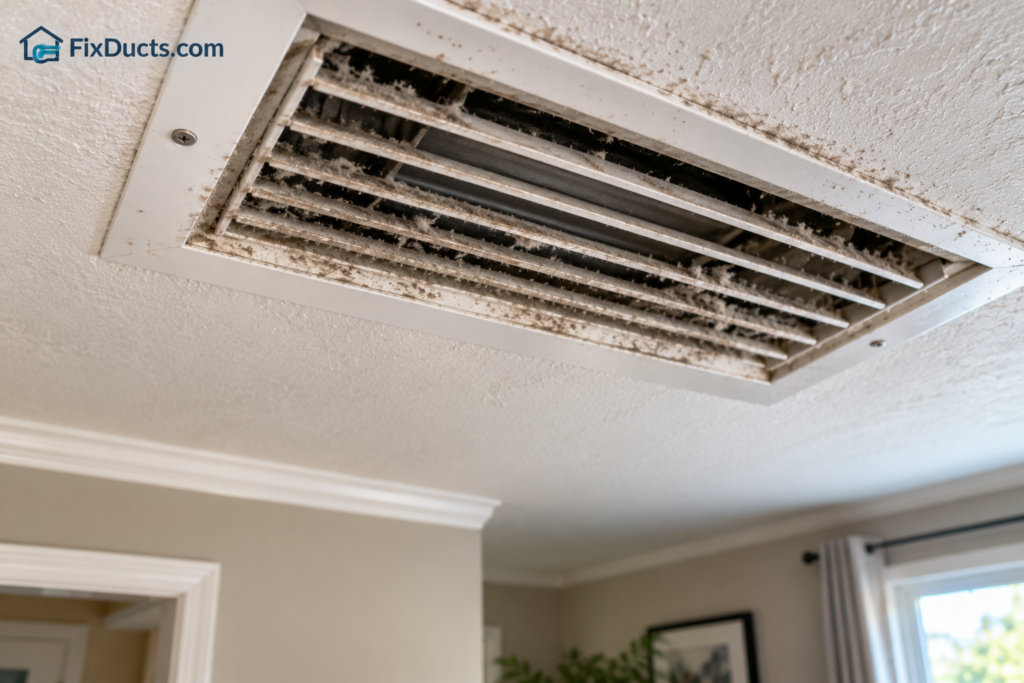
- Significant amounts of dust or debris are released from supply registers.
- Debris or contamination has accumulated following a particular event.
- An inspection identifies a specific problem that cleaning can reasonably address.
If your ducts are in good condition and there is no evidence of significant contamination, you may not need to schedule professional cleaning on a fixed annual or biannual basis.
Be cautious of companies that claim every home must have its ducts cleaned at the same interval without inspecting the system or explaining why the service is necessary.
What Factors Affect How Often Air Ducts Need Cleaning?
Although there is no fixed cleaning interval, several factors can influence whether your ductwork needs attention.
1. The Condition of Your Ductwork
The actual condition of your duct system is one of the most important considerations.
Ducts may accumulate dust over time, but ordinary dust inside a duct does not necessarily indicate a problem. More significant concerns include substantial debris, pest contamination, damaged duct insulation, or confirmed mold growth involving appropriate components.
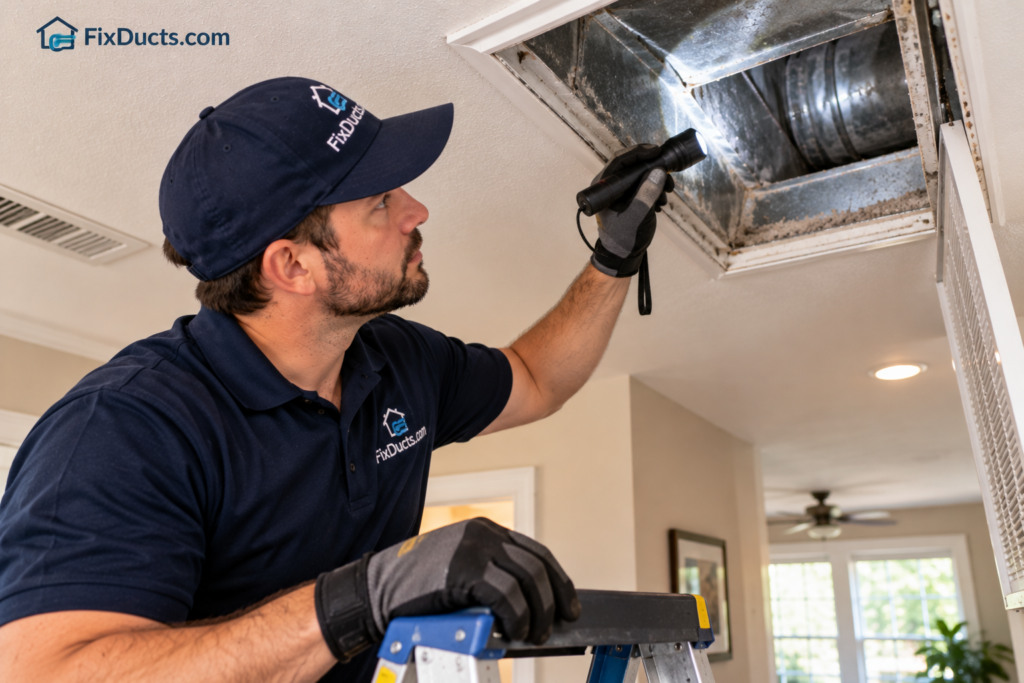
Inspect accessible areas when possible, but do not enter confined spaces or disturb potentially contaminated materials.
If you notice visible damage, unusual contamination, or persistent problems associated with your HVAC system, arrange an appropriate inspection before deciding whether cleaning is needed.
2. Pets in the Home
Pets can contribute hair, skin flakes, and other particles to household dust. These materials may enter the HVAC system through return-air grilles, depending on how air moves through the home.
However, having pets does not automatically mean that your air ducts require frequent professional cleaning.
Instead, focus on regular vacuuming, cleaning pet bedding, maintaining your air filter, and preventing excessive hair and debris from collecting around return grilles.
Consider duct cleaning only if there is evidence that significant contamination has accumulated inside the ductwork.
3. Recent Home Renovations
Renovation projects can generate substantial dust from drywall, wood, concrete, and other building materials.
If dust enters open or unprotected ductwork during construction, it may accumulate inside the system. The likelihood depends on the type of work, the condition of the ducts, and the precautions taken during the project.
After renovation, inspect accessible supply registers and return grilles. If you suspect construction debris entered the duct system, have the affected areas assessed before deciding whether professional cleaning is necessary.
Covering and protecting duct openings during appropriate construction activities can help prevent debris from entering the system. Ensure that the HVAC equipment is used safely during the project and follow the advice of the contractor or HVAC professional.
4. Smoking and Indoor Particle Sources
Smoking indoors, burning certain materials, and other activities that produce airborne particles can affect indoor surfaces and may contribute to contamination in parts of an HVAC system.
Nevertheless, indoor smoke or ordinary household dust does not automatically prove that the entire duct system needs cleaning.
Start by addressing the particle source, improving appropriate ventilation, cleaning affected surfaces, and maintaining HVAC filters. If you suspect substantial contamination inside the ductwork, seek a professional assessment.
5. Pest Activity
Rodents and insects can enter some duct systems or nearby building cavities. Their presence may leave droppings, nesting material, or other debris.
If you discover evidence of pests in ductwork, address the infestation and determine how the animals entered. Cleaning may be necessary when the inspection confirms contamination inside the ducts.
Cleaning alone will not prevent the problem from returning if entry points remain open. Repairs and appropriate pest-control measures may also be required.
6. Moisture and Mold Concerns
Moisture problems require particular attention because persistent dampness can encourage mold growth on suitable materials.
If you see suspected mold in or around HVAC components, do not assume that routine duct cleaning will resolve the problem. The source of moisture must be identified and corrected.
A qualified professional can determine the extent of contamination and recommend an appropriate response. Avoid disturbing suspected mold or contaminated insulation, especially when the affected area is extensive or difficult to access.
Not every dark mark inside a duct is mold, so visual appearance alone may not establish what the material is.
Seven Signs Your Air Ducts May Need Cleaning
The following signs can help you decide whether an inspection is worthwhile. None of them, on its own, proves that the entire duct system needs professional cleaning.
1. Visible Mold Growth in Appropriate HVAC Areas
Visible mold growth involving suitable HVAC components can justify further investigation, particularly if moisture is present.
The important step is to determine what the material is, where it is located, and whether the HVAC system is affected.
Cleaning without correcting the moisture source may allow the problem to return.
2. Evidence of Rodents or Insects Inside the Ducts
Nesting material, droppings, or other evidence of pest activity inside ductwork should be investigated.
The response may involve pest removal, sealing entry points, replacing contaminated materials, and cleaning affected areas. The appropriate work depends on the location and extent of the problem.
3. Large Amounts of Debris Coming From Supply Registers
A small amount of ordinary dust around a vent is common. However, repeated release of substantial debris from supply registers deserves closer attention.
Check whether dust is coming from the vent surface, nearby furniture, or the airflow itself. A professional can inspect the system if the source is unclear.
4. Significant Contamination After Construction
If renovation debris entered an unprotected duct system, an inspection may help determine whether cleaning is necessary.
Do not assume that every renovation requires professional duct cleaning. The decision should be based on whether debris actually entered and accumulated inside the system.
5. Damaged or Contaminated Duct Insulation
Some duct systems contain internal or external insulation. If this material becomes damaged, wet, or contaminated, cleaning may not be sufficient.
Depending on the material and condition, repair or replacement may be necessary. Ask a qualified professional to evaluate the affected section.
6. Persistent Dust With Evidence of a Duct Problem
Dust that returns quickly after cleaning can have many causes, including outdoor air, pets, fabrics, cooking, and ordinary household activity.
Persistent dust alone is not proof that duct cleaning is needed.
However, if you also notice damaged duct connections, unusual debris emerging from registers, or contamination inside accessible ductwork, further investigation may be appropriate.
7. A Specific Problem Identified During Inspection
An inspection may reveal a condition that justifies cleaning, such as substantial debris or confirmed contamination.
Ask the inspector to explain what was found, where it is located, and why cleaning is the recommended solution. When possible, request clear photographs or other documentation of the affected areas.
This helps you distinguish necessary work from services that are simply being offered as part of a sales package.
Does Changing Your HVAC Filter Mean You Can Avoid Duct Cleaning?
Changing your HVAC filter regularly is important, but it does not guarantee that duct cleaning will never be necessary.
The filter captures some airborne particles as air passes through it. Its effectiveness depends on the filter type, installation, condition, and compatibility with the HVAC system.
A correctly installed filter can help reduce the amount of airborne debris reaching equipment and some downstream components. However, particles can settle inside ducts, enter through leaks, or accumulate through other pathways.
To maintain your system:
- Check the filter regularly.
- Replace disposable filters according to the manufacturer’s instructions.
- Clean reusable filters as directed.
- Make sure the filter fits correctly.
- Keep return grilles unobstructed.
- Investigate damaged or leaking ductwork.
A filter that is too restrictive for your equipment can interfere with airflow, so do not select a replacement based only on its advertised efficiency rating.
Can You Clean Air Ducts Yourself?
Homeowners can perform several basic maintenance tasks without arranging professional duct cleaning.
For example, you can:
- Remove dust from accessible vent covers.
- Clean removable registers according to their material and care instructions.
- Vacuum dust from surrounding surfaces.
- Replace or maintain HVAC filters as recommended.
- Keep furniture and other objects from blocking return grilles.
- Check accessible duct connections for obvious damage.
However, avoid pushing a household vacuum deep into ductwork or attempting to clean inaccessible internal components. Improper methods can damage flexible ducts, loosen insulation, or release debris into the living space.
If you suspect mold, pest contamination, substantial debris, or damaged duct materials, seek an appropriate professional assessment.
What Happens During Professional Air Duct Cleaning?
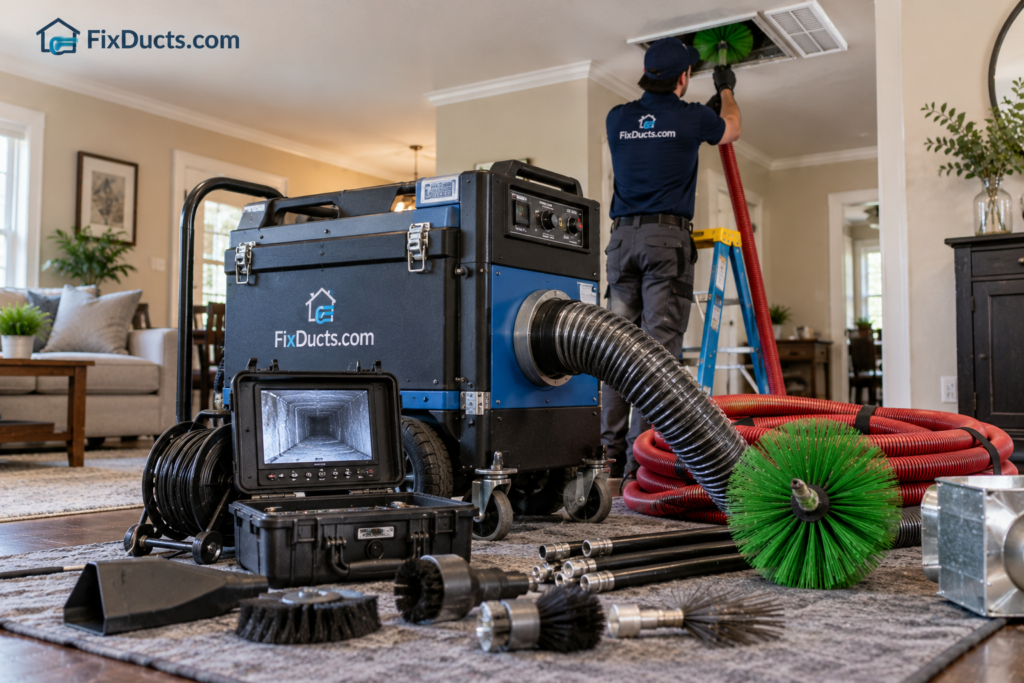
A professional duct cleaning service should begin by identifying the system layout and the areas that require attention.
Depending on the provider’s scope of work, the process may include:
- Inspecting accessible ductwork and registers.
- Identifying the areas containing debris or contamination.
- Protecting the work area and setting up suitable collection equipment.
- Cleaning the included supply and return ducts.
- Collecting loosened debris using appropriate equipment.
- Inspecting the completed work and explaining any additional problems found.
Not every service includes cleaning the blower assembly, evaporator coil, furnace, or other HVAC components. Confirm exactly what is included before scheduling an appointment.
A trustworthy provider should explain the findings and avoid promising that cleaning will cure allergies, eliminate all household dust, or guarantee energy savings.
How Much Does Air Duct Cleaning Cost?
The cost of professional duct cleaning varies by location, home size, duct layout, accessibility, contamination, and the amount of work required.
Some companies advertise low introductory prices that cover only a limited portion of the system. Additional services may increase the final bill.
Before hiring a provider, ask:
- Which supply and return ducts are included?
- Are accessible HVAC components included?
- Is the quoted price for the entire agreed scope of work?
- Are repairs or replacement materials charged separately?
- Will the company explain any additional work before proceeding?
- Can the provider document the condition that makes cleaning necessary?
Request an itemized quote when possible and compare the actual services included rather than choosing solely by the advertised price.
Air Duct Cleaning vs. Routine HVAC Maintenance
Air duct cleaning and HVAC maintenance serve different purposes.
Air duct cleaning focuses on removing accumulated debris from ductwork and the components included in the cleaning agreement.
Routine HVAC maintenance focuses on inspecting and caring for heating and cooling equipment. It may include checking filters, inspecting accessible components, assessing system operation, and identifying problems that require repair.
Routine maintenance does not automatically include thorough duct cleaning. Likewise, a duct cleaning appointment does not necessarily include mechanical maintenance of the heating or cooling equipment.
If your goal is to maintain the HVAC system, follow the manufacturer’s maintenance recommendations. If there is evidence of duct contamination, determine whether cleaning is appropriate for that specific condition.
Frequently Asked Questions
Should air ducts be cleaned every year?
Not necessarily. The EPA does not recommend routine duct cleaning for every home. Cleaning should be considered when there is evidence of a condition that makes the service necessary.
Is it bad if there is dust inside my air ducts?
Not always. Some dust accumulation is normal in residential ductwork. Significant debris, pest contamination, suspected mold, or material repeatedly coming from supply registers may warrant further investigation.
Does a new house need air duct cleaning?
Not automatically. Consider whether construction debris entered the duct system and whether an inspection identifies significant contamination. The age of the house alone does not determine whether cleaning is necessary.
Should I clean my air ducts after remodeling?
Only if the circumstances justify it. If construction debris entered and accumulated inside the ductwork, professional cleaning may be appropriate. Protecting the system during renovation can help prevent contamination.
Can air duct cleaning reduce household dust?
It may help when a specific duct contamination problem contributes to the dust. However, household dust has many sources, and duct cleaning is not a universal solution.
How long does professional air duct cleaning take?
The time depends on the size and layout of the system, its condition, accessibility, and the scope of the service. Ask the provider for an estimate based on your actual system rather than relying on a fixed time for every home.
Can I use a regular vacuum cleaner to clean my ducts?
A household vacuum is suitable for some accessible surfaces, such as vent covers and nearby flooring. It is not generally a substitute for appropriate equipment and methods when cleaning the interior of a duct system.
Final Thoughts
Air ducts do not need to be cleaned automatically every year or every few years. The right timing depends on the condition of the system and whether a specific problem requires attention.
Start by maintaining your HVAC filter, keeping registers clear, and inspecting accessible areas. If you discover substantial debris, pest contamination, suspected mold, or another clear concern, seek an appropriate professional assessment.
The best approach is to clean ductwork when there is a justified reason, address the underlying cause of contamination, and maintain your HVAC equipment according to the manufacturer’s recommendations.
References
- U.S. Environmental Protection Agency (EPA): Should You Have the Air Ducts in Your Home Cleaned?
- U.S. Department of Energy: Maintaining Your Air Conditioner.
- U.S. Environmental Protection Agency (EPA): A Guide to Air Cleaners in the Home.