
If you have never hired a professional air duct cleaning company, you may wonder what happens during the service, how long it takes, and whether your entire HVAC system will be cleaned. Understanding the process can help you prepare your home, compare service providers, and recognize whether a company is performing the work you agreed to.
Professional air duct cleaning generally involves inspecting accessible ductwork, using specialized equipment to remove accumulated dust and debris, and cleaning the components included in the service agreement. The exact process depends on your HVAC system, the condition of the ductwork, and the services offered by the contractor.
However, air duct cleaning is not automatically necessary for every home. The U.S. Environmental Protection Agency (EPA) explains that research has not established that routine duct cleaning prevents health problems. Homeowners should consider the condition of their system and specific signs of contamination before scheduling a service.
For official guidance, review the EPA’s Should You Have the Air Ducts in Your Home Cleaned? page.
What Is Professional Air Duct Cleaning?
Professional air duct cleaning is a service designed to remove dust, debris, and other accumulated material from parts of a home’s heating and cooling air distribution system.
A typical forced-air HVAC system may include:
- Supply ducts that carry conditioned air to rooms.
- Return ducts that carry air back toward the HVAC equipment.
- Supply and return registers or grilles.
- Air handler components and accessible duct connections.
- An air filter that captures particles before they circulate through the system.
Not every component is necessarily included in every cleaning appointment. Some companies focus on the ductwork, while others offer additional services for accessible HVAC components.
Before work begins, ask the contractor to identify which components are included, which are excluded, and whether additional services cost extra.
It is also important to understand that air duct cleaning is different from routine HVAC maintenance. Cleaning ductwork does not automatically repair air leaks, correct poor airflow, fix a faulty blower, or resolve moisture problems.
Step 1: The Technician Inspects Your HVAC System
A professional appointment should begin with an assessment of the system and the areas that need attention.
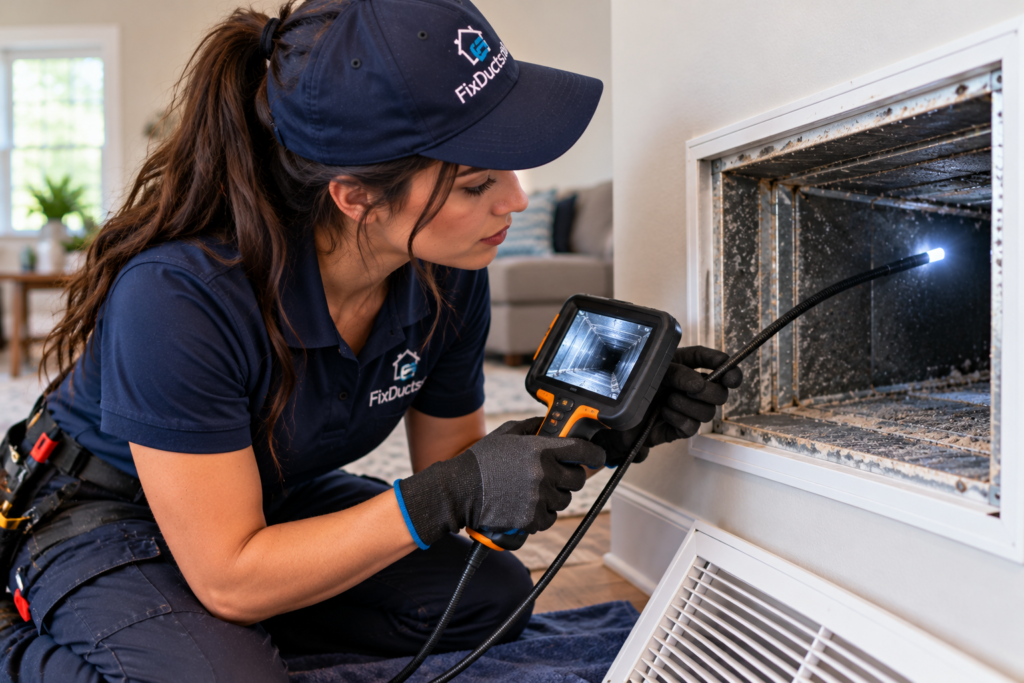
The technician may examine accessible supply and return vents, visible duct interiors, the air filter, and relevant HVAC components. Depending on the home’s design, the inspection may also include accessible attic, basement, or crawl-space ductwork.
The purpose is to understand the system’s condition and identify evidence that may justify cleaning.
What the technician may look for
Common observations include:
- Visible accumulations of dust or debris inside accessible ducts.
- Construction debris or other material left inside the ductwork.
- Evidence of rodents or insects.
- Signs of moisture or suspected microbial growth.
- Damaged, disconnected, or poorly sealed duct sections.
- Restricted access that may affect the cleaning method.
Visible dust around a register does not necessarily mean the entire duct system requires cleaning. A technician should evaluate the evidence rather than automatically recommend the most expensive package.
If you are concerned about contamination, ask the technician to explain the findings and show you relevant evidence when practical.
Step 2: The Technician Explains the Cleaning Plan
After inspecting the system, the company should explain the proposed work before beginning.
A clear estimate should describe the areas to be cleaned, the equipment and methods to be used, the expected cost, and any limitations caused by inaccessible ductwork.
Ask whether the quoted price includes supply ducts, return ducts, registers, and any HVAC components the company proposes to clean.
You should also clarify whether the price includes taxes, access-panel installation, repairs, sanitizing products, or other optional services.
Be cautious if a contractor promises dramatic health benefits, claims every home requires annual duct cleaning, or pressures you into purchasing costly treatments without explaining why they are needed.
The EPA’s official air duct cleaning guidance provides useful information about when cleaning may be appropriate and what homeowners should consider before hiring a service.
Step 3: The Work Area Is Prepared
Before cleaning begins, the technician typically prepares the work area to control dust and protect your belongings.
Depending on the system and the cleaning method, preparation may include:
- Moving or covering furniture near vents.
- Protecting floors and nearby surfaces.
- Removing vent covers or registers where necessary.
- Identifying suitable access points in the ductwork.
- Setting up collection equipment and hoses.
- Protecting HVAC components from dust and debris.
Professional methods vary, but the goal is to remove material from the duct system without unnecessarily releasing it into occupied rooms.
You can help by clearing access to vents, moving fragile items away from the work area, and informing the technician about pets, delicate furnishings, or any known problems with the HVAC system.
If the company needs to create an access opening, ask where it will be placed and how it will be closed afterward.
Step 4: Specialized Equipment Removes Dust and Debris
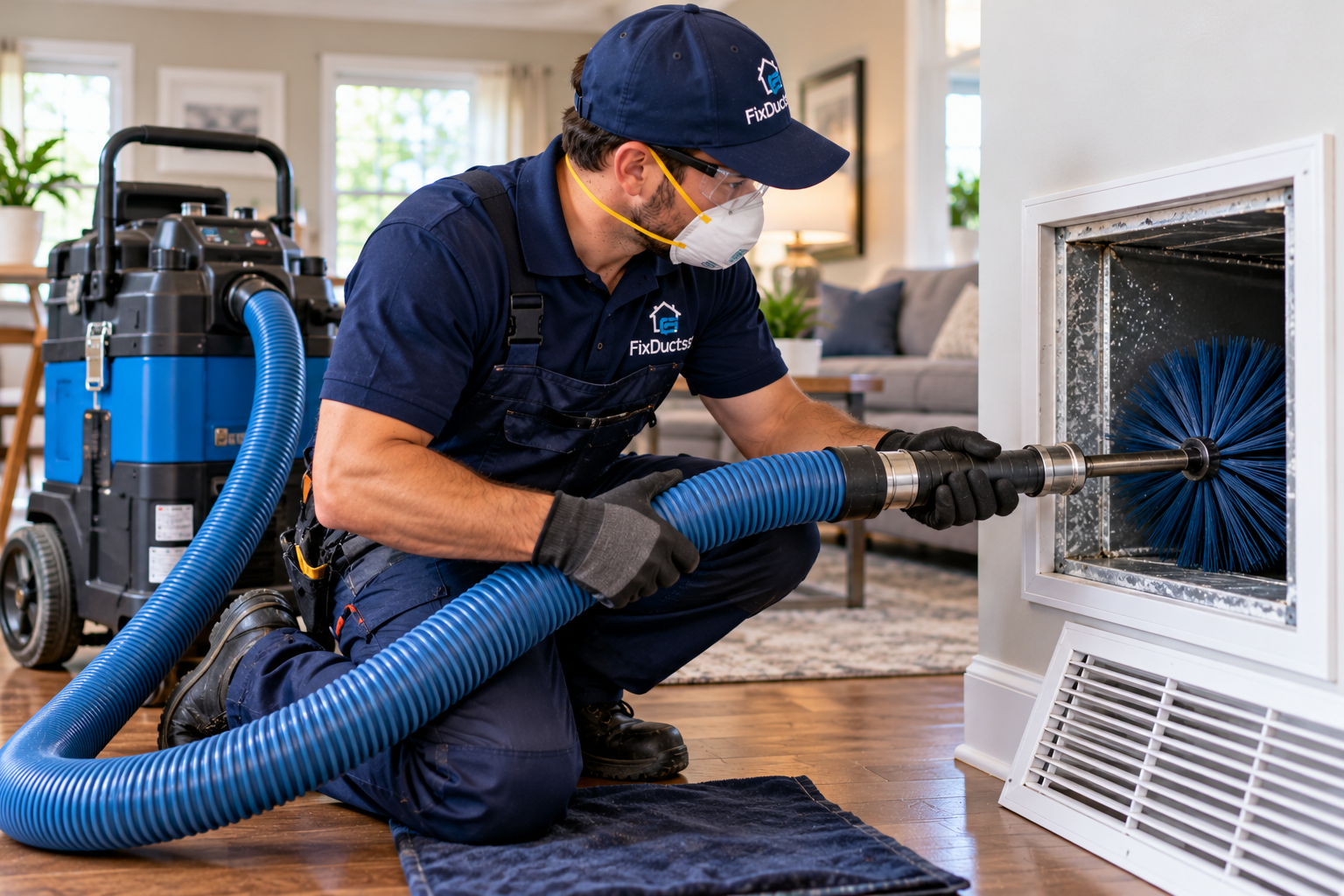
A common professional cleaning method combines agitation tools with a powerful vacuum collection system.
The exact equipment depends on the type of ductwork, its condition, and the contractor’s method.
Negative-pressure vacuum equipment
Some systems use a vacuum collection unit connected to the ductwork. The equipment creates negative pressure to help capture loosened debris rather than allowing it to spread through the home.
The technician then works through the relevant duct sections, using suitable tools to loosen accumulated material so it can be collected.
Brushes and agitation tools
Mechanical brushes, air-driven tools, or other suitable agitation equipment may be used to dislodge material from duct surfaces.
The correct tool matters because flexible ducts, older ductwork, internal insulation, and delicate components may be damaged by inappropriate cleaning methods.
Ask the contractor how the equipment will be used with your particular duct material.
Cleaning supply and return ducts
Supply ducts carry heated or cooled air toward your rooms. Return ducts bring air back to the HVAC equipment.
Both may be inspected and cleaned when included in the service plan and when cleaning is justified.
A thorough service should follow a defined process rather than simply vacuuming the visible area immediately behind each register.
For additional background on maintaining a home’s indoor environment, see the EPA’s guide to indoor air quality.
Step 5: Registers and Other Included Components Are Cleaned
Registers and grilles can collect visible dust because air moves through them and household particles settle on nearby surfaces.
The technician may remove and clean accessible register covers, depending on the agreed scope of work.
Other HVAC components may be included in a broader cleaning service, but they should not be assumed to be part of a basic duct-cleaning package.
For example, cleaning the blower, evaporator coil, or drain pan may require separate work and specific procedures.
These components serve different functions. If one is dirty, damaged, or malfunctioning, the technician should explain the issue and recommend an appropriate solution.
Cleaning a component should not be used as a substitute for repairing a mechanical problem.
Step 6: The Technician Checks the Results
After cleaning, the technician should review the completed work and confirm that the agreed areas were addressed.
Depending on the job, this may involve visually inspecting accessible duct sections, checking the condition of registers, removing collected debris, and ensuring that access points have been properly closed.
Ask for an explanation of any areas that could not be reached or cleaned.
If the original concern involved a particular issue, such as visible debris or suspected contamination, ask what the technician found and whether the problem appears to have been addressed.
Keep the invoice and any inspection notes with your home maintenance records. These documents can help you compare future service recommendations and avoid paying repeatedly for work that is not needed.
How Long Does Professional Air Duct Cleaning Take?
The time required depends on the size and layout of the home, the number of duct runs, accessibility, the amount of accumulated debris, and the cleaning method.
A smaller home with accessible ductwork may require less time than a larger property with multiple systems, complicated duct layouts, or restricted access.
There is no single duration that applies to every house. Ask the company for an estimate based on your home’s actual configuration rather than relying on a fixed time promise.
Be cautious of appointments that appear to involve very little work despite claims of comprehensive cleaning. At the same time, a longer appointment does not automatically prove that the service is better.
The scope of work, suitable equipment, and quality of execution matter more than the duration alone.
Does Professional Air Duct Cleaning Make Your Home Healthier?
The answer depends on the condition of the ductwork and the reason for cleaning.
Removing substantial debris or addressing specific contamination may be useful in appropriate circumstances. However, the EPA states that there is insufficient evidence to conclude that duct cleaning alone prevents health problems.
Dust in a home can come from many sources, including outdoor air, clothing, pets, cooking, and household activities. Cleaning ducts will not eliminate these sources.
For better indoor air quality, homeowners should also consider source control, suitable ventilation, regular cleaning, and appropriate HVAC filtration.
The EPA recommends considering duct cleaning when there is substantial visible mold growth inside hard-surface ducts or on other components of the heating and cooling system, when ducts are infested with vermin, or when ducts are clogged with excessive amounts of dust and debris that are released into the home.
For the complete list of considerations, consult the EPA’s air duct cleaning recommendations.
Will Air Duct Cleaning Improve Airflow?
Not necessarily.
Airflow problems can be caused by dirty filters, closed or obstructed vents, damaged ductwork, poorly designed duct systems, blower issues, or other HVAC problems.
If a significant obstruction inside the ductwork is restricting air movement, removing it may help address that specific restriction. However, cleaning will not correct every airflow problem.
Before paying for duct cleaning to solve weak airflow, check whether the air filter needs replacement and whether supply and return vents are unobstructed.
If the problem persists, ask an HVAC technician to diagnose the system. The technician may need to inspect duct connections, dampers, the blower, and other relevant components.
A diagnosis is more useful than assuming that dust is responsible for every airflow issue.
Should You Pay Extra for Duct Sanitizing or Chemical Treatments?
Some companies offer sanitizers, antimicrobial products, fragrances, or chemical treatments as optional additions to duct cleaning.
These treatments are not automatically necessary just because the ducts have been cleaned.
Before agreeing to any chemical application, ask the company to explain:
- Why the treatment is recommended.
- Which specific product will be used.
- Whether it is appropriate for the duct material and HVAC system.
- How the product will be applied.
- What precautions are required for occupants and pets.
- Whether the product is registered and labeled for the intended use.
Chemical treatment should not replace correcting a moisture problem or removing contaminated materials when necessary.
If mold or persistent dampness is suspected, the source of moisture should be addressed first. Applying a product without resolving the underlying cause may not prevent the problem from returning.
For general information about moisture and indoor biological contaminants, consult the EPA’s Biological Contaminants and Indoor Air Quality guidance.
How to Choose a Professional Air Duct Cleaning Company
Choosing a qualified contractor can help you avoid unnecessary services and unclear pricing.
Before booking, consider these practical steps.
Request a written estimate
The estimate should explain what will be cleaned, what is excluded, and whether additional charges may apply.
Avoid accepting a vague price that changes substantially once the technician arrives without a clear explanation.
Ask about equipment and cleaning methods
A reputable company should be able to explain its cleaning process and how it will protect your ductwork.
The method should be appropriate for the material and configuration of your system.
Check experience and references
Look for relevant experience, verifiable customer feedback, and any applicable local or professional requirements.
Ask whether the company has experience with your type of HVAC system and ductwork.
Avoid unnecessary pressure
Be wary of claims that every home needs frequent cleaning, that cleaning will cure health conditions, or that expensive chemical treatments are essential without a specific reason.
A professional should explain the findings and allow you to make an informed decision.
Confirm the scope before work begins
Make sure you understand what the service includes, how the company will access the ducts, and whether any repairs are priced separately.
A clear agreement can reduce misunderstandings and help you compare contractors fairly.
How to Prepare Your Home for the Appointment
You can make the appointment easier by preparing a few things in advance:
- Clear furniture and belongings away from supply and return vents.
- Secure pets in a separate area if necessary.
- Inform the technician about known duct damage, water leaks, or previous pest problems.
- Ask whether the contractor needs access to an attic, basement, crawl space, or utility room.
- Confirm the service price and scope before work begins.
- Ask how the company will protect floors, furniture, and HVAC components.
- Keep the estimate and invoice for your records.
You generally do not need to purchase special cleaning products or dismantle your HVAC system yourself.
If you suspect mold, water damage, or a structural issue, explain the concern before the cleaning begins so the contractor can determine whether additional inspection or a different specialist is needed.
Final Thoughts
Professional air duct cleaning involves more than vacuuming the visible parts of a few vents. Depending on the home’s needs, the process may include an inspection, preparation of the work area, specialized debris-removal equipment, cleaning of agreed duct sections and registers, and a review of the results.
The most important step is determining whether cleaning is appropriate in the first place. Ask for evidence of the problem, a clear written scope of work, and an explanation of any optional treatments.
Remember that duct cleaning is not a replacement for HVAC maintenance, duct repairs, proper filtration, or moisture control. Choosing a contractor who explains the process honestly can help you make a practical decision for your home.
Sources