

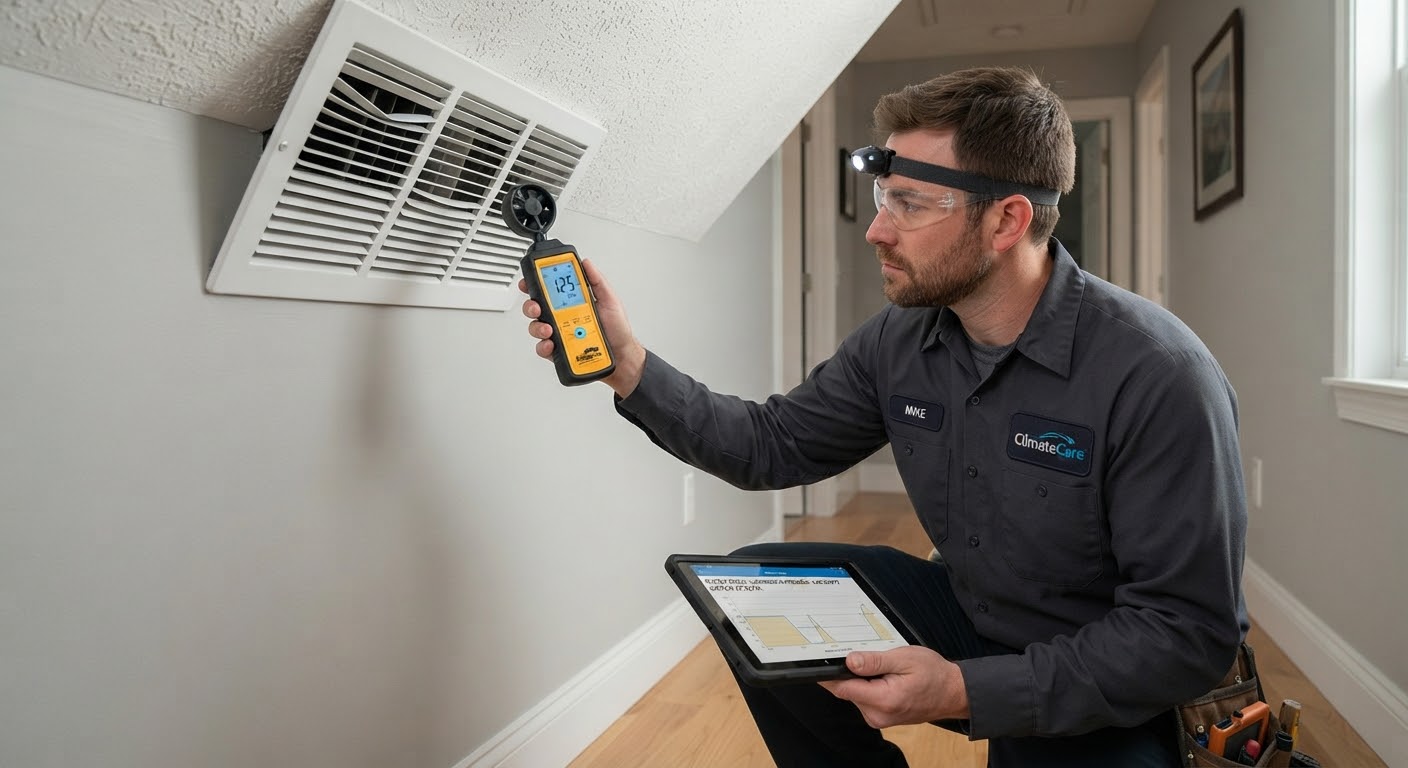
When your HVAC system is running but little air comes out of the vents, your home may take longer to reach the desired temperature. Some rooms may feel comfortable while others remain too hot or too cold.
Poor airflow can result from a clogged air filter, blocked vents, leaking ductwork, or a problem with the HVAC equipment itself. Identifying the cause is important because cleaning air ducts or replacing a filter will not solve every airflow issue.
In this guide, we explain nine common causes of weak HVAC airflow, what homeowners can safely check, and when to contact a qualified heating and cooling professional.
What Is HVAC Airflow?
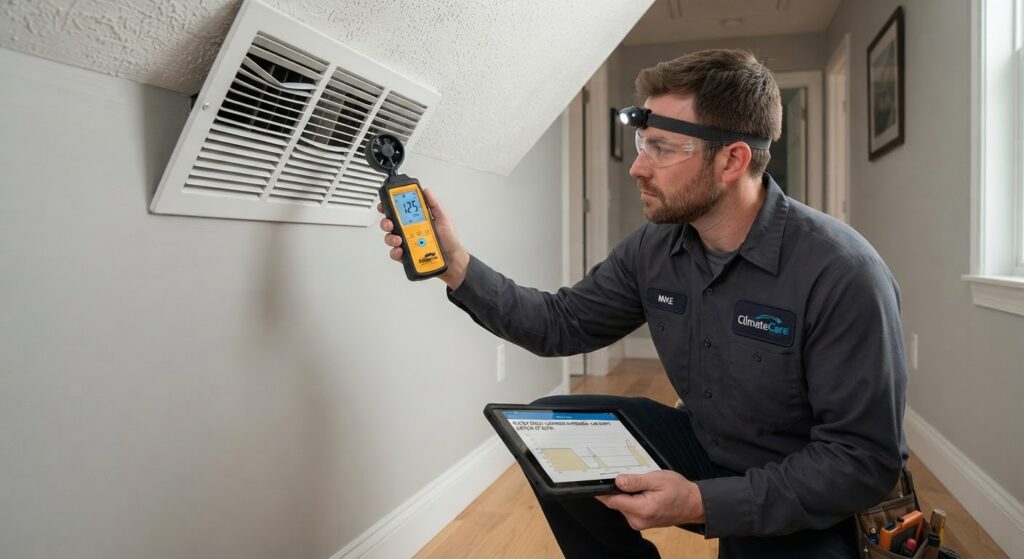
HVAC airflow is the movement of heated or cooled air through your heating, ventilation, and air conditioning system and into your living spaces.
Your system draws air through return vents, passes it through the equipment, and distributes conditioned air through supply ducts and registers.
When something restricts this process, the system may struggle to deliver enough air to certain rooms. Restricted airflow can also affect system performance and, in some circumstances, contribute to equipment problems.
The first step is to determine whether the issue affects one room, several rooms, or the entire house.
9 Common Causes of Weak HVAC Airflow
1. A Dirty or Clogged Air Filter
A dirty HVAC air filter is one of the first things homeowners should check when airflow decreases.
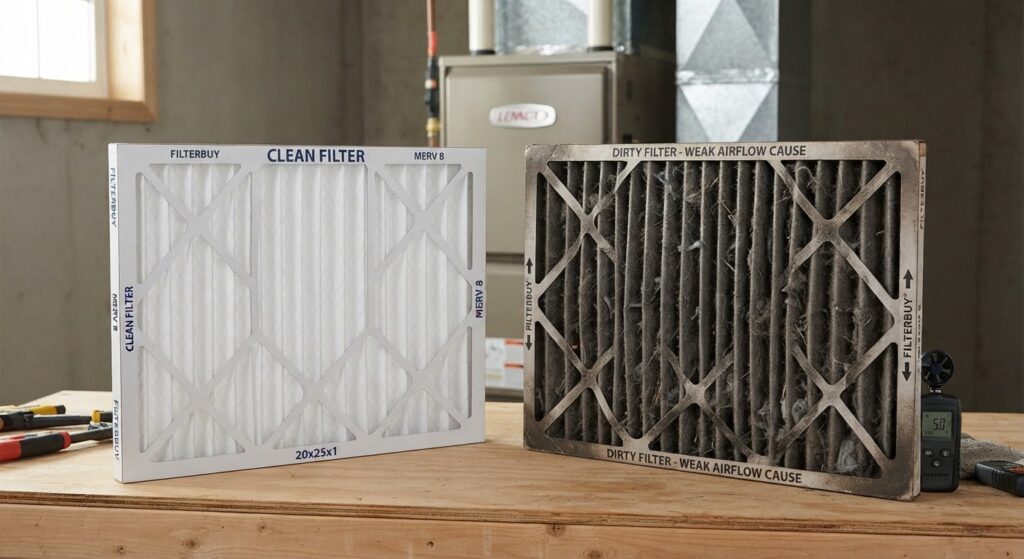
Filters capture airborne particles as air passes through the system. Over time, dust and debris accumulate on the filter, potentially restricting the amount of air that can move through it.
Signs of a filter-related airflow problem may include:
- Weak airflow from several supply vents.
- A visibly dirty filter.
- Longer heating or cooling cycles.
- Reduced system performance.
What to do: Turn off the system according to the manufacturer’s instructions and inspect the filter. Replace it if necessary with the correct size and type.
Check the recommended replacement interval for your particular filter. Homes with pets, heavy dust, or frequent HVAC use may require more frequent checks.
Do not automatically choose the highest-rated filter available. Some filters create more resistance than certain systems can accommodate. Follow the equipment manufacturer’s recommendations.
2. Blocked Supply Vents or Return Grilles
Furniture, curtains, rugs, and household items can obstruct vents and interfere with airflow.
Supply vents deliver conditioned air into rooms, while return grilles allow air to flow back toward the HVAC equipment. Blocking either type of opening can affect system performance.
Walk through your home and check whether:
- Furniture is covering supply registers.
- Curtains are hanging over vents.
- Rugs or objects are blocking floor registers.
- Return-air grilles are obstructed.
- Registers have been accidentally closed.
What to do: Remove obstructions and make sure the intended vents are open. If the problem continues after clearing the openings, investigate other possible causes.
Avoid closing multiple supply vents to force more air into another room unless an HVAC professional has confirmed that the system is designed for that adjustment.
3. Leaking or Disconnected Air Ducts
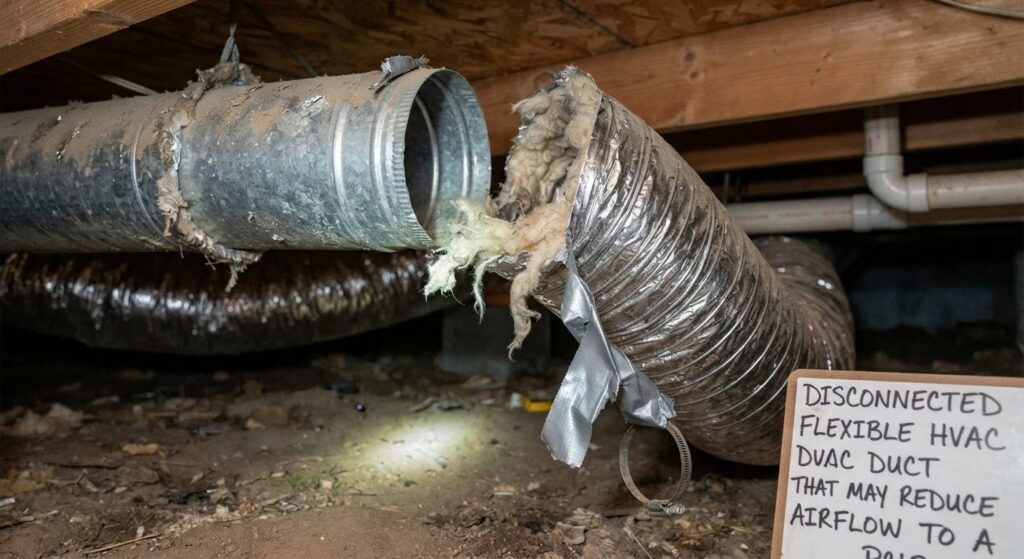
Air ducts carry conditioned air from your HVAC equipment to different rooms. If a duct has a gap, damaged joint, or disconnected section, some of that air may escape before reaching its destination.
Duct leakage is especially worth investigating when certain rooms receive noticeably less airflow than others.
Possible warning signs include:
- Weak airflow in specific rooms.
- Unusually dusty areas around accessible duct joints.
- Damaged or visibly disconnected duct sections.
- Comfort differences between rooms.
- Ductwork located in an attic, crawl space, or garage that appears damaged.
What to do: Inspect only ductwork that is safely accessible. Look for visible gaps, loose connections, or damaged sections without entering confined spaces.
A qualified HVAC professional can test the duct system and recommend appropriate repairs or sealing methods.
For more information, read our guide to the signs of leaky air ducts.
4. A Dirty Blower or Restricted HVAC Equipment
The blower moves air through the HVAC system. If the blower assembly becomes dirty, develops a mechanical problem, or cannot operate correctly, airflow may decrease.
Other internal components may also restrict airflow if they are dirty or malfunctioning.
Potential signs include:
- Weak airflow from many vents.
- Unusual noises from the indoor unit.
- Reduced heating or cooling performance.
- A system that starts and stops unexpectedly.
What to do: Check the filter and make sure accessible vents are unobstructed. If airflow remains weak, arrange a professional inspection.
Blower motors, electrical components, and internal equipment should not be dismantled by homeowners without the necessary training. Turn the system off and seek professional help if you notice burning smells, unusual electrical noises, or repeated equipment shutdowns.
5. A Frozen Evaporator Coil
In an air conditioning system, the evaporator coil absorbs heat from indoor air. If the coil freezes, accumulated ice can block airflow and reduce cooling performance.
A frozen coil may be associated with restricted airflow, refrigerant problems, or other equipment faults.
Warning signs can include:
- Very weak airflow during cooling.
- Ice on refrigerant lines or accessible coil surfaces.
- Cooling performance that declines over time.
- Water around the indoor unit after ice melts.
What to do: Turn off the cooling function and contact an HVAC professional for guidance. If the manufacturer provides instructions for operating the fan during defrosting, follow those instructions; otherwise, ask a technician how to proceed.
Do not chip ice off the coil or use sharp tools. A technician may need to identify the underlying cause before restarting the system.
6. Closed or Improperly Adjusted Dampers
Some duct systems use dampers to control how air is distributed between different areas of a home.
If a damper is accidentally closed, incorrectly adjusted, or malfunctioning, rooms served by that duct branch may receive less conditioned air.
This is more likely to be relevant in homes with zoned HVAC systems or accessible duct dampers.
What to do: Check any clearly labeled, user-accessible controls and confirm that they are set as intended. If the damper is hidden inside ductwork or you are unsure how it should be adjusted, ask an HVAC professional to inspect it.
Do not adjust unfamiliar dampers randomly. Incorrect settings may worsen airflow balance elsewhere in the house.
7. Undersized, Crushed, or Poorly Designed Ductwork
Duct dimensions and layout affect how easily air travels through a system.
If ducts are too small for the required airflow, have excessive bends, or contain crushed flexible sections, they may create too much resistance. Poorly designed duct branches can also make it difficult to distribute air evenly.
Potential signs include:
- Persistent weak airflow in particular rooms.
- Uneven temperatures across the house.
- Airflow problems that have existed since installation.
- Flexible ductwork that appears crushed or sharply bent.
What to do: Ask an HVAC professional to assess duct sizing, layout, and static pressure where appropriate.
Simply installing a more powerful blower is not necessarily the correct solution. The system needs to be evaluated as a whole to ensure the equipment and ductwork work together properly.
8. A Problem With the HVAC Blower Motor or Electrical Controls
The blower motor and its controls are responsible for moving air through the system. If a motor, capacitor, relay, control board, or another component malfunctions, the blower may not operate at the intended speed or may stop working.
The symptoms depend on the equipment and the nature of the fault.
You might notice:
- Very little airflow despite a clean filter.
- The system running without normal air circulation.
- Unusual humming or mechanical noises.
- Repeated shutdowns or fault indicators.
What to do: Check the thermostat settings and consult the equipment manual for any user-level troubleshooting instructions. If the blower does not operate normally, arrange professional service.
Electrical diagnosis and component replacement should be left to qualified technicians. If you smell burning or notice signs of overheating, switch the system off if safe and seek professional assistance.
9. Incorrect Thermostat Settings or a System Operating Problem
Sometimes the problem is not inside the ductwork at all. Incorrect thermostat settings, equipment operating limits, or a system fault may prevent normal heating, cooling, or fan operation.
Before assuming that a major repair is needed, check:
- Whether the thermostat is set to the intended mode.
- Whether the fan is set to Auto or On as desired.
- Whether the temperature setting is appropriate.
- Whether the thermostat displays an error message.
- Whether the HVAC circuit breaker has tripped.
If a breaker trips repeatedly, do not keep resetting it. Contact a qualified professional to identify the cause.
If the settings appear correct but airflow remains weak, further diagnosis may be necessary.
Why Is Airflow Weak in Only One Room?
When one room receives much less air than the others, the problem may be related to that room’s duct branch or register rather than the entire HVAC system.
Possible causes include:
- A closed or obstructed supply register.
- A disconnected or leaking branch duct.
- A crushed flexible duct section.
- An incorrectly adjusted damper.
- Duct design or balancing problems.
Start by checking the room’s register and comparing airflow with nearby rooms. If the register is unobstructed and the difference persists, a professional inspection can help determine whether the ductwork needs repair or adjustment.
Do not assume that a dirty main air duct is responsible for every room-specific problem.
Why Is Airflow Weak Throughout the Entire House?
When airflow decreases at nearly every supply vent, the cause may be closer to the HVAC equipment or within a part of the system that affects the whole house.
Common possibilities include a heavily restricted air filter, a blower problem, a frozen evaporator coil, a major return-air obstruction, or an equipment fault.
A practical first check is to inspect the filter and clear any blocked return grilles. If airflow does not improve, arrange an HVAC inspection rather than repeatedly changing parts without a diagnosis.
How to Troubleshoot Weak HVAC Airflow Safely
Use this basic checklist before scheduling service.
Step 1: Check the thermostat. Confirm the correct mode and temperature settings.
Step 2: Inspect the air filter. Replace a dirty filter with the correct type and size.
Step 3: Clear vents and returns. Remove furniture, curtains, and objects that obstruct airflow.
Step 4: Compare rooms. Determine whether airflow is weak everywhere or only in specific locations.
Step 5: Look for obvious warning signs. Note unusual noises, ice, water leaks, persistent odors, or visible duct damage.
Step 6: Contact an HVAC professional when needed. Seek help if airflow remains poor, internal components may be affected, or you suspect a refrigerant, electrical, or mechanical fault.
Never remove safety covers or work on energized electrical components. Do not enter confined spaces or climb into unsafe areas to inspect ductwork.
Can Air Duct Cleaning Fix Weak Airflow?
Air duct cleaning may help when substantial debris inside the ductwork is genuinely restricting air movement. However, it is not a universal solution for weak HVAC airflow.
A clogged filter, leaking duct, crushed flexible duct, frozen evaporator coil, or malfunctioning blower requires a different response.
Before paying for cleaning, ask the technician to explain what was found and how it relates to the airflow problem.
If a duct has a gap or disconnected joint, cleaning it will not repair the leak. If the blower motor has failed, duct cleaning will not restore its operation.
The best approach is to identify the cause first and select the appropriate repair or maintenance service.
When Should You Call an HVAC Professional?
Arrange professional service if:
- Airflow remains weak after you check the filter and vents.
- Ice appears on the indoor coil or refrigerant lines.
- The blower makes unusual noises or fails to operate.
- You find disconnected or damaged ductwork.
- One or more rooms consistently receive very little air.
- The system repeatedly shuts down or displays a fault.
- You notice burning smells, electrical problems, or repeated breaker trips.
If you suspect an electrical hazard, switch off the system if it is safe to do so and contact a qualified professional. Do not attempt repairs that require opening energized equipment.
Frequently Asked Questions
Can a dirty air filter cause weak airflow?
Yes. A heavily loaded filter can restrict airflow through an HVAC system. Check it regularly and replace it according to the manufacturer’s recommendations.
Can leaky air ducts reduce airflow?
Yes. Air escaping through damaged or disconnected duct sections may reduce the amount of conditioned air reaching the intended rooms. A professional can inspect and test the ductwork to determine whether repairs are necessary.
Will cleaning air ducts increase airflow?
It may help if significant debris inside the ducts is restricting air movement. However, cleaning will not correct mechanical faults, frozen coils, undersized ductwork, or leaking joints.
Why is my AC running but barely blowing air?
Possible causes include a dirty filter, blocked return grille, blower problem, frozen evaporator coil, or duct restriction. Start with safe external checks and seek professional service if the problem continues.
Should I close vents in unused rooms?
Closing multiple vents is not generally a reliable way to improve airflow elsewhere. It can affect system pressure and distribution, depending on the design. Ask an HVAC professional before making significant changes to your duct system.
How can I tell if my HVAC system needs repair?
Persistent weak airflow, unusual noises, repeated shutdowns, visible ice, and inconsistent temperatures can indicate a problem. These symptoms have multiple possible causes, so a proper inspection is often the best way to determine what repair is needed.
Final Thoughts
Weak HVAC airflow can make your home less comfortable and may indicate anything from a simple filter problem to a more serious equipment or ductwork issue.
Start with the easiest checks: inspect the air filter, clear blocked vents, and review the thermostat settings. Then consider whether the problem affects one room or the entire house.
If airflow remains poor, a qualified HVAC professional can identify the cause and recommend an appropriate solution. Accurate diagnosis helps you avoid unnecessary duct cleaning and focus your maintenance budget on the repair your system actually needs.
References
- U.S. Department of Energy: Maintaining Your Air Conditioner
- U.S. Environmental Protection Agency: Should You Have the Air Ducts in Your Home Cleaned?
- U.S. Environmental Protection Agency: A Guide to Air Cleaners in the Home