
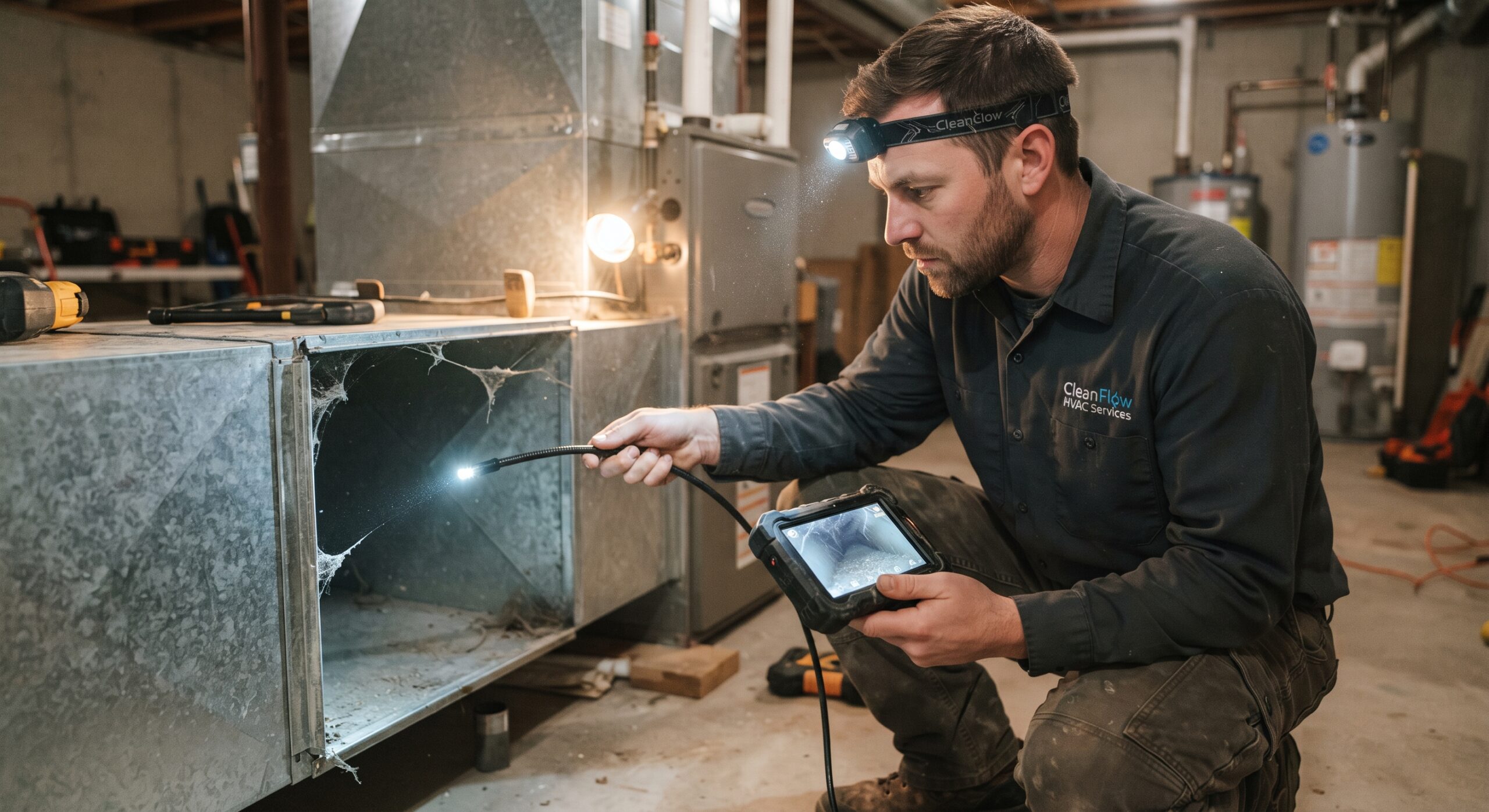
Air ducts help distribute heated and cooled air throughout your home. Over time, dust and other debris may collect inside ductwork, but a certain amount of dust does not automatically mean the system needs professional cleaning.
Knowing which signs deserve attention can help homeowners decide when to inspect their HVAC system and when professional air duct cleaning may be worthwhile.
In this guide, we explain seven signs that may indicate your air ducts need cleaning, how to distinguish duct problems from other HVAC issues, and what to check before scheduling a service.

1. Dust and Debris Are Coming Out of Your Air Vents
One possible sign of a dirty duct system is visible dust or debris being released from supply registers when the HVAC system starts or operates.
Before assuming the ducts are dirty, inspect the vent covers and the surrounding areas. Dust can accumulate on register surfaces and be disturbed when air begins flowing.
Here is what to check:
- Look for visible debris inside accessible vent openings.
- Inspect the register covers for dust buildup.
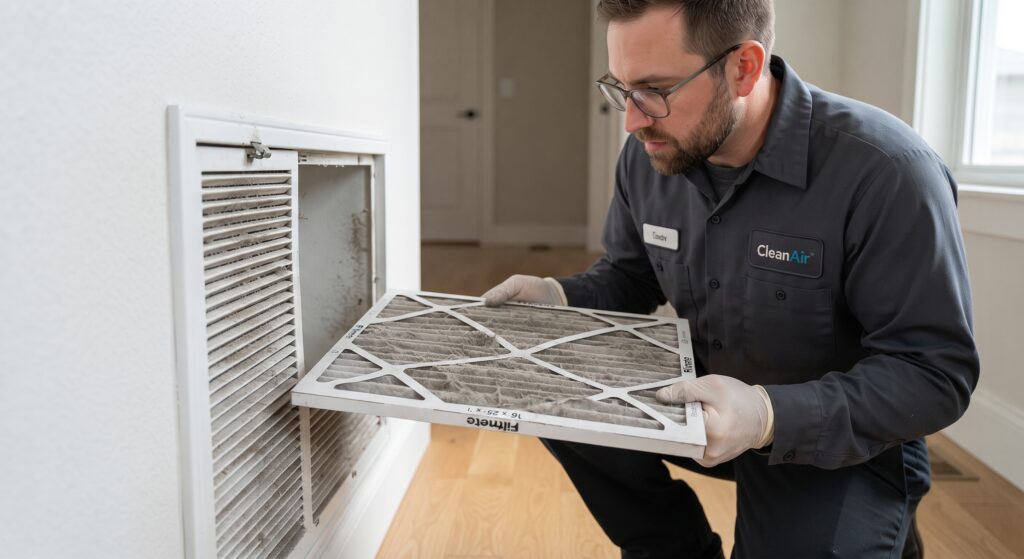
- Check whether the HVAC air filter is dirty or incorrectly installed.
- Notice whether visible debris repeatedly comes from the same vents.
A small amount of dust on a vent cover is common and can usually be handled with routine cleaning. Repeatedly blowing debris from inside the ductwork deserves closer inspection, particularly if the material appears excessive.
Avoid inserting tools deep into ducts or removing HVAC components without the proper knowledge.
2. You Notice Excessive Dust Around Your Home
If furniture and surfaces become dusty soon after cleaning, you may wonder whether your air ducts are responsible.
Ductwork can contain accumulated debris, but household dust comes from many sources, including outdoor soil, pollen, clothing fibers, pet dander, and normal daily activities.
Before arranging duct cleaning, consider these possibilities:
- The HVAC filter may need replacement.
- Doors and windows may allow outdoor dust inside.
- Carpets, rugs, and upholstered furniture may hold dust.
- Pets may contribute hair and dander.
- Cleaning methods may be redistributing dust rather than removing it.
Check your filter first and make sure the return-air grilles are unobstructed. If excessive dust continues and you also notice debris inside the ducts, a professional inspection may help identify the cause.
Dust alone is not proof that professional duct cleaning is necessary.
3. You Notice a Persistent Musty Smell When the HVAC Runs
A musty odor coming from an air vent may indicate moisture problems, microbial growth, or debris inside part of the HVAC system.
However, odors can also originate from a damp basement, a dirty drain pan, a clogged condensate drain, a contaminated filter, or another nearby source.
If you notice a persistent musty smell, consider the following steps:
- Check whether the air filter needs replacement.
- Look for visible moisture around accessible HVAC components.
- Check for condensation or water stains near ductwork.
- Notice whether the odor appears only when heating or cooling operates.
- Contact an HVAC professional if the odor persists or you suspect mold inside the system.
Cleaning the ducts without correcting the source of moisture may not solve the problem. Mold growth requires attention to the underlying moisture condition.
Do not enter confined spaces or disturb suspected mold if doing so could expose you to significant contamination.
4. You Find Visible Mold Inside Accessible HVAC Components
Visible mold or suspected microbial growth inside an HVAC system deserves careful attention, especially when moisture is present.
The U.S. Environmental Protection Agency identifies substantial visible mold growth inside appropriate parts of an air duct system as one circumstance in which duct cleaning may be considered.
Nevertheless, not every dark mark is mold. Dust, dirt, staining, and other materials can look similar.
If you find suspected mold:
- Avoid brushing or scraping it into the air.
- Look for signs of leaks, condensation, or standing water.
- Have the material assessed by a qualified professional when necessary.
- Ask how the moisture source will be corrected.
- Confirm whether affected insulation or other porous materials need additional attention.
Cleaning alone will not provide a lasting solution if the conditions that caused the growth remain.
If you see mold on an external surface near a vent, that does not automatically mean the entire duct system is contaminated. The location and extent of the problem matter.
5. You Discover Pest Activity or Debris Inside the Ducts
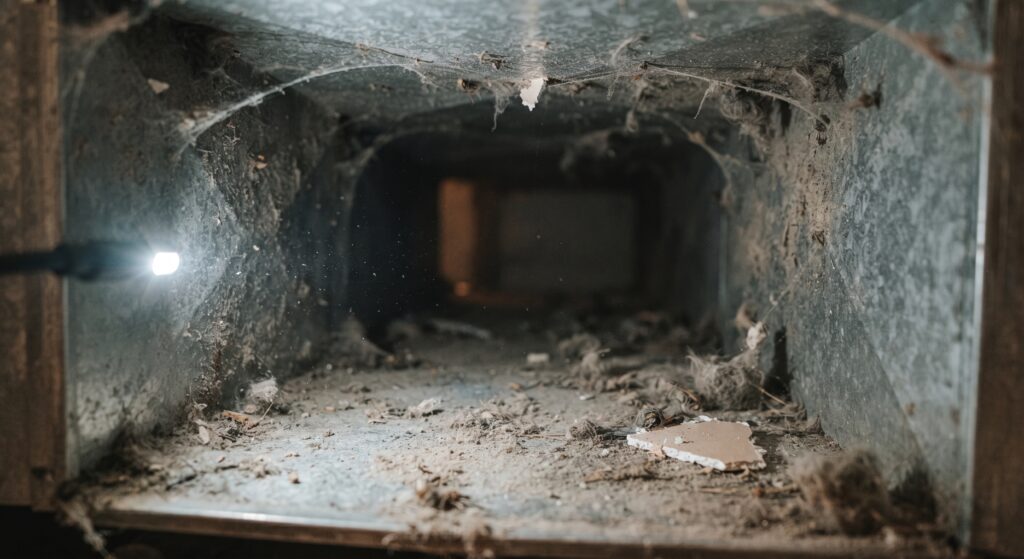
Rodents and insects can sometimes enter ductwork or other parts of a building’s HVAC system. Evidence may include droppings, nesting materials, insect remains, or damaged duct sections.
If you suspect pests, avoid disturbing the material or operating a contaminated system unnecessarily until the situation has been assessed.
A sensible response includes:
- Identifying and addressing the pest problem.
- Inspecting accessible ductwork for openings or damage.
- Checking whether insulation has been contaminated.
- Arranging appropriate cleaning or repairs when needed.
- Sealing entry points to reduce the chance of recurrence.
Duct cleaning by itself will not prevent pests from returning if entry points remain open.
Because animal droppings and nesting materials can pose health risks, significant contamination should be handled by qualified professionals using suitable protective measures.
6. You Find Heavy Debris During a Duct Inspection
An inspection may reveal accumulated construction debris, excessive dust, or other material inside ductwork.
This can happen after remodeling, particularly if the HVAC system was operated while sanding, cutting, or demolition work was underway and the ducts were not adequately protected.
Check for:
- Loose construction material inside accessible duct sections.
- Large accumulations of debris near registers.
- Damaged or disconnected duct joints.
- Evidence that the duct system was left uncovered during renovation.
If construction dust entered the system, ask an HVAC professional to determine whether cleaning is necessary and which components require attention.
Do not assume that every older duct system needs cleaning. The amount and type of debris, the system’s condition, and the presence of specific problems should guide the decision.
7. You Have Had a Significant Contamination Event
Some situations make a duct inspection more worthwhile than routine dust accumulation alone.
Examples include:
- Major indoor renovation that allowed debris into the HVAC system.
- A pest infestation involving ductwork.
- Water damage affecting duct insulation or HVAC components.
- A confirmed contamination problem requiring specialized cleanup.
After water damage, it is particularly important to determine whether duct materials became wet and whether moisture remains trapped inside the system.
Flexible ducts and internally insulated components may require different treatment from bare metal ductwork. Some contaminated porous materials may need replacement rather than ordinary cleaning.
Discuss the type of contamination with a qualified professional before choosing a service.
What Does Not Automatically Mean Your Air Ducts Need Cleaning?
Several common household problems are often blamed on dirty ducts even though they can have other causes.
Weak Airflow From Vents
Weak airflow may result from a clogged filter, closed registers, blocked return grilles, duct leaks, a malfunctioning blower, or other HVAC problems.
Cleaning the ducts is not necessarily the right solution. Persistent airflow problems should be diagnosed before a service is selected.
High Energy Bills
An increase in energy costs does not prove that ductwork needs cleaning. Changes in weather, energy prices, thermostat settings, equipment condition, insulation, and duct leakage can all affect energy use.
A professional HVAC inspection can help identify the actual cause.
Allergy Symptoms
Dust, pollen, pet dander, and other airborne particles can affect sensitive individuals. However, symptoms alone cannot establish that dirty air ducts are responsible.
Consider other potential sources, such as bedding, carpets, pets, moisture, and outdoor allergens. If symptoms persist, seek appropriate medical advice.
Dust on Vent Covers
Dust on the outside of a register is usually a routine cleaning issue. Wipe the cover with a damp cloth and inspect the accessible opening without reaching deep into the duct.
Professional cleaning should be based on the condition of the system rather than the appearance of a dusty vent cover alone.
How to Check Your Air Ducts Safely
Homeowners can perform a basic visual check without dismantling the HVAC system.
Step 1: Turn Off the HVAC System
Switch the system off before inspecting accessible vent openings. This helps prevent the system from blowing air or debris while you check the area.
Step 2: Inspect the Vent Covers
Look for accumulated dust, visible debris, signs of pests, or moisture around the registers.
Step 3: Check the Air Filter
Locate the filter and inspect its condition according to the equipment manufacturer’s instructions. Replace it if necessary, using the correct size and type.
Step 4: Look for Moisture or Damage
From a safe, accessible location, check for water stains, disconnected duct sections, or visible damage. Do not enter confined spaces or climb into unsafe areas to inspect ductwork.
Step 5: Decide Whether Professional Inspection Is Needed
If you find significant debris, suspected mold, evidence of pests, or persistent odors, arrange an assessment by a qualified HVAC professional.
Ask the professional to explain what was found, why cleaning is recommended, which components are affected, and whether repairs or moisture control are also necessary.
How Often Should Air Ducts Be Cleaned?
There is no single cleaning schedule that is appropriate for every home.
The EPA does not recommend routine air duct cleaning for every household. Instead, it advises considering cleaning when there is a relevant problem, such as substantial visible mold in appropriate parts of the system, a pest infestation, or excessive dust and debris being released into the home.
The condition of your ductwork matters more than its age alone.
Regular filter replacement, appropriate HVAC maintenance, moisture control, and keeping registers unobstructed can help you monitor the system without paying for unnecessary cleaning.
How to Choose a Reliable Air Duct Cleaning Professional
If an inspection indicates that cleaning is appropriate, choose a provider who can explain the work clearly and avoid making unsupported health claims.
Before hiring a company, ask:
- What specific evidence indicates that cleaning is necessary?
- Which parts of the HVAC system will be cleaned?
- What equipment and methods will be used?
- Is the quoted price based on the actual system and scope of work?
- Will the technician inspect for moisture, damage, or other underlying problems?
- Are additional services optional, clearly explained, and separately priced?
Be cautious of pressure tactics, unusually low introductory prices that increase dramatically, or claims that every home requires annual duct cleaning.
A reputable provider should explain what the inspection reveals and help you understand whether cleaning, repairs, or another solution is appropriate.
Frequently Asked Questions
How do I know if my air ducts are really dirty?
Look for relevant evidence such as substantial debris inside accessible duct sections, material repeatedly blowing from vents, pest contamination, or confirmed mold in appropriate HVAC components. Dust on a register alone is not enough to establish that professional cleaning is necessary.
Can dirty air ducts make my house dusty?
Ductwork may contribute to dust problems in some circumstances, but dust also comes from outdoor particles, fabrics, pets, and normal household activities. Check the filter and other dust sources before assuming the ducts are responsible.
Should I clean my air ducts every year?
Not necessarily. The EPA does not recommend routine cleaning for every home. The need depends on the condition of the ductwork and whether specific problems justify cleaning.
Can I clean my air ducts myself?
You can safely clean removable vent covers and inspect accessible areas. Deep duct cleaning is more difficult and may require specialized equipment. Avoid disturbing suspected mold, pest waste, or other potentially contaminated material.
Will air duct cleaning eliminate all household odors?
No. Odors may come from moisture, drains, cooking, pets, chemicals, or other sources. Cleaning the ducts will not necessarily resolve an odor unless the source is actually inside the duct system or an affected HVAC component.
Does air duct cleaning improve HVAC efficiency?
The result depends on the condition of the system and the cause of any performance problem. Removing significant debris may be useful in some circumstances, but a dirty filter, duct leaks, blocked returns, or mechanical faults may require different solutions.
Final Thoughts
Knowing the signs that your air ducts may need cleaning helps you make informed decisions about home maintenance. Persistent debris from vents, suspected mold inside HVAC components, pest contamination, and significant material inside the ductwork deserve more attention than ordinary dust on vent covers.
Before booking a service, check the air filter, look for moisture, and consider other possible causes of the problem. When cleaning is justified, choose a qualified professional who explains the findings and addresses the underlying cause rather than simply recommending an expensive service.
The goal is not to clean every duct on a fixed schedule. It is to keep your HVAC system in good condition and respond appropriately when a genuine problem appears.
References
- U.S. Environmental Protection Agency (EPA): Should You Have the Air Ducts in Your Home Cleaned?
- EPA: A Guide to Air Cleaners in the Home
- EPA: Mold and Moisture