

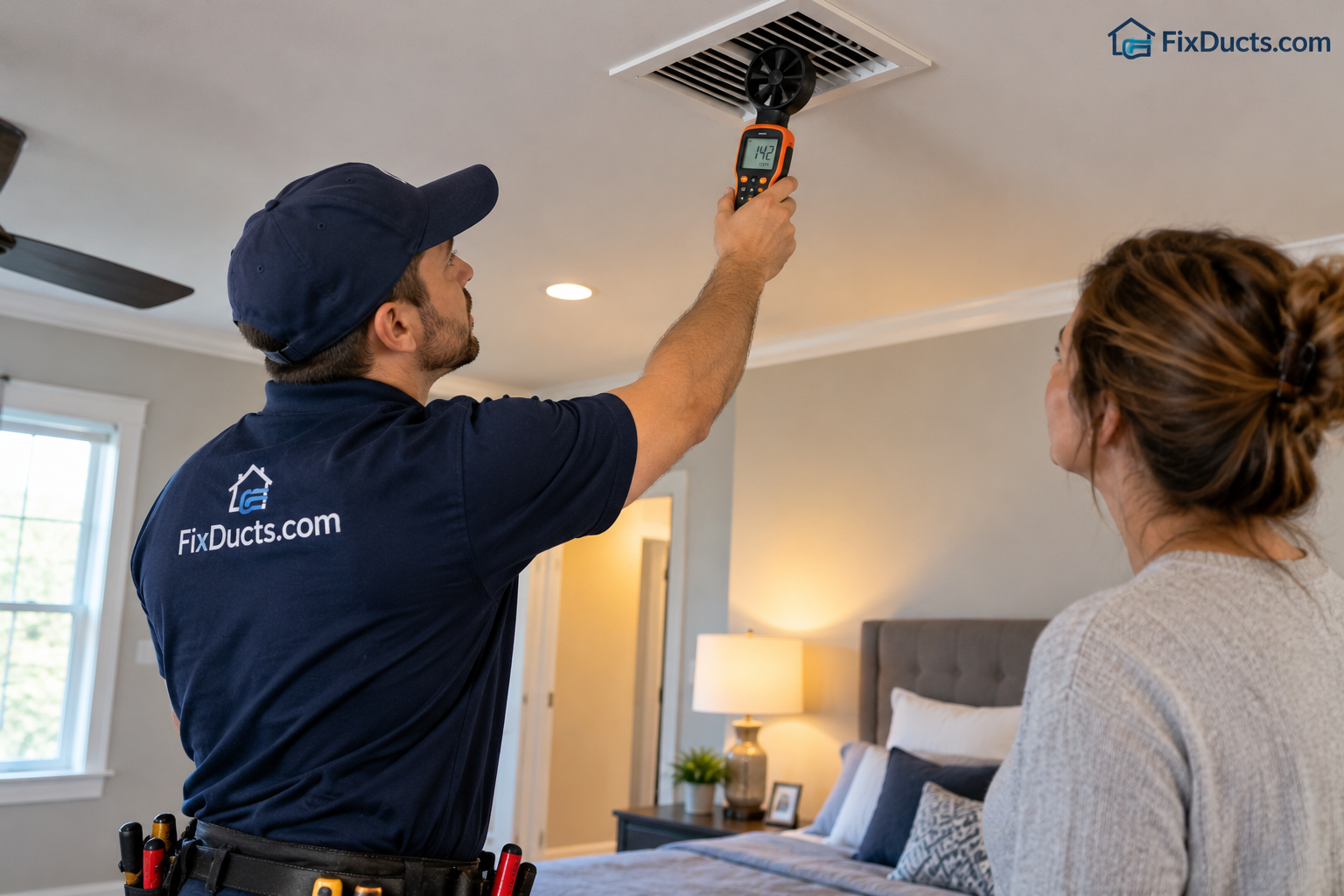
Does one bedroom feel warmer than the rest of your home in summer, while another room stays unusually cold in winter? Uneven temperatures are a common household comfort problem, and they can make it difficult to maintain a comfortable indoor environment.
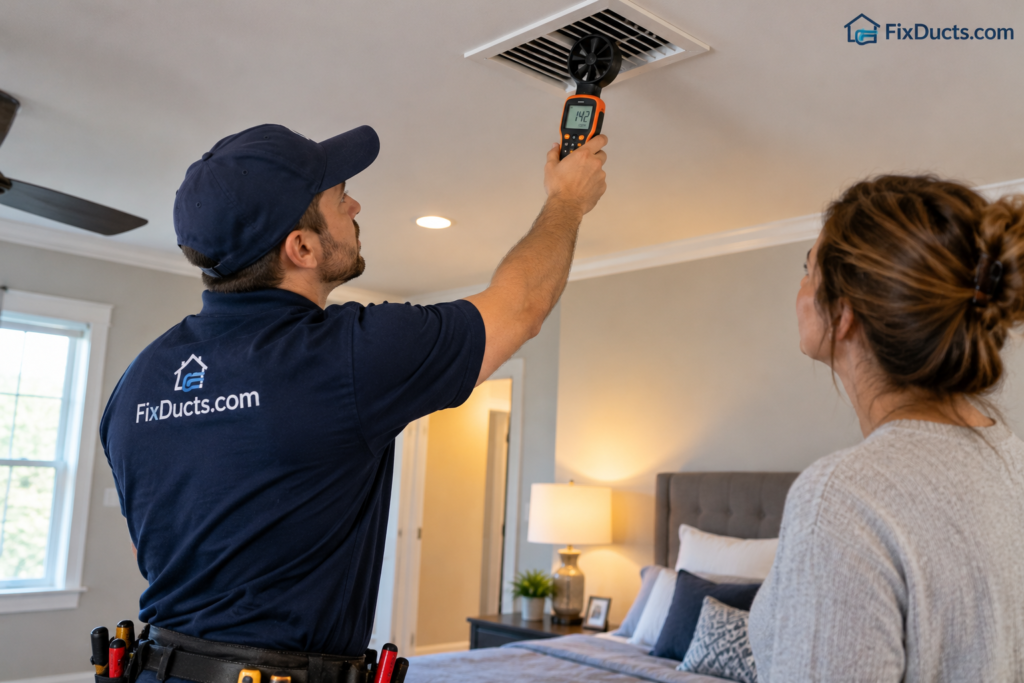
Your heating, ventilation, and air conditioning (HVAC) system is designed to distribute conditioned air throughout your home. However, differences in ductwork, insulation, sunlight, airflow, and equipment performance can cause some rooms to receive more heating or cooling than others.
The good news is that several causes are relatively simple to investigate. In this guide, we explain why one room may be hotter or colder than the rest of the house, what homeowners can check safely, and when professional HVAC repairs may be necessary.
What Causes Uneven Temperatures in a House?
Uneven indoor temperatures occur when different rooms gain, lose, or receive heat at different rates.
For example, a bedroom above an unconditioned garage may lose heat faster in winter. A room with large south-facing windows may become warmer on sunny afternoons. A bedroom at the end of a long duct run may also receive less conditioned air than a room closer to the HVAC equipment.
Common causes include:
- Leaking or disconnected air ducts.
- Blocked supply vents or return-air grilles.
- Poor insulation and air leaks.
- Direct sunlight through windows.
- Ductwork that is poorly sized or balanced.
- Dirty HVAC filters or equipment problems.
- Thermostat placement and control issues.
Identifying the likely cause helps you avoid spending money on repairs that do not address the actual problem.
8 Reasons One Room Is Hotter or Colder Than Others
1. Leaking or Disconnected Air Ducts
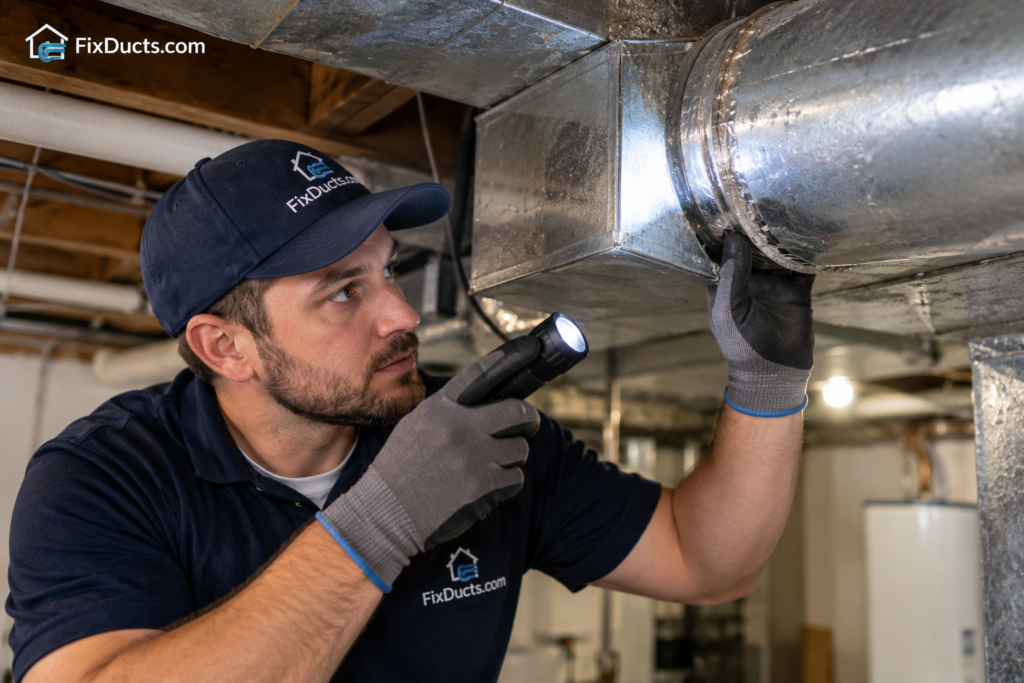
Air ducts carry heated and cooled air from your HVAC equipment to individual rooms. When duct sections develop gaps, become disconnected, or suffer damage, some conditioned air may escape before reaching its intended destination.
This can leave certain rooms uncomfortable even when the HVAC system appears to be running normally.
Possible warning signs include:
- One or more rooms consistently receiving weak airflow.
- Visible gaps or disconnected joints in accessible ductwork.
- Damaged or crushed flexible ducts.
- Temperature differences that persist despite correct thermostat settings.
- Ducts located in an attic, crawl space, or garage that show obvious damage.
What you can do: Inspect only ductwork that is safely accessible. Look for visible damage without entering confined spaces or removing equipment panels.
A qualified HVAC professional can inspect the duct system and determine whether sealing or repairing leaks is appropriate.
Simply cleaning the ducts will not fix a disconnected joint or a damaged section.
2. Blocked Supply Vents or Return-Air Grilles
Your HVAC system needs a clear path for air to circulate. Supply registers deliver conditioned air into rooms, while return grilles allow air to flow back toward the equipment.
If furniture, curtains, rugs, or other objects block these openings, the room may not receive or circulate air properly.
Check whether:
- Furniture is covering a supply register.
- Curtains are blocking an air vent.
- Rugs are covering floor registers.
- Return-air grilles are obstructed.
- A register has been accidentally closed.
What you can do: Move objects away from vents and make sure accessible registers are open as intended.
Avoid closing multiple vents to force air into another room. This can change system pressure and airflow distribution, depending on the equipment and duct design.
If clearing the vents does not improve comfort, investigate other possible causes.
3. Poor Insulation in Walls, Ceilings, or Floors
Insulation helps slow heat transfer between your home and the surrounding environment.
A room with insufficient insulation may become hotter in summer and colder in winter because it gains or loses heat more quickly than other rooms.
This is particularly common in rooms with:
- Exterior walls that receive strong sunlight.
- Ceilings directly beneath an attic.
- Floors above an unconditioned garage.
- Older windows or poorly insulated exterior doors.
- Areas where insulation is missing or damaged.
What you can do: Look for noticeable drafts, cold wall surfaces, or large temperature differences near windows and exterior walls.
If the problem is persistent, an insulation contractor or qualified home energy professional can assess the building envelope and recommend improvements.
Increasing HVAC output alone may not solve a room that loses heat quickly because of poor insulation.
4. Air Leaks Around Windows and Doors
Small gaps around windows, doors, and other openings can allow outdoor air to enter or conditioned air to escape.
During winter, cold drafts may make a room feel colder than the rest of the house. During summer, hot outdoor air can add to the cooling load.
To investigate possible air leaks:
- Check the weatherstripping around exterior doors.
- Look for visible gaps around window frames.
- Notice whether curtains move when windows are closed.
- Inspect accessible seals for damage.
- Check for drafts near exterior openings when outdoor conditions make them noticeable.
What you can do: Replace worn weatherstripping or improve appropriate seals when necessary.
Do not block required ventilation openings or combustion-air supplies. If your home uses fuel-burning equipment, follow applicable safety requirements.
If the room remains uncomfortable after obvious drafts are addressed, the issue may involve insulation, ductwork, or HVAC system performance.
5. Long or Poorly Designed Duct Runs
Rooms located far from the HVAC equipment may receive less conditioned air if the duct system is poorly designed, improperly balanced, or affected by excessive resistance.
Long duct runs, numerous bends, undersized sections, crushed flexible ducts, and poorly arranged branches can all affect airflow.
This does not mean that every room far from the furnace or air handler will have a problem. A properly designed duct system can distribute air effectively throughout a home.
What you can do: Compare airflow from the uncomfortable room with airflow from nearby rooms. Check that the register is open and unobstructed.
If the difference is persistent, ask an HVAC professional to evaluate the duct layout and airflow distribution.
The appropriate solution may involve repairing damaged ducts, adjusting dampers, correcting restrictions, or improving the duct design.
6. A Dirty Air Filter or HVAC Equipment Problem
A heavily loaded air filter can restrict airflow through the HVAC system. Other equipment problems may also affect how much heated or cooled air reaches different rooms.
Possible causes include a malfunctioning blower, a frozen evaporator coil, or another component that requires professional attention.
Signs may include:
- Weak airflow from several vents.
- Reduced heating or cooling performance.
- Unusual equipment noises.
- Ice on accessible cooling-system components.
- The system repeatedly shutting down.
What you can do: Check the filter and replace it when needed, following the manufacturer’s instructions. Make sure return-air grilles are unobstructed.
If the problem continues, arrange an HVAC inspection. Do not dismantle electrical components or attempt refrigerant repairs yourself.
If you notice burning smells or a potential electrical hazard, turn off the system if safe and seek professional assistance.
7. Sunlight and Room Orientation
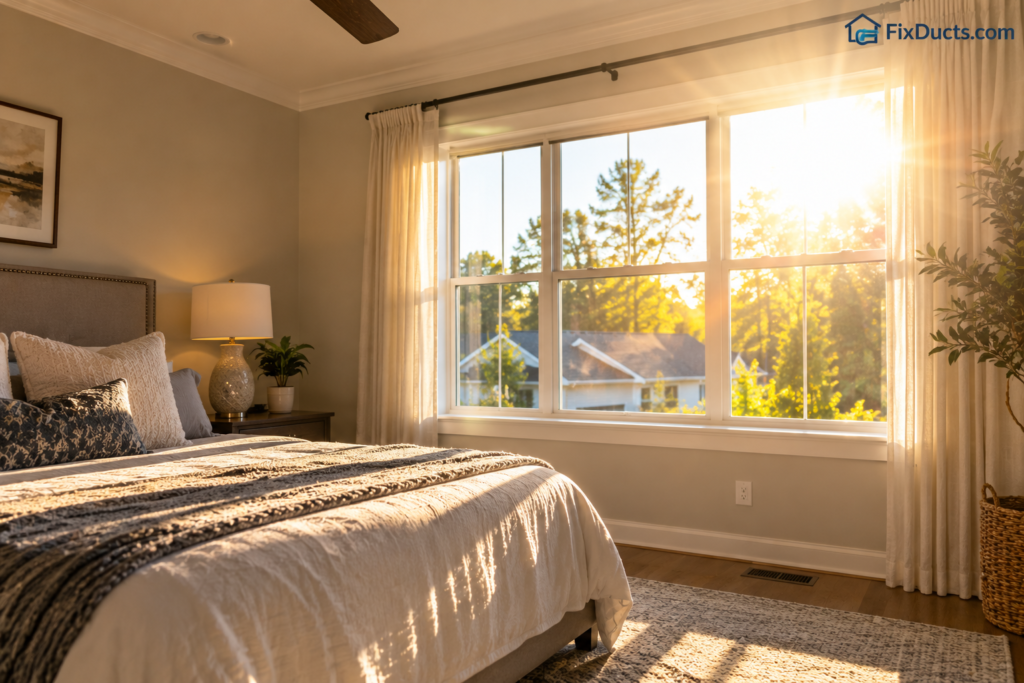
Direct sunlight can significantly affect indoor temperatures, particularly in rooms with large windows.
A room exposed to strong afternoon sun may become warmer than a shaded room even when both receive similar amounts of conditioned air.
Other factors, such as dark surfaces, roof exposure, and window design, may also influence how quickly a room gains heat.
To reduce unwanted heat gain:
- Close blinds or curtains during intense sunlight.
- Consider suitable window coverings.
- Check for drafts around window frames.
- Use shading where practical.
- Maintain appropriate insulation in exposed walls and ceilings.
These measures can reduce the amount of heat entering the room without requiring major HVAC repairs.
If the temperature difference remains significant, the room may also have an airflow or insulation problem.
8. Thermostat Location or HVAC Zoning Issues
A thermostat measures temperature at its own location. If it is installed in a hallway, near a sunny window, or close to a heat-producing appliance, its reading may not accurately reflect conditions in every room.
As a result, the HVAC system may stop heating or cooling when the thermostat’s area reaches the set temperature, even though another room remains uncomfortable.
Homes with zoning systems may also experience problems if dampers, sensors, or controls are not working as intended.
What you can do: Check the thermostat’s location and settings. Avoid placing heat-producing appliances near it, and keep the area around the thermostat unobstructed.
If your home has multiple zones, note which areas are affected and whether the issue occurs during heating, cooling, or both.
A qualified technician can assess thermostat placement, zoning controls, and system balancing when necessary.
Why Is One Room Hotter in Summer?
A room that becomes unusually warm during summer may be gaining heat faster than the HVAC system can remove it.
Common causes include:
- Strong afternoon sunlight through windows.
- Poor attic or wall insulation.
- Air leaks around windows and doors.
- Restricted airflow from supply vents.
- Leaking or poorly balanced ductwork.
- HVAC equipment that is not operating correctly.
Start by closing blinds during strong sunlight, clearing the vents, and checking the filter.
If the room continues to overheat, consider a professional assessment of duct leakage, insulation, and airflow distribution.
Do not assume that installing a larger air conditioner is the correct solution. Equipment sizing should be based on the home’s cooling requirements and a proper evaluation of the system.
Why Is One Room Colder in Winter?
A room that remains cold in winter may be losing heat faster than other parts of the house or receiving insufficient heated air.
Potential causes include:
- Drafty windows and exterior doors.
- Missing or inadequate insulation.
- A blocked supply register.
- Leaking or disconnected heating ducts.
- Poor airflow balancing.
- A heating-system problem.
Check for visible drafts and make sure the room’s supply register is not blocked.
If the room is above a garage or directly beneath an attic, insulation may deserve particular attention.
Persistent cold spots should be assessed before attempting major changes to the heating system.
How to Fix Uneven Temperatures in Your Home
The right solution depends on the underlying cause. Use these steps to begin troubleshooting safely.
Step 1: Compare the Affected Rooms
Determine whether the problem affects one room, several rooms, or an entire floor.
Notice whether the temperature difference occurs only during sunny afternoons, during cold weather, or whenever the HVAC system runs.
Step 2: Check the Vents
Make sure supply registers are open as intended and return-air grilles are unobstructed.
Remove furniture or curtains that may interfere with airflow.
Step 3: Inspect the HVAC Filter
Check the filter and replace it if necessary, following the manufacturer’s instructions.
A filter that is too dirty or incorrectly fitted may affect system airflow.
Step 4: Look for Drafts and Sunlight
Check windows and exterior doors for obvious air leaks. Close blinds or curtains when strong sunlight makes a room uncomfortably warm.
These simple adjustments may improve comfort without requiring a repair.
Step 5: Inspect Accessible Ductwork
If you can safely see ductwork without entering a confined space, look for obvious damage or disconnected sections.
Leave inaccessible ductwork and technical repairs to qualified professionals.
Step 6: Arrange a Professional Assessment
If the problem persists, ask an HVAC professional to evaluate airflow, duct leakage, system balancing, insulation concerns, and equipment operation.
A proper diagnosis helps determine which repair is appropriate.
Can Air Duct Repair Fix Uneven Room Temperatures?
Air duct repair can help when damaged, disconnected, or leaking ductwork is responsible for uneven airflow.
For example, repairing a disconnected duct branch may allow more conditioned air to reach the room it serves.
However, duct repair will not solve every temperature problem. Poor insulation, sunlight, window drafts, thermostat placement, and equipment faults may require different solutions.
Before authorizing repairs, ask the technician to explain the suspected cause and how the proposed work is expected to improve comfort.
A targeted repair based on a clear diagnosis is generally more useful than replacing ductwork without evidence of a problem.
Frequently Asked Questions
Why is my bedroom hotter than the rest of the house?
Possible causes include direct sunlight, poor insulation, restricted airflow, leaking ducts, or a room located above an unconditioned space. Check the vents, filter, windows, and curtains before arranging a professional inspection.
Why is one room colder even when the heat is running?
The room may be losing heat through drafts or insufficient insulation, or it may be receiving too little heated air. Blocked registers, duct leakage, and airflow-balancing problems are also possible causes.
Should I close vents in rooms I do not use?
Closing multiple vents is not generally a reliable way to redirect heat or cooling. It may affect system pressure and airflow distribution. Follow your HVAC manufacturer’s guidance and ask a professional before making significant changes.
Can a dirty air filter cause uneven temperatures?
Yes, a heavily loaded filter can restrict airflow through the system. However, if only one room is affected, other causes such as a blocked register, leaking duct, or insulation problem may be more likely.
Will duct cleaning fix uneven temperatures?
Not necessarily. Duct cleaning may help when significant debris inside the ductwork is restricting airflow, but it will not repair leaks, correct poor insulation, or fix faulty HVAC equipment.
When should I call an HVAC professional?
Arrange an inspection if the temperature difference persists after basic checks, airflow is consistently weak, ductwork appears damaged, or the system makes unusual noises or repeatedly shuts down.
Final Thoughts
When one room is hotter or colder than the rest of the house, the problem may involve airflow, ductwork, insulation, sunlight, air leaks, or HVAC controls.
Start with simple checks: clear blocked vents, inspect the filter, look for drafts, and consider whether sunlight is affecting the room. If the temperature difference continues, a qualified HVAC professional can investigate the underlying cause.
The goal is to identify the actual problem before paying for repairs. Fixing a genuine duct leak, improving insulation, or correcting airflow distribution can be more effective than changing equipment without a clear diagnosis.
References
- U.S. Department of Energy: Air Sealing Your Home
- U.S. Department of Energy: Insulation
- U.S. Environmental Protection Agency: Should You Have the Air Ducts in Your Home Cleaned?