

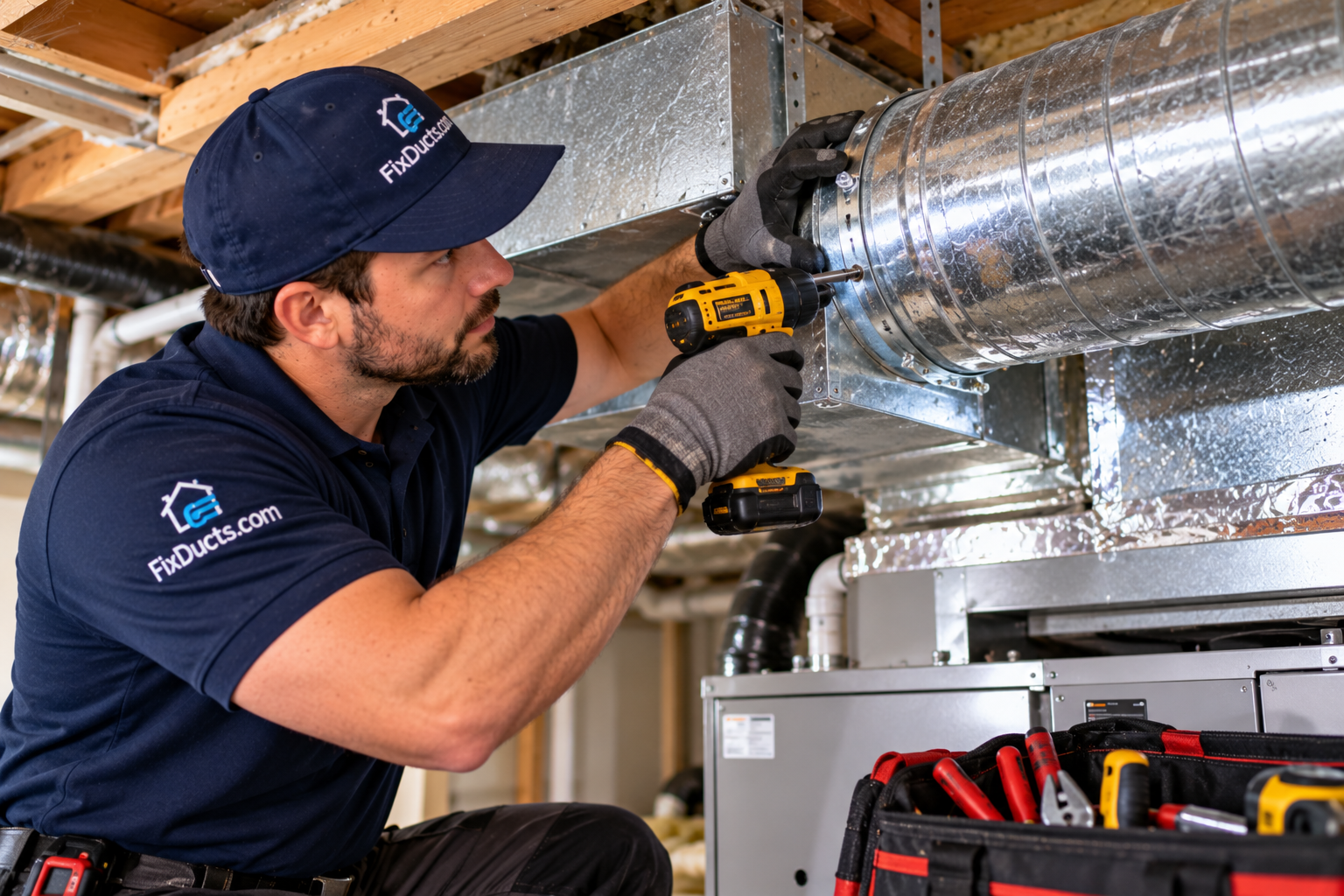
Damaged air ducts can affect how efficiently your heating and cooling system distributes air throughout your home. Leaks, disconnected duct sections, damaged insulation, and crushed flexible ducts may contribute to uneven temperatures, reduced airflow, or wasted conditioned air.
If you suspect a problem with your ductwork, one of the first questions you may have is how much air duct repair costs.
The total cost depends on the type of damage, the location of the affected ducts, accessibility, materials, and the amount of labor required. A small, accessible repair may be relatively straightforward, while damaged ductwork inside a ceiling, wall, attic, or crawl space can require more work.
This guide explains the main factors that affect air duct repair costs, common repair types, when replacement may be necessary, and how to compare contractor estimates.
How Much Does Air Duct Repair Cost?
There is no single price for every air duct repair. The cost depends on the specific problem and the scope of work needed to correct it.
For example, sealing a small leak in an accessible duct connection is different from repairing a long damaged section of ductwork or replacing ducts that are difficult to reach.
When requesting an estimate, ask the contractor to explain:
- What part of the duct system is damaged.
- Whether the problem involves a leak, disconnection, crushed duct, or damaged insulation.
- How much ductwork needs repair.
- Whether access panels or other building materials must be removed.
- Which materials and sealing products will be used.
- Whether testing or additional work is included in the quoted price.
A detailed estimate makes it easier to compare contractors and understand what you are paying for.
What Factors Affect Air Duct Repair Costs?
Several factors influence the final price of a duct repair project.
1. Type and Extent of Damage
The nature of the damage is one of the most important cost factors.
A minor problem, such as a loose connection in an accessible location, may require less work than a section of ductwork that has collapsed, torn, or deteriorated.
Common duct problems include:
- Small leaks around joints and connections.
- Disconnected duct sections.
- Torn or crushed flexible ducts.
- Damaged metal duct sections.
- Deteriorated duct insulation.
- Loose or poorly sealed connections.
- Damage caused by rodents or other pests.
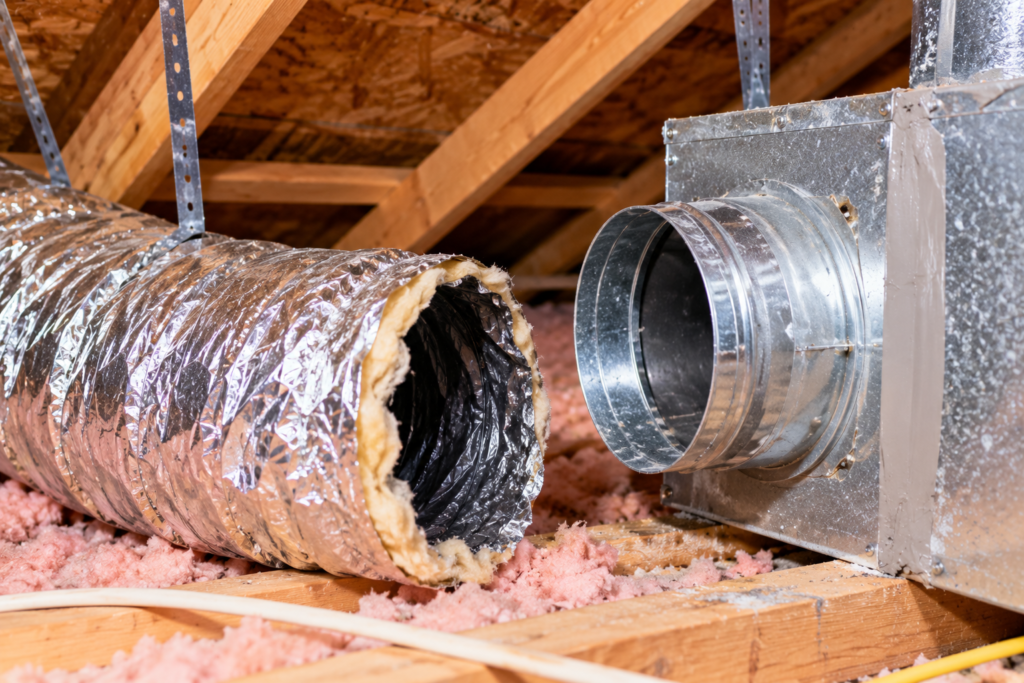
The contractor should identify the actual problem before recommending a repair. Sealing a connection will not solve a crushed duct, and cleaning will not repair a disconnected section.
2. Location and Accessibility
Where the damaged duct is located can substantially affect labor requirements.
Ductwork in an accessible basement, utility room, or open attic may be easier to inspect and repair than ducts hidden behind finished walls or ceilings.
Difficult access may require additional preparation, specialized equipment, or the removal and restoration of building materials.
For example, repairing a damaged duct inside a finished ceiling may involve more work than repairing a similar section that is fully accessible in an attic.
Ask whether the estimate includes all access-related work, including any necessary drywall repair, painting, or other restoration.
3. Type of Duct Material
Residential HVAC systems may use flexible ducts, sheet-metal ducts, or ductboard, depending on the home’s design.
Each material has different repair requirements.
Flexible ductwork: Tears, crushed sections, damaged insulation, and loose connections may require appropriate repairs or replacement of the affected section.
Sheet-metal ductwork: Leaks may occur at joints, seams, or connections. Depending on the damage, repairs may involve approved sealing methods, mechanical fastening, or replacement of a section.
Ductboard: Damaged or deteriorated sections may require specialized repair methods or replacement, depending on the material’s condition.
The repair method should be compatible with the duct material and the system’s requirements. Improvised fixes may fail to provide a durable seal or could damage the ductwork.
4. Labor and Local Rates
Labor rates vary by location, contractor, scheduling, and the complexity of the job.
A repair that takes little time in an accessible location may cost less than work requiring multiple technicians or extended access preparation.
Some contractors may also have minimum service charges for inspection, travel, or a repair visit.
When comparing estimates, check whether each quote includes labor, materials, inspection, and any applicable service fees.
The lowest initial quote is not necessarily the best value if it excludes essential work or does not explain the proposed repair.
5. Additional Repairs
Sometimes a duct problem is connected to another issue.
For example, a duct may have become disconnected because its support failed, or insulation may have deteriorated because of moisture.
If the underlying cause is not addressed, the problem may return.
Additional work could include replacing damaged supports, correcting a moisture source, addressing pest entry, or repairing the surrounding structure.
Ask the contractor to separate the essential repair from any optional improvements so you can make an informed decision.
Common Types of Air Duct Repairs
Understanding the type of repair recommended can help you evaluate an estimate.
Repairing Leaky Air Ducts
Duct leaks may develop around joints, seams, connections, or damaged sections.
Depending on the location and condition, a contractor may use compatible duct mastic, approved sealing products, mechanical fastening, or replacement materials.
Ordinary cloth-backed household duct tape is generally not a suitable long-term solution for HVAC duct sealing.
The contractor should identify the leak and use a method appropriate for the duct material and operating conditions.
If you suspect leaking ductwork, read our guide to signs of leaky air ducts to understand common warning signs.
Reconnecting Disconnected Ducts
A disconnected duct can interrupt airflow to part of the home or allow conditioned air to escape into an attic, crawl space, or other area.
The repair may involve reconnecting the sections, securing the connection, supporting the ductwork, and sealing the joint.
The amount of work depends on where the disconnection occurred and whether surrounding components are damaged.
A proper repair should restore the intended connection rather than simply cover the visible gap.
Repairing Crushed or Torn Flexible Ducts
Flexible ductwork can become compressed, torn, or disconnected if it is improperly supported or disturbed during maintenance or other work.
A minor issue may be repairable, but a severely crushed or deteriorated section may need replacement.
The contractor should also check whether the duct is routed and supported appropriately. Replacing damaged material without correcting the cause may allow the problem to happen again.
Repairing Damaged Insulation
Some ductwork is insulated to limit heat transfer and, in appropriate conditions, help prevent condensation.
Damaged or missing insulation may affect system performance and can contribute to moisture concerns when surface temperatures and humidity conditions allow condensation to form.
Repair options depend on the duct type, the location of the damage, and the condition of the surrounding materials.
If insulation is wet or mold is suspected, the moisture source should be investigated before simply covering the affected area.
Replacing a Damaged Duct Section
Sometimes repairing a section is not practical.
Replacement may be more appropriate when a duct is badly crushed, extensively torn, deteriorated, or contaminated in a way that cannot be addressed adequately through repair.
The cost depends on the length and type of duct, accessibility, connections, and any necessary restoration work.
Ask the contractor to explain why replacement is preferable to repair and whether the proposed work addresses the full extent of the damage.
Air Duct Repair vs. Air Duct Replacement: Which Is Cheaper?
Repair is often the more straightforward option when damage is limited to a small, accessible area and the surrounding ductwork remains in good condition.
Replacement may be more appropriate when damage is extensive or the material can no longer perform reliably.
Consider the following factors:
| Situation | Potentially appropriate option |
| Small leak at an accessible joint | Sealing the joint |
| Loose but undamaged duct connection | Reconnecting and securing it |
| Minor damage to flexible ductwork | Repair or localized replacement, depending on condition |
| Severely crushed flexible duct | Replacing the affected section may be appropriate |
| Extensive corrosion or deterioration | Evaluating replacement |
| Damaged insulation with an unresolved moisture problem | Addressing the moisture source and repairing or replacing affected materials |
| Multiple damaged sections across an aging system | Comparing targeted repairs with a broader replacement plan |
These are general guidelines, not a substitute for inspecting the actual ductwork.
If a contractor recommends replacing a large portion of the system, ask for an explanation of the damage, the expected benefits, and the cost of a more limited repair if one is feasible.
Can Leaky Air Ducts Increase Energy Bills?
They can, depending on the location and severity of the leaks.
When supply ducts leak into unconditioned spaces, some heated or cooled air may fail to reach the intended rooms. The HVAC system may then have difficulty maintaining comfortable temperatures.
Leaks in return ductwork can also draw air from unwanted areas, depending on the system layout and the location of the leak.
However, higher energy bills do not automatically indicate duct leakage. Other possible causes include extreme weather, thermostat settings, restricted airflow, equipment problems, and changes in household usage.
If your energy bills have increased unexpectedly, consider an HVAC assessment that examines the system as a whole rather than assuming duct repair is the only solution.
Can You Repair Air Ducts Yourself?
Some minor maintenance tasks are suitable for homeowners, but the appropriate approach depends on the location and type of damage.
You may be able to inspect visible duct connections, keep vents unobstructed, or identify obvious tears in accessible areas.
However, repairs involving inaccessible ducts, electrical equipment, combustion appliances, suspected mold, or significant structural work should be evaluated by qualified professionals.
DIY repairs can create problems if the wrong materials are used or if a connection is not properly secured and sealed.
Before attempting any work:
- Turn off the HVAC system when appropriate for the task.
- Avoid entering unsafe attics or crawl spaces.
- Do not disturb suspected mold or contaminated insulation.
- Use only materials suitable for the duct type and application.
- Consult a qualified professional if you cannot identify the cause or extent of the damage.
Do not attempt work that could interfere with combustion air, flue systems, electrical components, or other safety-critical equipment.
How to Get an Accurate Air Duct Repair Estimate
A useful estimate should explain the problem, the repair method, and the total scope of work.
Follow these steps before hiring a contractor.
1. Describe the Symptoms
Tell the contractor what you have noticed, such as weak airflow, unusual temperature differences, visible duct damage, or a sudden change in system performance.
Symptoms can help guide the inspection, but they do not establish the cause by themselves.
2. Request an Inspection
Ask the contractor to inspect the affected ductwork and identify the source of the problem.
If the damage is hidden, find out what access will be required and whether inspection fees are separate from repair costs.
3. Request an Itemized Quote
The quote should clearly identify the work to be performed, the materials involved, and any additional charges.
If access work or building restoration is required, ask whether those items are included.
4. Compare More Than One Estimate
For substantial work, obtaining more than one estimate can help you understand whether the proposed repair and price are reasonable.
Compare the scope, materials, warranties, and explanations rather than comparing only the final totals.
5. Ask About the Repair Warranty
Ask whether the contractor provides a workmanship warranty and what it covers.
Check any exclusions and clarify how the company handles a problem if the repaired section develops a leak again.
6. Avoid Unnecessary Add-On Services
A contractor may recommend duct cleaning, additional sealing, insulation improvements, or equipment maintenance during the visit.
Some additional work may be justified, but each recommendation should be supported by an identified problem. Ask for the reason, the expected benefit, and a separate price before authorizing extra work.
How to Maintain Your Ductwork After a Repair
Once the repair is complete, basic maintenance can help you identify future problems.
- Check and replace HVAC filters according to the manufacturer’s recommendations.
- Keep supply registers and return grilles unobstructed.
- Avoid storing items against accessible ductwork.
- Look for obvious damage when inspecting accessible areas.
- Address water leaks and moisture problems promptly.
- Schedule HVAC maintenance according to the equipment manufacturer’s instructions.
- Ask a professional to investigate persistent airflow problems or unusual system behavior.
Maintenance cannot prevent every duct problem, but it can help you recognize changes before they become more extensive.
Frequently Asked Questions
How much does it cost to repair air ducts?
The cost varies according to the damage, duct material, accessibility, labor, and amount of work required. A contractor’s inspection and itemized estimate are the best ways to determine the likely cost for your home.
Is it cheaper to repair or replace air ducts?
Repair may be more economical when the damage is limited and the surrounding material is in good condition. Replacement may be more appropriate when the duct is severely damaged or deteriorated. The decision should be based on the condition of the actual system.
Does homeowners insurance cover air duct repair?
Coverage depends on the policy, the cause of the damage, and any applicable exclusions. Some sudden accidental events may be treated differently from gradual deterioration or lack of maintenance. Review your policy and contact your insurer before assuming the repair will be covered.
Can I use duct tape to repair my HVAC ducts?
Ordinary cloth-backed duct tape is generally not a reliable long-term sealing method for HVAC ductwork. Use a product approved for the specific duct material and application, or have a qualified professional perform the repair.
Can damaged air ducts cause uneven temperatures?
Yes. Leaks, disconnected sections, crushed ducts, and other airflow problems can contribute to uneven temperatures. However, thermostat issues, equipment faults, insulation, and duct design can also cause temperature differences.
How do I know if an HVAC contractor’s quote is reasonable?
Compare itemized estimates from qualified contractors. Check the repair scope, materials, labor, access requirements, warranty, and additional charges. Ask for an explanation if a quote recommends extensive work without clearly identifying the damage.
Should I clean my air ducts before repairing them?
Not automatically. If the problem is a leak, disconnection, or damaged duct section, the repair addresses a different issue from cleaning. Cleaning may be appropriate if there is a separate, justified contamination problem.
Final Thoughts
Air duct repair costs depend on the type of damage, the duct material, accessibility, labor, and whether additional work is required.
The best starting point is to identify the actual problem and obtain a clear estimate that explains the proposed repair. Minor leaks and loose connections may need a different solution from severely damaged ductwork or deteriorated insulation.
Compare estimates carefully, avoid unnecessary add-ons, and choose a repair method that addresses the underlying cause. With appropriate repairs and routine HVAC maintenance, you can help your duct system continue distributing conditioned air as intended.
References
- U.S. Department of Energy: Maintaining Your Air Conditioner.
- U.S. Environmental Protection Agency (EPA): Should You Have the Air Ducts in Your Home Cleaned?
- ENERGY STAR: Heating and Cooling.