



Does your home seem to get dusty again shortly after you clean it? Dust on furniture, floors, shelves, and air vents is a common household problem. Although regular cleaning helps, it may not solve the issue if dust continues entering your home or accumulating in frequently used rooms.
Household dust is a mixture of tiny particles from many sources. It can include fabric fibers, skin flakes, outdoor soil, pollen, pet dander, and particles brought in on shoes and clothing. The amount of dust in your home depends on your surroundings, daily activities, ventilation, cleaning habits, and HVAC system.
Understanding where dust comes from is the first step toward controlling it. In this guide, we explain eight common causes of household dust and practical ways to keep your home cleaner.
What Causes Dust in a House?
Dust does not come from a single source. It forms and accumulates as particles enter from outdoors, shed from indoor materials, or become airborne during everyday activities.
Common sources include:
- Outdoor dirt and pollen.
- Pet hair and dander.
- Carpets, rugs, bedding, and upholstery.
- Open windows and doors.
- Household activities that disturb settled particles.
- Construction materials and deteriorating surfaces.
- HVAC filters that need attention.
- Poorly sealed openings that allow outdoor particles inside.
Identifying the most likely sources in your home can help you choose the right cleaning and maintenance methods.
8 Common Causes of Dust in Your House
1. Outdoor Dirt Entering Through Doors and Windows
One of the most common sources of household dust is the outdoors. Soil, pollen, road dust, and other airborne particles can enter through open windows, exterior doors, and gaps around the building.
Foot traffic can also bring dirt inside on shoes, especially during dry, windy, or muddy weather.
To reduce outdoor dust:
- Use doormats at entrances.
- Remove shoes before walking through the house.
- Keep frequently used entryways clean.
- Inspect weatherstripping around doors and windows.
- Close windows when outdoor dust or pollen levels are high.
- Ventilate when outdoor air quality is suitable.
You do not need to keep your windows permanently closed. Fresh air can be beneficial, but the timing of ventilation matters when outdoor pollution, dust, or pollen is elevated.
2. Carpets, Rugs, and Upholstered Furniture
Soft furnishings can collect dust, hair, fibers, and other particles. Walking across carpets or sitting on upholstered furniture can disturb these materials and release some particles back into the air.
Areas that receive frequent use may accumulate more dust than rooms that are rarely occupied.
To control dust from fabrics and furnishings:
- Vacuum carpets and rugs regularly.
- Clean upholstery according to the manufacturer’s instructions.
- Wash removable cushion covers when appropriate.
- Pay attention to areas underneath furniture.
- Consider washable rugs in high-traffic areas.
- Clean curtains and fabric blinds periodically.
A vacuum cleaner with an effective filtration system can help capture fine particles instead of releasing them back into the room.
If dust is a persistent concern, focus on frequently used areas first rather than trying to deep-clean every room at once.
3. Pets and Pet Dander
Pets can contribute to household dust through shed hair, skin flakes, and particles carried in their coats. Cats and dogs may also bring soil and outdoor pollen into the home.
Pet dander can remain on furniture, bedding, carpets, and clothing even when visible hair is removed.
Practical ways to reduce pet-related dust include:
- Grooming pets regularly in an appropriate location.
- Washing pet bedding according to its care instructions.
- Vacuuming areas where pets spend the most time.
- Cleaning furniture that collects pet hair.
- Keeping pets away from clean bedding when appropriate.
- Using a suitable air purifier if airborne particles are a concern.
You do not necessarily need to remove pets from your living spaces to control dust. A consistent cleaning routine can help reduce the accumulation of hair and dander.
4. Bedding, Clothing, and Everyday Fabric Fibers
Clothing, blankets, towels, mattresses, and bedding gradually release small fibers through normal use. These particles can become part of the dust that collects on bedroom furniture and floors.
Bedrooms may also accumulate skin flakes, hair, and outdoor particles carried in on clothing.
To reduce dust from fabrics:
- Wash bedding regularly.
- Clean under beds and around bedroom furniture.
- Avoid allowing laundry to accumulate on the floor.
- Clean fabric headboards and upholstered furniture as appropriate.
- Store clean clothing in drawers or closets.
- Vacuum mattresses and fabric surfaces when recommended by their manufacturers.
You cannot eliminate all fabric fibers from your home, but regular cleaning can prevent excessive buildup.
5. A Dirty or Unsuitable HVAC Air Filter
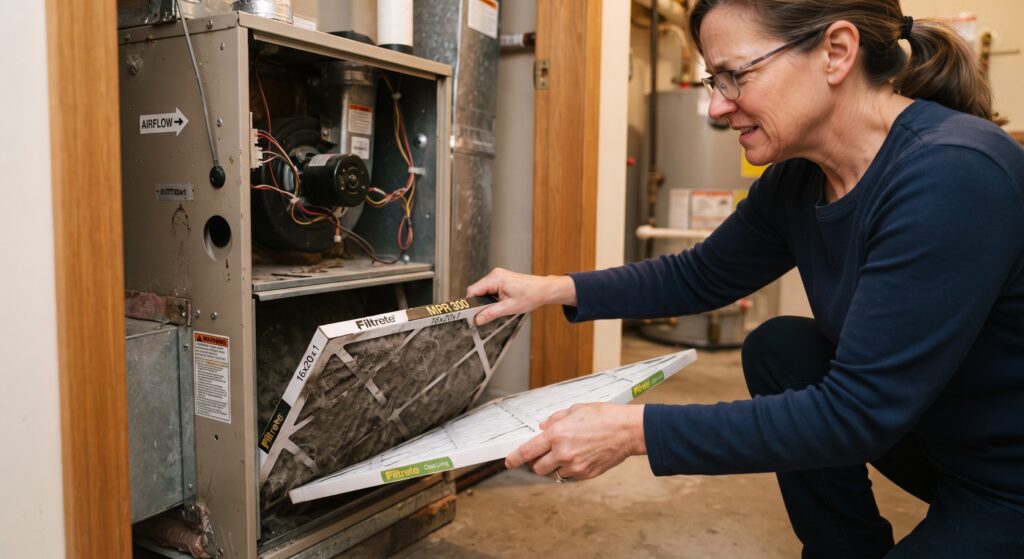
Your heating, ventilation, and air conditioning (HVAC) system circulates air throughout the home. Its filter captures particles as air passes through it.
When a filter becomes heavily loaded with dust, airflow may be restricted. A damaged, incorrectly sized, or poorly fitted filter may also allow air to bypass the filtration material.
However, a dusty home does not automatically mean that the HVAC filter is responsible.
Check for these potential issues:
- The filter is visibly dirty.
- The filter is installed in the wrong direction.
- The filter does not fit the designated slot properly.
- The filter is damaged or unsuitable for the equipment.
- The filter has not been checked according to the recommended schedule.
Replace the filter when needed, following the HVAC manufacturer’s instructions. Choose a compatible filter with the correct dimensions and filtration rating.
Avoid selecting a higher-resistance filter without confirming that your system can accommodate it.
For more information, read our guide to how often to change an HVAC air filter. Confirm that the URL matches your published article.
6. Household Activities That Disturb Dust
Dust can accumulate on surfaces and later become airborne when people move around or perform everyday tasks.
Activities that may disturb settled particles include:
- Making beds.
- Shaking blankets or rugs indoors.
- Sweeping floors with a dry broom.
- Moving furniture.
- Sorting old clothing or stored belongings.
- Cleaning shelves without capturing the dust.
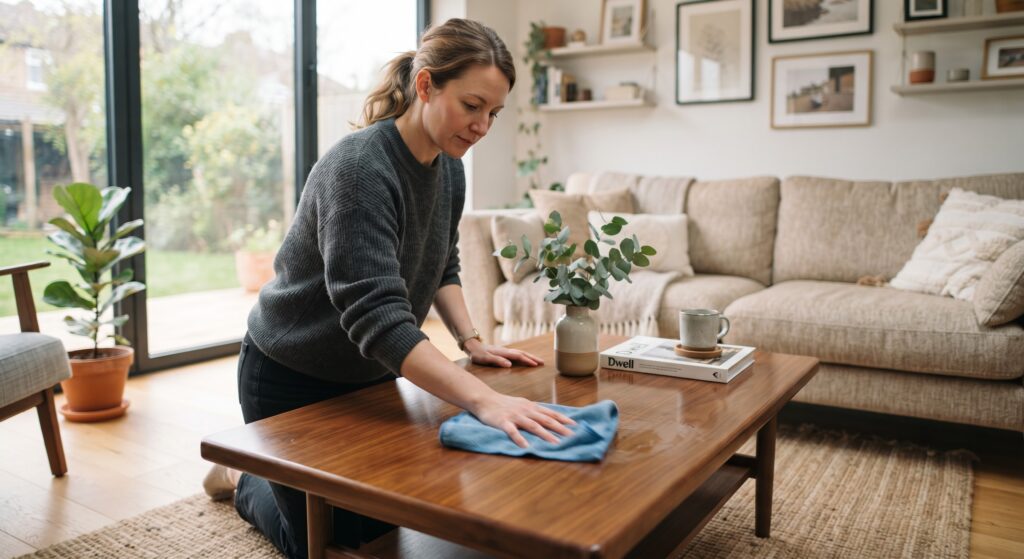
To reduce the amount of dust released during cleaning, use a damp microfiber cloth on suitable surfaces and vacuum floors with an appropriate attachment.
When cleaning, work from higher surfaces toward lower ones. This helps remove dust that falls onto furniture or floors during the process.
Avoid dry dusting when it repeatedly sends visible particles into the air.
7. Home Renovations and Deteriorating Building Materials
Construction, remodeling, sanding, drilling, and cutting can produce substantial dust. Fine particles may spread beyond the work area and settle on furniture, floors, and ventilation grilles.
Some older or damaged building materials may also release particles as they deteriorate.
To control renovation dust:
- Isolate work areas where practical.
- Protect furniture and belongings.
- Use suitable dust-control equipment.
- Clean up construction debris promptly.
- Keep HVAC return grilles protected during dusty work when appropriate.
- Follow professional guidance for hazardous materials.
If you suspect that old paint, insulation, or other building materials contain asbestos or lead, do not disturb them. Have the material assessed by qualified professionals before renovation or removal.
After major construction, inspect accessible HVAC components and filters. If substantial debris may have entered the duct system, ask a qualified professional whether further inspection or cleaning is appropriate.
8. Gaps Around Doors, Windows, and Other Openings
Small gaps around exterior doors, windows, and building penetrations can allow outdoor particles to enter.
Wind can carry dust through poorly sealed openings, while normal movement through doors can bring in dirt from outside.
To reduce these entry points:
- Inspect weatherstripping around exterior doors.
- Check for visible gaps around window frames.
- Replace damaged seals when appropriate.
- Keep entry areas clean.
- Ask a qualified contractor to assess persistent drafts or larger gaps.
Sealing unwanted gaps can help reduce outdoor dust and improve comfort. However, do not block required ventilation openings or combustion-air supplies. Fuel-burning equipment must receive appropriate ventilation according to applicable safety requirements.
Why Does My House Get Dusty So Quickly After Cleaning?
If dust returns quickly, several sources may be contributing at the same time.
For example, a home with pets, carpets, frequently opened windows, and heavy foot traffic may accumulate dust faster than a home with fewer particle sources.
Your cleaning method also matters. Dry dusting can move particles from one surface to another rather than capturing them. Sweeping without appropriate dust control may also disturb settled material.
Try this simple approach:
- Dust furniture with a slightly damp microfiber cloth.
- Vacuum carpets and upholstered furniture as appropriate.
- Clean hard floors after dusting higher surfaces.
- Check and replace the HVAC filter when necessary.
- Use doormats and reduce dirt entering from outside.
- Repeat the routine consistently in high-traffic areas.
If dust continues accumulating unusually quickly, look for a specific source rather than assuming that the ductwork must be cleaned.
Can Dirty Air Ducts Cause Dust in Your House?
Air ducts can contain dust and debris, but the presence of dust inside a duct does not automatically mean it is responsible for excessive household dust.
The EPA notes that routine air duct cleaning is not necessary for every home. Cleaning may be worth considering in specific situations, such as substantial visible mold in appropriate parts of the system, pest infestation, or excessive dust and debris being released from the vents.
If dust is your main concern, begin with the air filter, household cleaning methods, and possible outdoor entry points.
You may also want to check for visible duct damage or disconnected sections in safely accessible locations.
Professional duct inspection may be useful when there is clear evidence of a problem. However, cleaning the ducts will not resolve dust caused by pets, fabrics, open windows, or other sources throughout the home.
Learn more in our guide to signs your air ducts may need cleaning. Confirm the link matches your published URL.
Do Air Purifiers Help Reduce Household Dust?
A suitable air purifier can help capture some airborne particles, depending on the filter and the size of the room.
A properly sized portable air purifier with a HEPA filter may reduce airborne particles such as pollen, some dust particles, and pet dander.
When choosing a unit, consider:
- Whether it is suitable for the room size.
- Its clean air delivery rate (CADR).
- The availability and cost of replacement filters.
- Noise levels at the settings you plan to use.
- The manufacturer’s maintenance instructions.
An air purifier does not remove all settled dust from furniture, carpets, or floors. It also does not replace regular cleaning or source control.
For best results, combine filtration with a cleaning routine and measures that reduce the amount of dust entering the home.
How to Reduce Dust in Your House: A Simple Checklist
Use this checklist to make dust control part of your regular home maintenance.
- ☐ Place doormats at exterior entrances.
- ☐ Remove shoes indoors when practical.
- ☐ Dust surfaces with a damp microfiber cloth.
- ☐ Vacuum carpets, rugs, and upholstery regularly.
- ☐ Wash bedding and pet bedding as needed.
- ☐ Check the HVAC filter and replace it when necessary.
- ☐ Keep supply vents and return grilles unobstructed.
- ☐ Inspect door and window seals for visible gaps.
- ☐ Reduce dust during renovations.
- ☐ Consider a suitable air purifier if airborne particles are a concern.
The best routine is one you can maintain consistently. Start with the areas where dust builds up most quickly and adjust your approach based on the results.
Frequently Asked Questions
Is it normal for a house to have dust?
Yes. Household dust is normal because particles enter from outdoors and are produced by everyday activities and indoor materials. Regular cleaning helps control accumulation, but it is not possible to eliminate all dust.
Why is there so much dust in my house even when I clean?
Possible causes include outdoor dirt, pets, carpets, bedding, fabric fibers, renovation work, and cleaning methods that redistribute particles. A dirty or poorly fitted HVAC filter may contribute in some circumstances, but it is only one possibility.
Does opening windows make a house dustier?
It can. Outdoor soil, pollen, and other airborne particles may enter through open windows, especially in dusty or windy conditions. Ventilate when outdoor air quality is suitable and keep windows closed when outdoor pollution or pollen levels are high.
Will changing my HVAC filter reduce dust?
A correctly fitted and suitable filter can capture airborne particles that pass through it. However, its effect on household dust depends on the filtration rating, system design, airflow, and other dust sources in the home.
Should I have my air ducts cleaned if my house is dusty?
Not automatically. First investigate common sources such as pets, carpets, outdoor dirt, and filter condition. Consider professional duct inspection if you find substantial debris, pest contamination, suspected mold in appropriate system components, or other evidence that cleaning may be justified.
Do air purifiers eliminate dust completely?
No. Air purifiers can reduce some airborne particles, but dust still settles on surfaces and can enter from outside. Regular cleaning and reducing particle sources remain important.
What is the best way to dust furniture?
A slightly damp microfiber cloth is a practical choice for many surfaces because it helps capture dust instead of simply moving it into the air. Follow the care instructions for delicate or moisture-sensitive materials.
Final Thoughts
Dust in your house can come from many sources, including outdoor dirt, pets, fabric fibers, household activities, and construction work. Your HVAC system may also play a role, but dusty surfaces do not automatically indicate that your air ducts need cleaning.
Start by identifying where dust accumulates most often. Use effective cleaning methods, maintain the air filter, reduce dirt entering from outdoors, and consider suitable air filtration when needed.
If you discover substantial debris inside the ductwork, signs of pests, or suspected mold, investigate the specific problem before arranging a service. A targeted solution is generally more useful than paying for cleaning without knowing what is causing the dust.
References
- U.S. Environmental Protection Agency (EPA): A Guide to Air Cleaners in the Home
- EPA: Should You Have the Air Ducts in Your Home Cleaned?
- EPA: Indoor Air Quality