
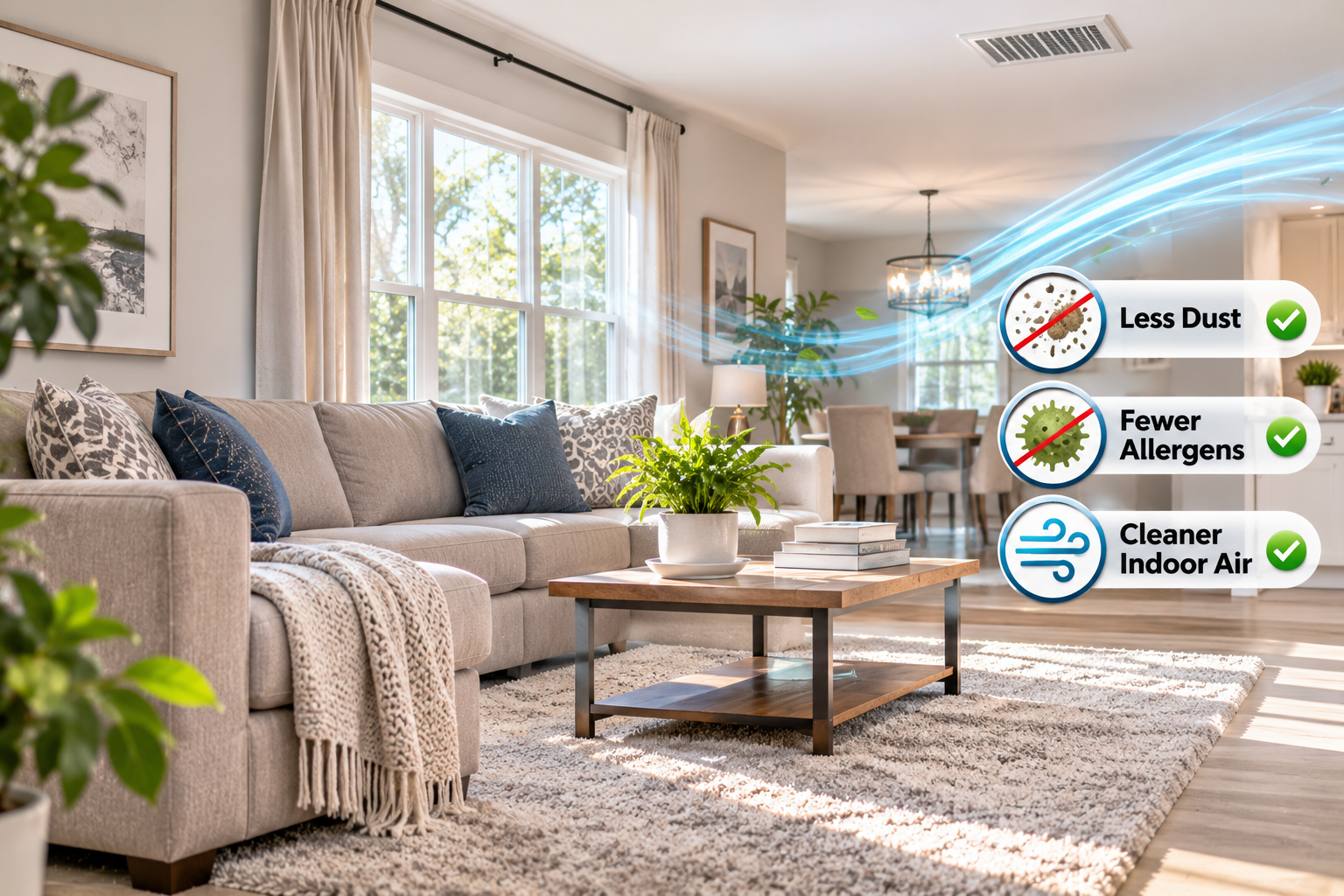
Indoor allergens can affect the comfort of your home, especially if you or your family members are sensitive to dust mites, pet dander, mold, or pollen. These substances can accumulate in carpets, bedding, upholstered furniture, air filters, and other areas where dust collects.
Although it is impossible to eliminate every allergen from your home, you can take practical steps to reduce exposure and improve your indoor environment.
The most effective approach usually combines regular cleaning, moisture control, proper ventilation, and suitable air filtration. The U.S. Environmental Protection Agency (EPA) identifies source control, ventilation, and filtration as important strategies for improving indoor air quality. You can read its recommendations in the official guide to improving indoor air quality at home.
In this guide, you will learn where common indoor allergens come from, how they enter your home, and what you can do to reduce their accumulation.
What Are Indoor Allergens?
Indoor allergens are substances found inside homes that can trigger allergic reactions in sensitive individuals.
Some are produced by living organisms, while others enter from outdoor environments and accumulate indoors.
Common indoor allergens include:
- Dust mite allergens: Found in household dust, mattresses, pillows, carpets, and upholstered furniture.
- Pet dander: Tiny particles from the skin, saliva, and other materials associated with cats, dogs, and other animals.
- Mold spores: Released by mold growing in damp areas or on water-damaged materials.
- Pollen: Outdoor particles that enter through windows, doors, clothing, and pets.
- Cockroach allergens: Particles from cockroach droppings, saliva, and body parts.
- Rodent allergens: Proteins found in rodent urine, droppings, and other materials.
These allergens may settle on surfaces or become airborne when people walk, clean, vacuum, or disturb household dust.
The EPA explains the different types and sources of biological pollutants in indoor environments.
1. Reduce Dust Mites in Your Bedroom
Dust mites are microscopic organisms that commonly live in bedding, mattresses, pillows, carpets, and upholstered furniture.
They feed on organic material found in household dust and tend to thrive in warm, humid environments.
Because people spend many hours in their bedrooms, reducing dust mite allergens in this area can be an important part of an indoor allergen-control routine.
Wash Bedding Regularly
Wash sheets, pillowcases, and blankets regularly according to their care labels.
Using hot water when the fabric allows can help reduce dust mites and remove accumulated allergens.
Pay particular attention to items that come into direct contact with your skin, such as pillowcases and sheets.
Use Allergen-Resistant Covers
Consider using allergen-resistant covers for mattresses and pillows.
These covers create a barrier between people and allergens that may be present inside bedding materials.
Choose products designed specifically for allergen protection and follow the manufacturer’s cleaning instructions.
Reduce Dust-Collecting Items
Bedrooms with many decorative fabrics, stuffed toys, heavy curtains, and upholstered furniture may provide more places for dust to accumulate.
You do not need to remove everything from the room, but reducing unnecessary dust-collecting items can make regular cleaning easier.
For additional information about indoor biological contaminants, see the EPA’s guide to biological pollutants.
2. Control Pet Dander
Pets can contribute to indoor allergens through skin flakes, saliva, and other particles.
Pet allergens may settle on furniture, carpets, bedding, clothing, and other household surfaces. They can also become airborne when people move around or clean.
Even homes without pets may contain animal allergens brought in on clothing or through other sources.
Keep Pets Away From Bedrooms
If someone in your household is sensitive to pet allergens, consider keeping pets out of the bedroom.
This can help reduce the amount of pet-related material accumulating around bedding and sleeping areas.
Clean Pet Bedding Regularly
Wash pet bedding according to the manufacturer’s instructions.
Vacuum areas where pets spend time and clean furniture or surfaces that collect hair and dust.
Groom Pets Carefully
Regular grooming may help manage loose hair and skin particles.
If possible, groom pets outdoors or in an area that can be cleaned easily. Avoid vigorous grooming inside bedrooms or other areas where people spend extended periods.
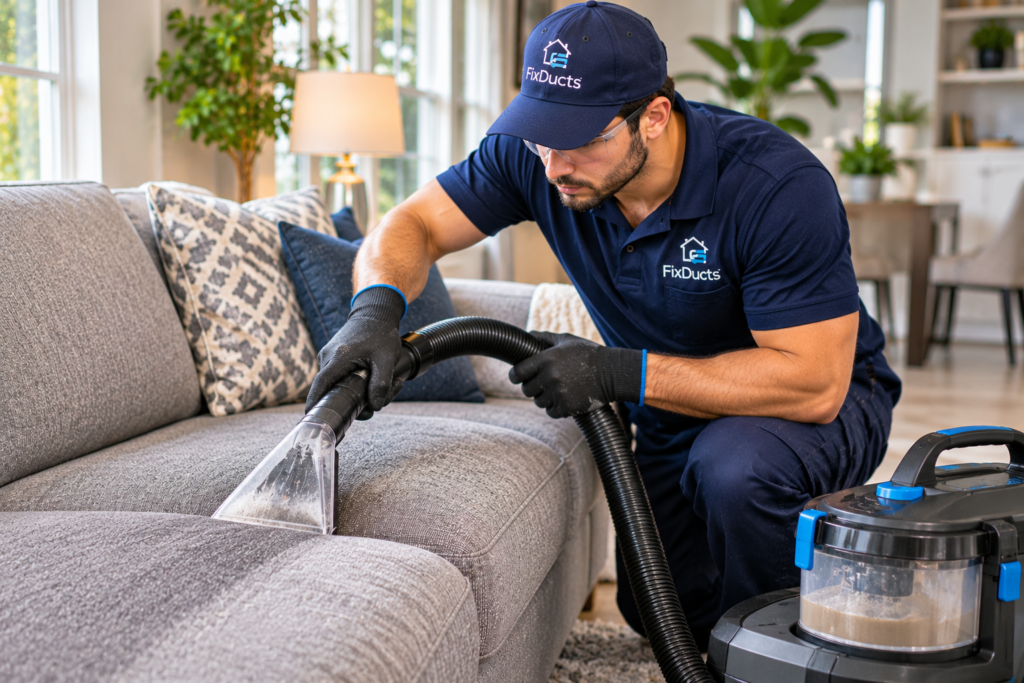
Clean Upholstered Furniture
Pet allergens can accumulate on sofas, chairs, rugs, and other fabrics.
Use a vacuum suitable for upholstery and clean these surfaces regularly according to their care instructions.
Remember that removing visible pet hair does not necessarily remove all allergens.
3. Prevent Mold and Moisture Problems
Mold is an important indoor allergen source because it can grow on materials that remain damp.
Common problem areas include bathrooms, basements, kitchens, window frames, ceilings, and locations affected by plumbing or roof leaks.
Controlling moisture is more effective than simply trying to remove mold after it has developed.
Repair Water Leaks Promptly
Inspect areas around sinks, toilets, pipes, windows, roofs, and HVAC equipment.
Look for water stains, peeling paint, damp insulation, or persistent musty odors.
Repair leaks and dry wet materials as soon as possible. The EPA recommends drying wet materials within 24–48 hours when possible to help prevent mold growth.
Use Bathroom Exhaust Fans
Showers and baths release moisture into the air.
Use an exhaust fan that vents outdoors during bathing and afterward. Make sure it is functioning properly and is not simply exhausting humid air into an attic or enclosed space.
Control Indoor Humidity
For most homes, maintaining relative humidity around 30%–50% is a useful target.
A digital hygrometer can help you monitor moisture levels.
If humidity remains high, consider using a dehumidifier and investigating possible sources of moisture.
Clean and Address Mold Correctly
Small areas of mold on appropriate hard surfaces may be cleaned using suitable methods and protective precautions.
However, extensive mold growth, recurring moisture, or contamination involving HVAC systems may require professional assessment.
Do not paint over mold or cover damp materials without correcting the moisture source.
For practical instructions, consult the EPA’s A Brief Guide to Mold, Moisture, and Your Home.
4. Improve HVAC Filtration
Your heating, ventilation, and air conditioning (HVAC) system circulates air throughout your home.
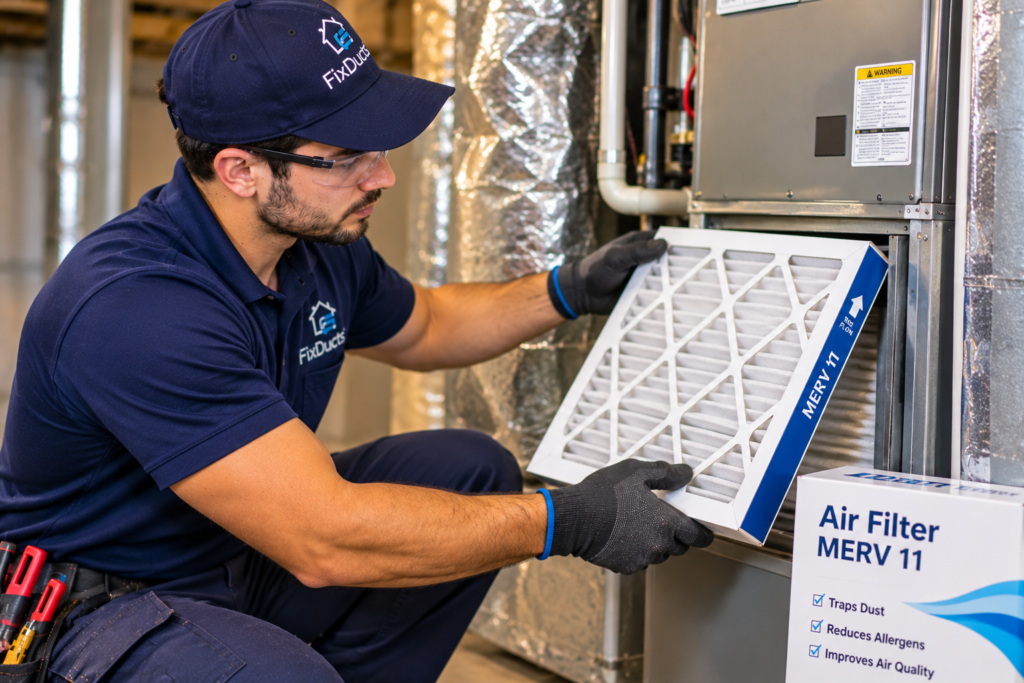
The air filter helps capture airborne particles before they pass through the system. Choosing an appropriate filter and replacing it when needed can support better filtration.
However, not every filter is suitable for every HVAC system.
Choose the Correct Filter
Check your equipment manufacturer’s recommendations before selecting a replacement filter.
Look for the filter size and efficiency rating specified for your system.
A higher-efficiency filter may capture smaller particles, but it must be compatible with the equipment’s airflow requirements.
Installing an unsuitable filter can restrict airflow and affect system performance.
Replace Filters Regularly
Check the filter according to the manufacturer’s recommended schedule.
Replacement frequency depends on the filter type, system usage, pets, dust levels, and household conditions.
If the filter appears heavily loaded with dust, inspect it and replace it when necessary.
Consider the MERV Rating
MERV stands for Minimum Efficiency Reporting Value. It describes how effectively an HVAC filter captures particles of different sizes under standardized testing conditions.
A higher MERV rating generally indicates greater particle-capture efficiency, but the highest available rating is not automatically the best choice for every home.
Check the HVAC manufacturer’s guidance or ask a qualified technician before upgrading to a more restrictive filter.
For more information, read the EPA’s Guide to Air Cleaners in the Home.
5. Use a Portable Air Purifier When Appropriate
A portable air purifier may help reduce certain airborne particles in a room.
Many models use HEPA filtration, which is designed to capture small airborne particles when the unit is properly selected and operated.
However, air purifiers do not remove allergens that have already settled on mattresses, carpets, furniture, or other surfaces unless those particles become airborne and pass through the filter.
Choose a Suitable Unit
Before purchasing an air purifier, consider:
- The size of the room.
- The unit’s clean air delivery rate (CADR).
- The type of filter used.
- Replacement filter availability and cost.
- Noise levels.
- The manufacturer’s maintenance recommendations.
Choose a model appropriately sized for the room where it will operate.
Place It Correctly
Position the air purifier where air can circulate freely around the intake and outlet.
Avoid blocking the unit with furniture or placing it directly against curtains or walls unless the manufacturer allows it.
Keep the purifier running according to the manufacturer’s instructions and replace filters when required.
Understand Its Limitations
An air purifier is a supplementary tool, not a complete solution.
It cannot repair water leaks, eliminate mold growth, remove dust mites from bedding, or replace regular household cleaning.
The EPA explains the potential benefits and limitations of portable air cleaners and HVAC filters.
6. Clean Floors and Furniture Regularly
Household dust can contain pollen, pet dander, dust mite allergens, mold particles, and other material.
Regular cleaning helps prevent these substances from accumulating on surfaces.
Vacuum Carpets and Rugs
Vacuum carpets and rugs regularly, especially in bedrooms, living rooms, and areas where pets spend time.
A vacuum cleaner with a well-sealed system and an appropriate high-efficiency filter can help capture fine particles.
Follow the manufacturer’s instructions for maintaining and replacing vacuum filters.
Use a Damp Cloth for Dusting
Dry dusting can move settled particles into the air.
A slightly damp microfiber cloth can help collect dust from shelves, tables, furniture, and other hard surfaces.
Wash cleaning cloths regularly to prevent them from spreading accumulated dirt.
Clean Upholstered Furniture
Sofas, cushions, chairs, and fabric-covered furniture can collect dust and allergens.
Vacuum these surfaces using suitable upholstery attachments and follow the manufacturer’s cleaning instructions.
Avoid Unnecessary Dust Accumulation
Pay attention to areas that are often overlooked, such as:
- Ceiling fan blades.
- Window frames and sills.
- Behind furniture.
- Shelves and decorative objects.
- Curtains and blinds.
- Areas around HVAC supply and return vents.
A consistent cleaning routine is usually more practical than waiting until dust becomes visibly noticeable.
The EPA provides additional recommendations in its guide to indoor particulate matter and common sources of household dust.
7. Reduce Outdoor Pollen Entering Your Home
Pollen from trees, grasses, and weeds can enter homes through open windows, doors, clothing, shoes, and pets.
During periods of high pollen activity, reducing outdoor particles entering your home may help limit indoor accumulation.
Keep Windows Closed on High-Pollen Days
Check local pollen conditions and consider keeping windows closed when pollen levels are high.
Use your air conditioning system when appropriate instead of relying on open windows for ventilation.
Remember that ventilation should be balanced with outdoor air quality. Opening windows is not always beneficial when pollen, smoke, or outdoor pollution levels are elevated.
Remove Shoes at the Door
Shoes can carry pollen, soil, and outdoor debris into your home.
Using a doormat and removing shoes near the entrance can help reduce the amount of material brought indoors.
Change Clothes After Outdoor Activities
If you have spent time outside during high-pollen periods, changing clothes and washing exposed skin may help remove particles that have settled on you.
Clean Entry Areas
Vacuum or clean entry mats and nearby floors regularly.
Pay attention to areas where family members and pets enter the home.
8. Control Cockroach and Rodent Allergens
Cockroaches and rodents can contribute to indoor allergens through droppings, saliva, urine, and body parts.
These materials may accumulate in kitchens, basements, storage areas, and other locations where pests are present.
Store Food Properly
Keep food in sealed containers and avoid leaving uncovered food on counters overnight.
Clean crumbs and food spills promptly, especially around kitchen appliances and cabinets.
Manage Waste
Use bins with secure lids and remove household waste regularly.
Keep the areas around garbage containers clean and dry.
Seal Entry Points
Inspect gaps around pipes, doors, windows, and other openings where pests may enter.
Use appropriate sealing materials for small openings and arrange professional repairs when necessary.
Address Infestations
If you notice droppings, nesting materials, or repeated pest activity, identify the source and consider professional pest-control assistance.
Do not rely only on sprays or traps while leaving food sources, moisture, and entry points unaddressed.
9. Improve Ventilation Without Bringing in More Allergens
Ventilation can help remove indoor pollutants and bring outdoor air into the home.
However, outdoor air can also introduce pollen, smoke, and other particles.
The best ventilation approach depends on outdoor conditions and the location of your home.
Use Kitchen and Bathroom Exhaust Fans
Exhaust fans that vent outdoors can remove moisture and some indoor pollutants.
Use them during activities that generate moisture or odors, such as cooking and showering.
Open Windows When Outdoor Conditions Are Suitable
When outdoor air quality and pollen levels are acceptable, opening windows can help increase fresh-air circulation.
Avoid unnecessary ventilation during periods of high pollen, smoke, or outdoor pollution.
Maintain Mechanical Ventilation Systems
If your home has a mechanical ventilation system, inspect and maintain it according to the manufacturer’s instructions.
Keep filters clean and make sure outdoor air intakes are not blocked by leaves, dust, or other debris.
The EPA explains how source control and appropriate ventilation can work together in its guide to biological contaminants and indoor air quality.
10. Maintain Your HVAC System
HVAC maintenance is another part of managing indoor particles and allergens.
A poorly maintained system may have dirty filters, obstructed airflow, or moisture-related problems that need attention.
Homeowners should follow the equipment manufacturer’s maintenance instructions and arrange professional inspections when necessary.
Basic HVAC Maintenance Tasks
- Check and replace air filters as recommended.
- Keep supply vents and return grilles unobstructed.
- Remove loose debris around outdoor equipment.
- Check for visible water leaks around indoor equipment.
- Keep the area around HVAC equipment accessible.
- Arrange professional inspections when unusual problems occur.
If you notice persistent musty odors, visible contamination, or water damage around ductwork, investigate the cause rather than assuming routine duct cleaning will solve the problem.
Air duct cleaning is not automatically necessary for every home. The EPA recommends considering it when specific conditions, such as substantial visible mold growth, vermin infestation, or excessive debris, are present.
For details, read Should You Have the Air Ducts in Your Home Cleaned?.
A Simple Weekly Indoor Allergen-Reduction Routine
A consistent routine can make allergen control easier without requiring major changes to your home.
Here is a practical example:
| Task | Suggested frequency |
| Wash bedding | Weekly |
| Vacuum carpets and rugs | Weekly or more often as needed |
| Dust hard surfaces with a damp cloth | Weekly |
| Clean pet bedding | According to use and care instructions |
| Check HVAC air filter | Regularly, following manufacturer guidance |
| Clean bathroom surfaces | Weekly or as needed |
| Check for moisture and leaks | Regularly |
| Inspect entry mats and floors | Weekly |
Adjust this routine according to your household, pets, flooring, and local conditions.
The goal is to reduce allergen accumulation gradually rather than relying on occasional intensive cleaning.
Final Thoughts
Reducing indoor allergens requires more than simply cleaning the air ducts or purchasing an air purifier. Dust mites, pet dander, mold, pollen, and pest-related particles can accumulate in different areas of your home and require different control methods.
Start by washing bedding regularly, cleaning carpets and furniture, controlling moisture, and maintaining appropriate HVAC filtration. Pay attention to outdoor pollen and prevent unnecessary dust and debris from entering your home.
For persistent moisture, visible mold, or pest infestations, address the underlying source rather than relying on air filtration alone.
Combining source control, regular cleaning, appropriate ventilation, and suitable filtration can help reduce indoor allergen exposure and support a more comfortable home environment.
Sources
- U.S. EPA: What Are Biological Pollutants and How Do They Affect Indoor Air Quality?
- U.S. EPA: What Can I Do to Improve Indoor Air Quality in My Home?
- U.S. EPA: Guide to Air Cleaners in the Home
- U.S. EPA: Sources of Indoor Particulate Matter
- U.S. EPA: A Brief Guide to Mold, Moisture, and Your Home
- U.S. EPA: Should You Have the Air Ducts in Your Home Cleaned?