
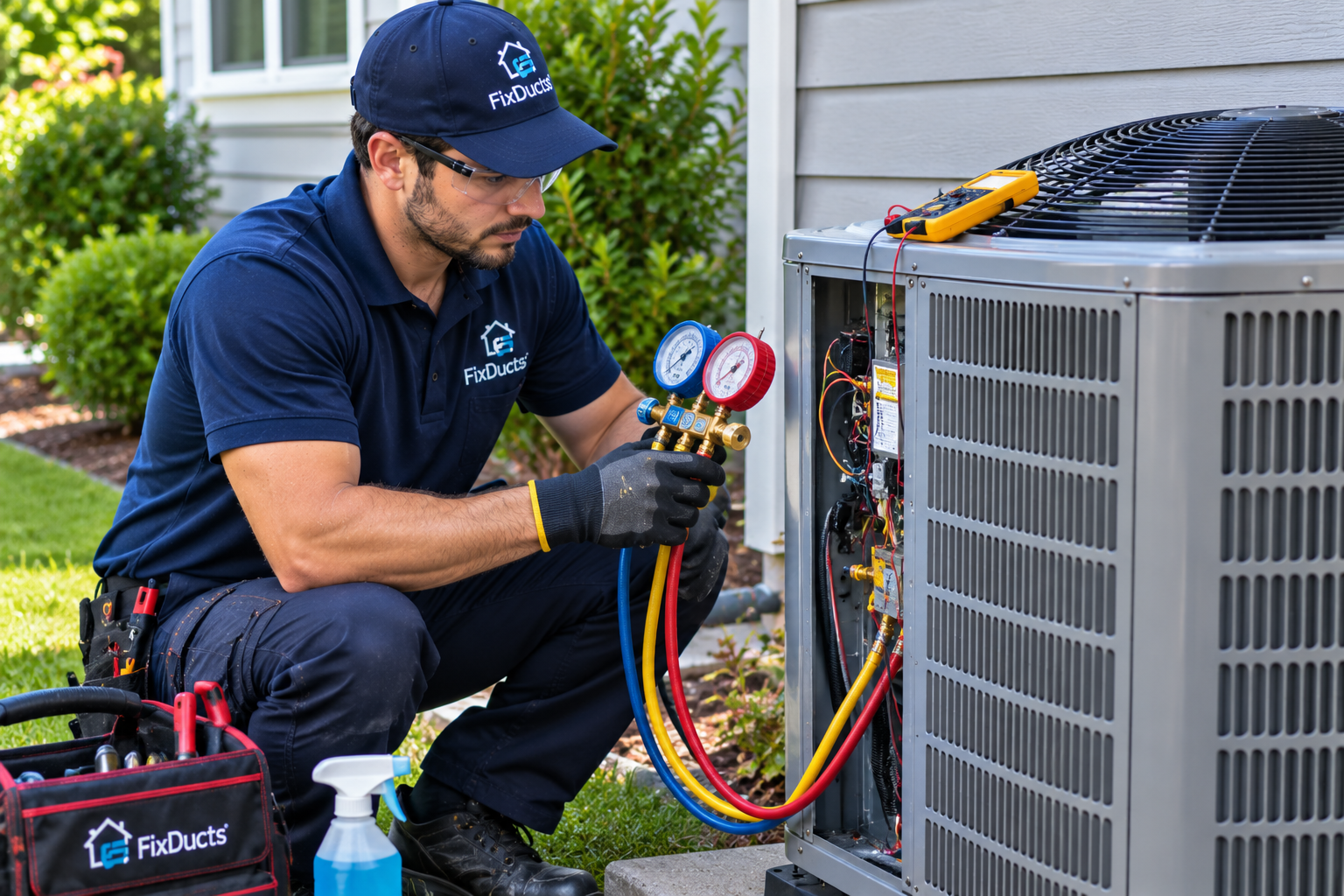
Your heating and cooling system works throughout the year to keep your home comfortable. However, regular use, dust accumulation, dirty filters, and normal component wear can affect its performance over time.
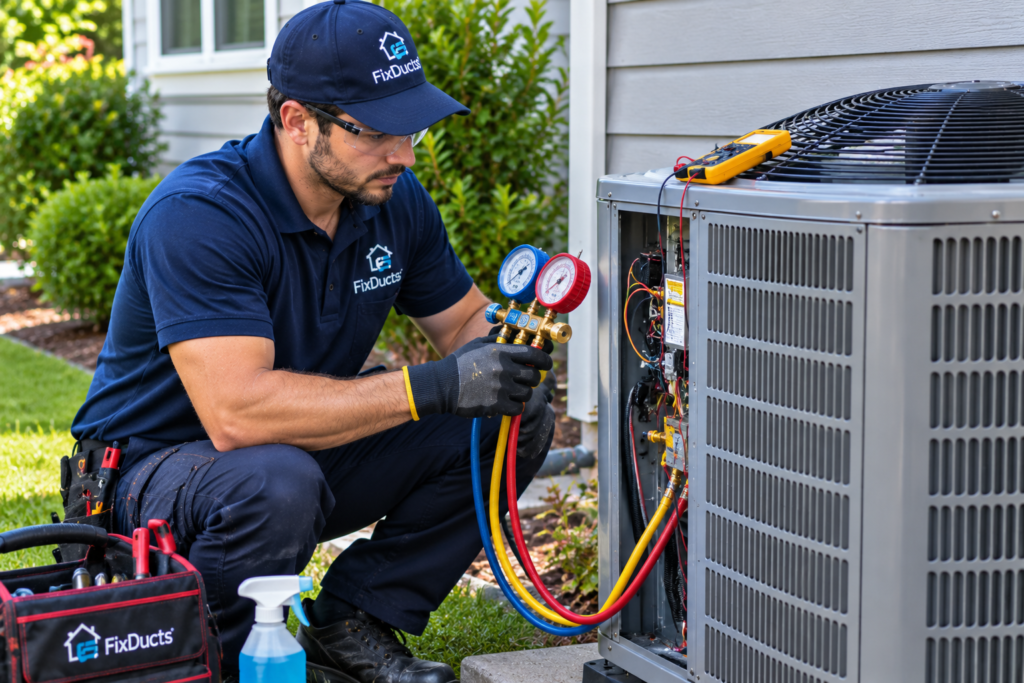
Knowing when to schedule HVAC maintenance can help homeowners identify potential problems before they become more expensive repairs. It can also help keep the system operating according to the manufacturer’s recommendations.
Many homeowners schedule professional maintenance before the cooling season begins and again before the heating season. However, the ideal schedule depends on your HVAC equipment, how frequently you use it, the local climate, and the manufacturer’s maintenance instructions.
In this guide, you will learn when to schedule HVAC maintenance, which warning signs to watch for, what a professional inspection usually includes, and how to maintain your system between appointments.
1. Schedule HVAC Maintenance Before Summer
Spring is a practical time to schedule an air conditioning inspection before temperatures begin to rise.
During summer, your air conditioner may operate for several hours each day. If the system has a dirty filter, restricted airflow, a drainage problem, or a mechanical issue, these problems may become more noticeable when cooling demand increases.
Scheduling maintenance before the hottest part of the year gives you an opportunity to identify problems before you depend heavily on the equipment.
What should be checked before summer?
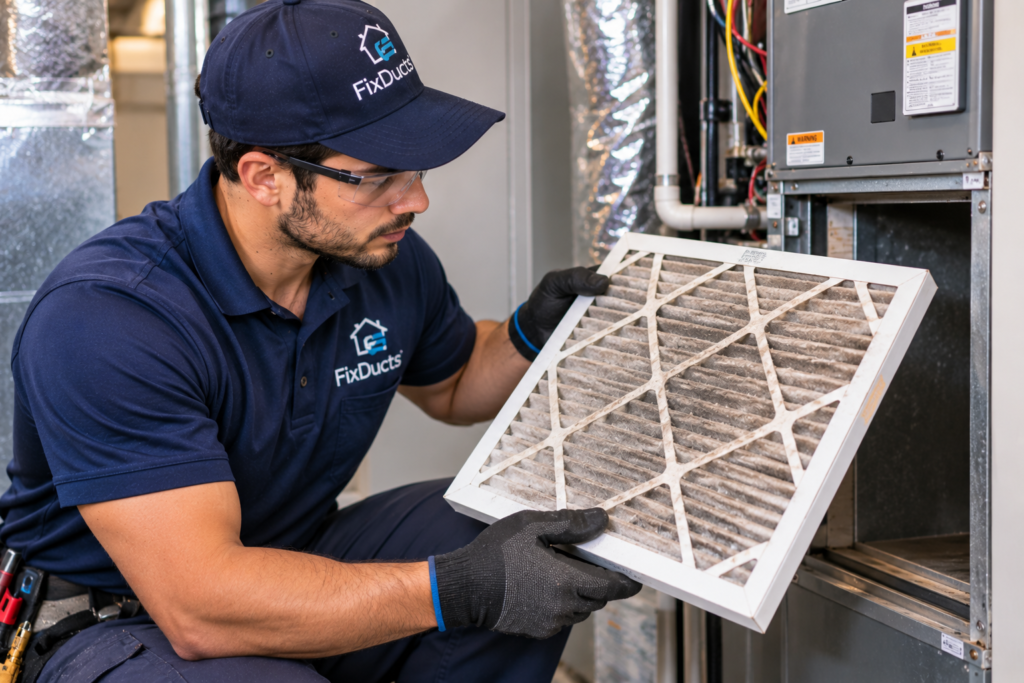
A qualified HVAC technician may inspect:
- The outdoor condenser unit.
- The indoor evaporator coil, where accessible.
- Refrigerant-related system performance.
- Electrical connections and controls.
- The condensate drain and drainage system.
- The blower and airflow.
- The air filter and filter compartment.
- Accessible ductwork and connections.
The exact inspection depends on the type of air conditioning system and the manufacturer’s service requirements.
Why spring maintenance matters
A spring inspection can help identify problems such as restricted airflow, dirty components, blocked drainage, or abnormal operating conditions.
It also gives you time to arrange repairs before the system is needed every day.
The U.S. Department of Energy provides useful recommendations in its guide to maintaining your air conditioner.
2. Schedule Heating System Maintenance Before Winter
Fall is generally a good time to have your heating system inspected before colder weather arrives.
Whether your home uses a furnace, heat pump, or another type of heating equipment, seasonal maintenance can help identify problems that may affect safe and reliable operation.
A system that has been inactive for several months may need inspection before being used regularly again.
What should be checked before winter?
Depending on your equipment, a professional inspection may include:
- Heating system controls and thermostat operation.
- Electrical connections.
- Blower operation.
- Air filters.
- Heating elements or burners, where applicable.
- Venting and combustion-related components in fuel-burning systems.
- Heat pump operation and outdoor unit condition.
- Condensate drainage, when applicable.
Fuel-burning equipment requires particular attention to combustion and venting safety. Never attempt to repair gas connections, burners, or combustion components yourself.
Why fall is a useful time
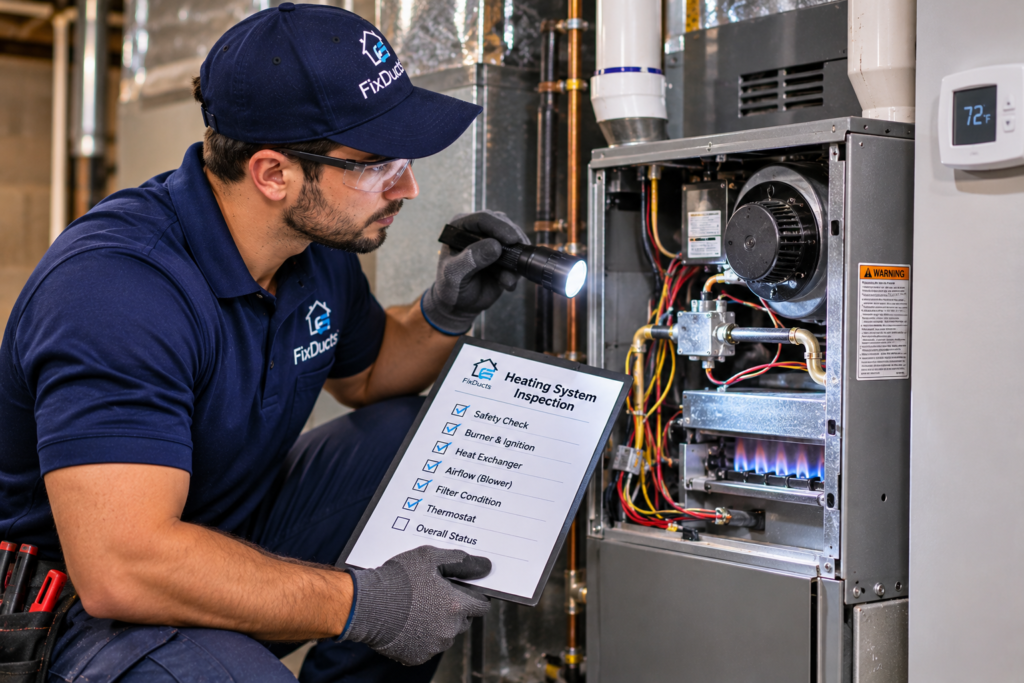
Scheduling maintenance before winter can help you discover problems before your home depends on the heating system.
It may also reduce the chance of waiting for an appointment during a period of high seasonal demand.
For additional homeowner guidance, see the Department of Energy’s recommendations for maintaining heating and cooling equipment.
3. How Often Should You Schedule HVAC Maintenance?
There is no single maintenance schedule that applies to every HVAC system.
Many homeowners arrange professional inspections approximately once or twice a year, depending on the equipment and whether it provides both heating and cooling.
A common approach is:
| Season | Recommended action |
| Spring | Inspect and prepare the cooling system before summer |
| Summer | Monitor cooling performance and replace filters as needed |
| Fall | Inspect and prepare the heating system before winter |
| Winter | Monitor heating performance and maintain clear airflow |
Some systems may require different service intervals. For example, a heat pump provides both heating and cooling, so it may benefit from more frequent attention than equipment used for only one season.
Always follow the manufacturer’s maintenance schedule and warranty requirements.
Factors that may affect your maintenance schedule
Consider arranging more frequent inspections if:
- Your HVAC system operates for long periods throughout the year.
- You have pets that shed heavily.
- Your home experiences frequent dust accumulation.
- You live in an area with high pollen or outdoor pollution.
- The system is older or has a history of recurring problems.
- You have recently completed renovation work.
- You notice unusual noises, odors, or airflow changes.
These factors do not automatically mean that your system needs additional professional service. They are reasons to monitor its condition and discuss an appropriate maintenance schedule with a qualified technician.
4. Warning Signs That Your HVAC System Needs Maintenance
You do not have to wait until spring or fall if your heating and cooling system begins showing signs of trouble.
Some problems require attention as soon as they appear, particularly when they affect system safety, cooling, heating, or electrical operation.
Weak Airflow From Vents
If air coming from your vents feels weaker than usual, the problem may involve a dirty filter, blocked return grille, obstructed duct, blower issue, or another airflow restriction.
Start by checking whether the air filter needs replacement and whether furniture or other objects are blocking the vents.
If airflow remains weak after these basic checks, arrange an HVAC inspection.
Uneven Temperatures Between Rooms
If one bedroom feels much warmer or colder than another, your system may not be distributing conditioned air evenly.
Possible causes include:
- Restricted or leaking ductwork.
- Closed or obstructed vents.
- Poor airflow balance.
- Insulation problems.
- Thermostat placement or control issues.
- Equipment performance problems.
Do not assume that the HVAC unit itself needs replacement. A technician should identify the actual cause before recommending major work.
Unusual Noises
Your HVAC system may produce normal operating sounds, but sudden or unusual noises deserve attention.
Examples include:
- Rattling from loose panels or components.
- Buzzing from electrical components.
- Grinding from moving parts.
- Whistling caused by airflow restrictions.
- Repeated clicking during startup or operation.
Turn off the equipment if you notice burning smells, smoke, electrical sparking, or other potentially dangerous conditions. Contact a qualified professional rather than attempting to investigate electrical or mechanical components yourself.
Unusual Odors
A persistent musty smell may indicate moisture or contamination somewhere in the system or surrounding building materials.
A burning or electrical odor should be treated more seriously. Stop operating the equipment if you suspect overheating or an electrical problem and arrange professional assistance.
Odors can have several sources, so avoid assuming that air duct cleaning will solve the issue without identifying the cause.
Higher Energy Bills
A sudden increase in heating or cooling costs may indicate that your system is operating differently than usual.
Possible explanations include:
- Changes in outdoor temperature.
- Increased system usage.
- Dirty or incorrectly installed filters.
- Restricted airflow.
- Duct leakage.
- Thermostat settings.
- Equipment problems.
Compare your energy use with previous periods while considering weather and household changes. If the increase is unexplained, an HVAC inspection may help identify the reason.
5. What Happens During a Professional HVAC Maintenance Visit?
Professional maintenance generally involves inspecting the equipment, checking its operation, and addressing service items recommended by the manufacturer.
The exact work varies depending on whether the appointment is for an air conditioner, furnace, heat pump, or complete heating and cooling system.
Checking the Air Filter
The technician may inspect the air filter to determine whether it is dirty, damaged, incorrectly installed, or unsuitable for the system.
A restricted filter can reduce airflow and make the equipment work harder.
Filter replacement intervals vary depending on filter type, household conditions, and system usage. Some filters need attention more frequently than others.
Inspecting Electrical Connections
Electrical components and connections may be checked for signs of wear, damage, or abnormal operation.
This work should be performed by a qualified technician. Homeowners should not remove electrical covers or attempt to repair wiring.
Checking the Condensate Drain
Air conditioners and some other HVAC systems produce condensate during operation.
The technician may inspect the drainage system to check for blockages, leaks, or other problems that could cause water to accumulate around the indoor unit.
A blocked drain can lead to water damage or system shutdowns, depending on the equipment.
Inspecting Coils and Outdoor Equipment
The technician may inspect accessible indoor and outdoor coils for dirt, obstruction, or damage.
Outdoor equipment should have sufficient clearance for airflow. Leaves, grass, and other debris around the unit may need to be removed carefully.
Coil cleaning should follow the manufacturer’s instructions and should be performed using appropriate methods.
Testing System Operation
The technician may operate the equipment to evaluate its performance.
Depending on the system, this may include checking thermostat operation, airflow, temperature differences, heating or cooling performance, and other operating conditions.
The technician should explain any problems discovered and provide recommendations before carrying out additional repairs.
For more information about routine care, visit the Department of Energy’s air conditioner maintenance guide.
6. What Homeowners Can Do Between Professional Visits
Professional maintenance is important, but there are several simple tasks homeowners can perform safely between appointments.
Replace or Clean Air Filters
Check your air filter regularly and follow the replacement or cleaning instructions provided by the manufacturer.
A filter that becomes heavily loaded with dust can restrict airflow.
Make sure the replacement filter has the correct dimensions and is suitable for your HVAC system. Pay attention to the airflow direction indicated on the filter frame.
Keep Vents and Return Grilles Clear
Do not place furniture, curtains, rugs, or storage items directly over supply vents or return grilles.
Unobstructed airflow helps the system circulate air as designed.
If a room has consistently weak airflow, avoid closing multiple vents in an attempt to force more air into other rooms. This may affect system operation.
Keep the Outdoor Unit Clear
Remove leaves, grass, and loose debris around the outdoor condenser or heat pump.
Maintain the clearance recommended by the manufacturer. Avoid bending the coil fins or spraying electrical components.
If the unit is heavily dirty or damaged, arrange professional cleaning or inspection.
Pay Attention to Water Leaks
Check the area around your indoor HVAC equipment for unexpected water accumulation.
Water may come from a blocked condensate drain, damaged piping, or another source.
Do not ignore recurring leaks. Identify the cause and arrange repairs before water damages nearby floors, walls, or ceilings.
Monitor Your Thermostat
Make sure your thermostat is operating correctly and that its settings match your comfort needs.
If the temperature displayed does not match the actual room conditions or the system repeatedly starts and stops unexpectedly, the thermostat or HVAC controls may need inspection.
7. Does HVAC Maintenance Include Air Duct Cleaning?
Not necessarily.
Routine HVAC maintenance and professional air duct cleaning are related but separate services.
HVAC maintenance focuses on the operation and condition of heating and cooling equipment. Air duct cleaning focuses on removing accumulated dust and debris from appropriate parts of the air distribution system when cleaning is justified.
A standard maintenance appointment does not automatically include cleaning the entire duct network.
Likewise, cleaning ducts does not replace checking electrical components, the blower, coils, condensate drainage, or other mechanical parts.
If you notice visible contamination, excessive debris, pest activity, or other specific problems inside your ducts, ask the technician whether a separate inspection or cleaning service is appropriate.
The EPA explains when duct cleaning may be worth considering in its guide, Should You Have the Air Ducts in Your Home Cleaned?.
8. How to Prepare for an HVAC Maintenance Appointment
A little preparation can help the technician inspect your equipment more efficiently.
Before the appointment:
- Clear access to the indoor HVAC unit.
- Remove stored items around the outdoor unit.
- Make sure the thermostat is accessible.
- Note any unusual sounds or odors.
- Write down rooms with weak airflow or inconsistent temperatures.
- Mention previous repairs or recurring problems.
- Ask what is included in the service price.
If the system has been experiencing a specific problem, explain when it started and whether it happens continuously or only under certain conditions.
This information can help the technician investigate the issue more effectively.
9. When Should You Schedule an Emergency HVAC Inspection?
Some problems should not wait for the next seasonal maintenance appointment.
Contact a qualified professional promptly if:
- Your system repeatedly shuts down unexpectedly.
- Water is leaking around the indoor unit.
- The equipment produces unusual electrical noises.
- You notice burning smells or signs of overheating.
- Your heating or cooling system stops working during extreme weather.
- You suspect a refrigerant leak.
- A fuel-burning heating system shows signs of unsafe operation.
If you smell natural gas, leave the building and contact your gas utility or emergency services from a safe location. Do not operate electrical switches or attempt to locate the leak yourself.
For suspected carbon monoxide exposure, leave the building immediately and contact emergency services. Never ignore a carbon monoxide alarm.
Safety problems should always take priority over routine maintenance.
Final Thoughts
The best time to schedule HVAC maintenance is usually before the season when your system will be used most heavily. Spring is a practical time to prepare cooling equipment, while fall is a good opportunity to inspect heating equipment.
However, unusual noises, weak airflow, water leaks, persistent odors, and inconsistent temperatures should not be ignored until the next seasonal appointment.
Between professional visits, homeowners can help maintain their systems by checking filters, keeping vents clear, removing debris around outdoor units, and monitoring for unusual changes.
Follow your equipment manufacturer’s recommendations and work with a qualified HVAC technician when inspection or repair is needed. A consistent maintenance routine can help you identify developing problems and keep your heating and cooling equipment in better operating condition.
Sources