

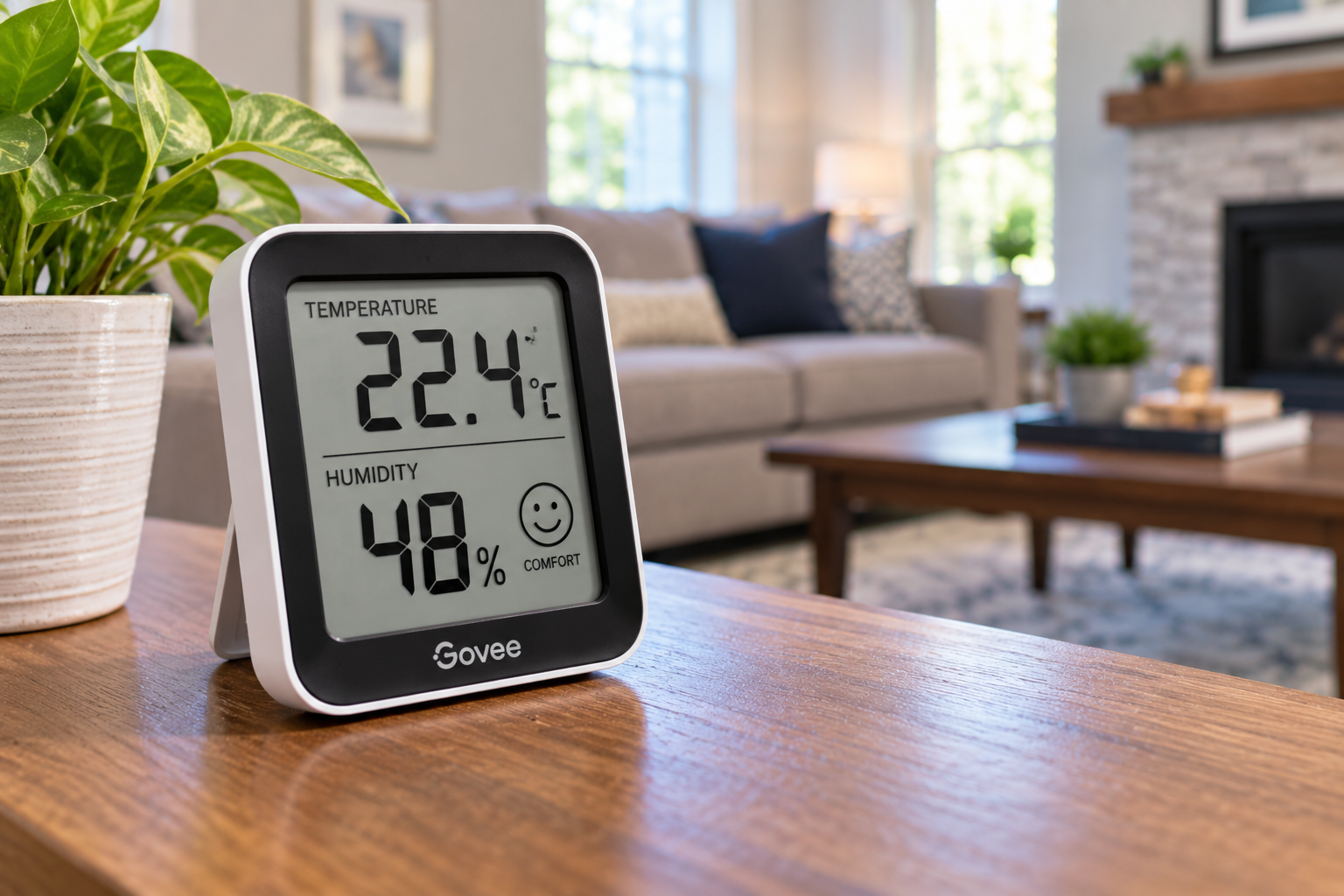
How Indoor Humidity Affects Air Quality
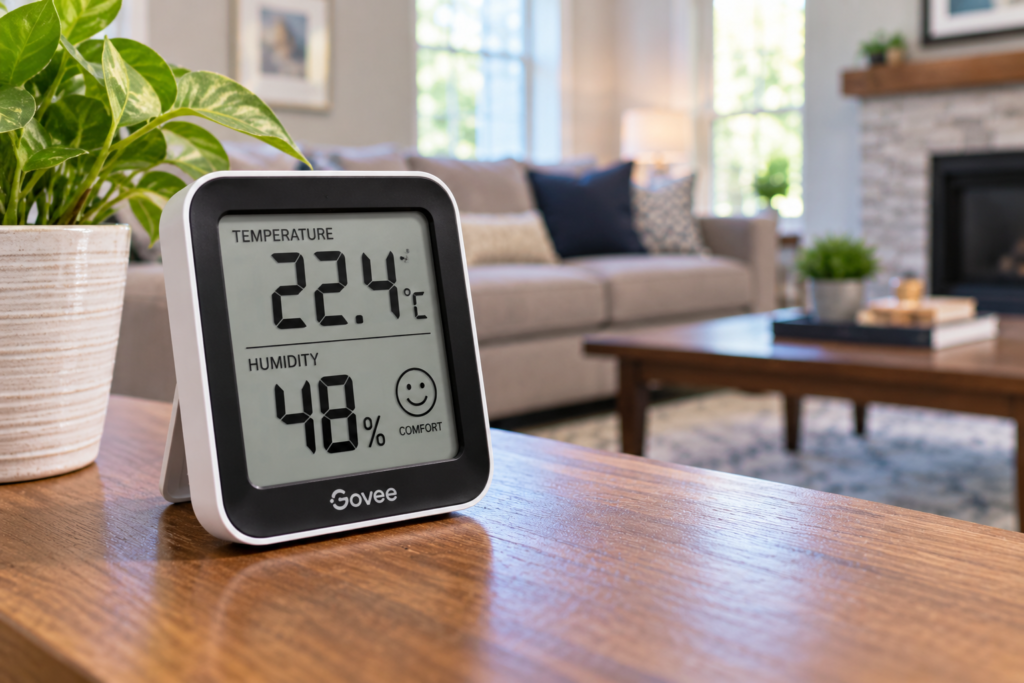
Indoor humidity plays an important role in your home’s comfort and indoor air quality. When humidity levels are too high, moisture can accumulate on windows, walls, ceilings, and other surfaces, creating conditions that support mold growth. When humidity is too low, the air may feel uncomfortable, and some people may experience dry skin, eyes, or irritated nasal passages.
Understanding how humidity affects indoor air quality can help homeowners identify moisture problems early, maintain a more comfortable home, and protect building materials from unnecessary damage.
According to the U.S. Environmental Protection Agency (EPA), homeowners should generally aim to keep indoor relative humidity between 30% and 50%, when possible, and below 60% to help reduce moisture-related problems. You can read the EPA’s recommendations in its guide to biological contaminants and indoor air quality.
What Is Indoor Humidity?
Indoor humidity refers to the amount of water vapor present in the air inside your home. One of the most useful measurements is relative humidity (RH), expressed as a percentage.
Relative humidity describes how much moisture the air contains compared with the maximum amount it can hold at its current temperature.
For example, a room with 40% relative humidity has a different moisture balance from a room with 70% relative humidity. The higher reading indicates that the air is closer to saturation, making condensation more likely when warm, moist air meets a cold surface.
Humidity changes throughout the day and from season to season. Showering, cooking, drying clothes indoors, and outdoor weather conditions can all affect indoor moisture levels.
Your heating, ventilation, and air conditioning (HVAC) system can also influence humidity. Air conditioning removes some moisture as it cools indoor air, while heating can change relative humidity by warming the air without adding moisture.
How High Humidity Affects Indoor Air Quality
Excessive indoor humidity can contribute to several indoor environmental problems. Although humidity itself is not an airborne pollutant, it can create conditions that allow certain biological contaminants to grow or thrive.
1. High Humidity Can Encourage Mold Growth
Mold needs moisture to grow. When indoor humidity remains high, dampness and condensation may develop on walls, ceilings, window frames, carpets, and other materials.
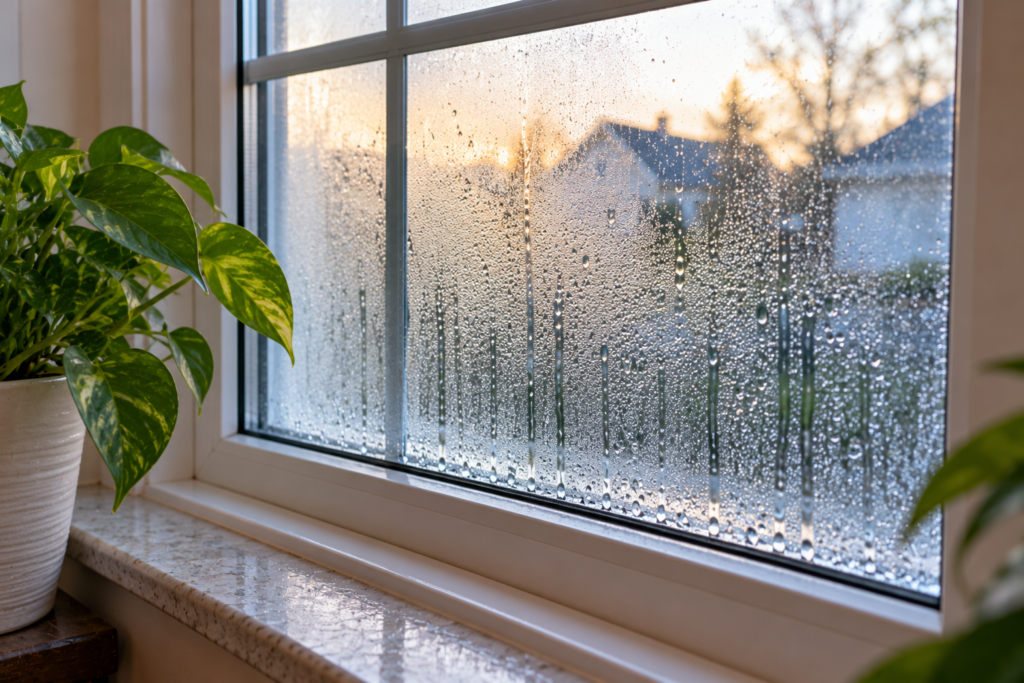
If these surfaces remain wet or damp, mold may begin growing. Mold can damage building materials and may trigger allergic reactions or asthma symptoms in some people.
Common warning signs of a moisture problem include:
- Musty or persistent damp odors.
- Dark or discolored spots on walls and ceilings.
- Condensation on windows or cold surfaces.
- Peeling paint or bubbling wallpaper.
- Damp areas around windows, plumbing, or air conditioning equipment.
These signs do not automatically mean that mold is present, but they indicate that the source of moisture should be investigated.
The EPA explains practical steps for preventing moisture and mold in its guide to mold, moisture, and your home.
2. Humidity Can Support Dust Mites
Dust mites are microscopic organisms commonly found in household dust, mattresses, bedding, upholstered furniture, and carpets. They thrive in environments that provide suitable moisture and warmth.
For people who are sensitive to dust mite allergens, indoor conditions may affect how comfortable their home feels.
Controlling humidity can help make the indoor environment less favorable for dust mites, although it will not eliminate them completely. Regular washing of bedding, thorough cleaning, and reducing dust accumulation are also useful steps.
For additional guidance, review the EPA’s information about biological pollutants and their effects on indoor air quality.
3. Excess Moisture Can Cause Condensation
Condensation occurs when water vapor in the air turns into liquid after contacting a sufficiently cold surface.
Homeowners may notice water droplets on windows during cold weather or moisture around cold pipes and air conditioning components.
Occasional condensation may have a simple explanation, but recurring moisture can indicate a humidity, insulation, ventilation, or equipment problem.
To address condensation:
- Wipe away moisture from affected surfaces.
- Use bathroom and kitchen exhaust fans that vent outdoors.
- Check for plumbing leaks and water intrusion.
- Inspect cold pipes for missing or damaged insulation.
- Monitor humidity levels in rooms where condensation repeatedly occurs.
Do not simply paint over damp areas or cover wet building materials. Identify and correct the moisture source first.
Can Low Humidity Also Affect Indoor Air Quality?
Yes. Although excessive humidity is a common concern, very dry indoor air can also affect comfort.
Low humidity may contribute to dry skin, dry eyes, and irritation of the nose or throat. These symptoms can have other causes, so humidity readings alone cannot establish why someone feels uncomfortable.
Indoor humidity can drop during cold weather when outdoor air enters the home and is heated. Heating the air lowers its relative humidity if no additional moisture is introduced.
If your home is consistently too dry, consider the following steps:
- Measure humidity before deciding whether to add moisture.
- Avoid setting humidifiers higher than necessary.
- Clean humidifiers according to the manufacturer’s instructions.
- Watch for condensation on windows or walls when using a humidifier.
- Follow the equipment manufacturer’s recommendations for safe operation.
Adding too much moisture can create a new problem, especially in rooms with cold windows, exterior walls, or poor ventilation.
The goal is not to make indoor air as humid as possible. It is to maintain a balanced level that supports comfort without creating unnecessary moisture problems.
What Is the Ideal Indoor Humidity Level?
For most homes, a useful target is 30% to 50% relative humidity. The EPA recommends keeping indoor humidity below 60% and ideally between 30% and 50%, when possible.
These figures are general guidelines, not a guarantee that mold or condensation will never occur. Moisture can still accumulate on cold surfaces even when the average room humidity appears reasonable.
Here is a practical guide to interpreting common humidity readings:
| Relative humidity | What homeowners should know |
| Below 30% | Air may feel excessively dry; check conditions before adding moisture. |
| 30%–50% | A commonly recommended indoor humidity range. |
| 51%–59% | Monitor for condensation and dampness, especially in humid weather. |
| 60% or higher | Investigate the source of excess moisture and consider humidity control. |
Use a digital hygrometer to measure relative humidity. These devices are generally inexpensive and can help you compare readings in different rooms.
For the EPA’s complete recommendations on moisture management, ventilation, and filtration, visit What Can I Do to Improve Indoor Air Quality in My Home?.
How to Reduce High Indoor Humidity
If your humidity readings regularly exceed the recommended range, start by identifying where the moisture comes from. The right solution depends on whether the problem is caused by everyday activities, outdoor humidity, a water leak, or an HVAC issue.
1. Use Bathroom Exhaust Fans
Showers and baths release moisture into indoor air. Run an exhaust fan during bathing and afterward according to the fan manufacturer’s instructions.
Make sure the fan vents outdoors rather than into an attic or another enclosed space. If your bathroom does not have a suitable exhaust fan, consider having one installed.
2. Improve Kitchen Ventilation
Cooking, boiling water, and washing dishes can increase indoor humidity.
Use a range hood that exhausts outdoors when available. If you have an exhaust fan, keep it clean and make sure it works correctly.
Ventilation should be appropriate for outdoor conditions. In hot, humid weather, opening windows may introduce more moisture instead of reducing it.
3. Consider a Dehumidifier
A dehumidifier removes moisture from indoor air and may help in persistently damp basements, bathrooms, or other problem areas.
Choose a unit suited to the room size and moisture conditions. Empty or drain the collection tank as instructed, and clean the equipment regularly.
A dehumidifier can help control moisture, but it cannot repair a leaking pipe, roof leak, or other underlying water problem.
4. Check for Plumbing and Building Leaks
A leak can increase moisture in walls, floors, ceilings, and enclosed spaces, even when the room’s humidity reading does not appear unusually high.
Inspect areas around sinks, toilets, water heaters, windows, roofs, and exterior walls. Look for stains, damp materials, peeling paint, or recurring musty odors.
Repair leaks promptly and dry wet materials thoroughly. The EPA advises drying damp or wet materials within 24–48 hours when possible to help prevent mold growth.
Read more in the EPA’s guide to mold, moisture, and your home.
5. Maintain Your HVAC System
Your HVAC system affects indoor temperature, air circulation, and moisture removal. If an air conditioner is not operating properly, your home may feel damp even when the system is running.
Basic maintenance includes checking the air filter, keeping supply and return vents unobstructed, and following the manufacturer’s maintenance schedule.
If you notice persistent humidity, water around the indoor unit, unusual odors, or cooling problems, a qualified HVAC technician can inspect the system, condensate drain, and other components.
For more information, consult the EPA’s guide to indoor air quality.
How to Monitor Humidity in Different Rooms
Humidity can vary throughout a home. A basement, bathroom, or laundry room may be much more humid than a bedroom or living room.
Place a hygrometer in frequently occupied areas and in rooms where you notice condensation or musty odors. Keep it away from direct sunlight, heating vents, and other locations that could distort readings.
Check readings at different times of day, particularly after showering, cooking, or running air conditioning.
If one room repeatedly shows higher humidity than the rest of the home, investigate local causes such as poor ventilation, water intrusion, or inadequate temperature control.
Remember that a single reading is only a snapshot. Repeated measurements can help you identify patterns and determine whether corrective action is needed.
Does Controlling Humidity Improve Indoor Air Quality?
Humidity control is an important part of maintaining a healthy indoor environment, but it is not the only factor.
Reducing excess moisture can help limit conditions that support mold growth and dust mites. However, it will not remove every airborne particle, eliminate all allergens, or correct every indoor air quality problem.
A more complete approach combines several strategies:
- Moisture control: Repair leaks and prevent persistent dampness.
- Ventilation: Remove moisture and indoor pollutants when outdoor conditions allow.
- Filtration: Use appropriate HVAC filters and replace them according to the manufacturer’s recommendations.
- Source control: Reduce indoor pollutant sources where practical.
- Regular maintenance: Inspect HVAC equipment and address problems promptly.
The EPA recommends combining source control, ventilation, and filtration rather than relying on a single method. See its guidance on improving indoor air quality at home.
When Should You Call a Professional?
Consider professional assistance if you experience persistent high humidity despite using ventilation or dehumidification, recurring condensation, unexplained water stains, suspected hidden leaks, or visible mold covering a large area.
An HVAC technician can evaluate cooling performance, condensate drainage, and relevant ventilation or equipment issues. A qualified building or moisture specialist may be appropriate when the source of dampness is unclear or involves walls, roofing, or structural materials.
Do not assume that air duct cleaning alone will resolve a humidity problem. Cleaning ducts does not repair water leaks, correct inadequate ventilation, or fix an air conditioner that is failing to remove moisture properly.
Address the underlying cause before considering any additional service.
Final Thoughts
Indoor humidity can influence comfort and indoor air quality by affecting condensation, mold growth, and conditions that support dust mites. For most homes, maintaining relative humidity around 30%–50% is a practical goal, while avoiding sustained levels above 60%.
Start with a simple hygrometer, improve moisture removal in kitchens and bathrooms, repair leaks promptly, and maintain your HVAC system. If humidity remains high or moisture problems keep returning, seek professional help to identify the underlying cause.
A balanced approach to humidity, ventilation, filtration, and home maintenance can help you manage moisture and maintain a more comfortable indoor environment.
Sources
U.S. EPA: Care for Your Air — A Guide to Indoor Air Quality Indoor humidity plays an important role in your home’s comfort and indoor air quality. When humidity levels are too high, moisture can accumulate on windows, walls, ceilings, and other surfaces, creating conditions that support mold growth. When humidity is too low, the air may feel uncomfortable, and some people may experience dry skin, eyes, or irritated nasal passages.
U.S. EPA: Biological Contaminants and Indoor Air Quality
U.S. EPA: A Brief Guide to Mold, Moisture, and Your Home
U.S. EPA: What Can I Do to Improve Indoor Air Quality in My Home?
Understanding how humidity affects indoor air quality can help homeowners identify moisture problems early, maintain a more comfortable home, and protect building materials from unnecessary damage.
According to the U.S. Environmental Protection Agency (EPA), homeowners should generally aim to keep indoor relative humidity between 30% and 50%, when possible, and below 60% to help reduce moisture-related problems. You can read the EPA’s recommendations in its guide to biological contaminants and indoor air quality.
What Is Indoor Humidity?
Indoor humidity refers to the amount of water vapor present in the air inside your home. One of the most useful measurements is relative humidity (RH), expressed as a percentage.
Relative humidity describes how much moisture the air contains compared with the maximum amount it can hold at its current temperature.
For example, a room with 40% relative humidity has a different moisture balance from a room with 70% relative humidity. The higher reading indicates that the air is closer to saturation, making condensation more likely when warm, moist air meets a cold surface.
Humidity changes throughout the day and from season to season. Showering, cooking, drying clothes indoors, and outdoor weather conditions can all affect indoor moisture levels.
Your heating, ventilation, and air conditioning (HVAC) system can also influence humidity. Air conditioning removes some moisture as it cools indoor air, while heating can change relative humidity by warming the air without adding moisture.
How High Humidity Affects Indoor Air Quality
Excessive indoor humidity can contribute to several indoor environmental problems. Although humidity itself is not an airborne pollutant, it can create conditions that allow certain biological contaminants to grow or thrive.
1. High Humidity Can Encourage Mold Growth
Mold needs moisture to grow. When indoor humidity remains high, dampness and condensation may develop on walls, ceilings, window frames, carpets, and other materials.
If these surfaces remain wet or damp, mold may begin growing. Mold can damage building materials and may trigger allergic reactions or asthma symptoms in some people.
Common warning signs of a moisture problem include:
- Musty or persistent damp odors.
- Dark or discolored spots on walls and ceilings.
- Condensation on windows or cold surfaces.
- Peeling paint or bubbling wallpaper.
- Damp areas around windows, plumbing, or air conditioning equipment.
These signs do not automatically mean that mold is present, but they indicate that the source of moisture should be investigated.
The EPA explains practical steps for preventing moisture and mold in its guide to mold, moisture, and your home.
2. Humidity Can Support Dust Mites
Dust mites are microscopic organisms commonly found in household dust, mattresses, bedding, upholstered furniture, and carpets. They thrive in environments that provide suitable moisture and warmth.
For people who are sensitive to dust mite allergens, indoor conditions may affect how comfortable their home feels.
Controlling humidity can help make the indoor environment less favorable for dust mites, although it will not eliminate them completely. Regular washing of bedding, thorough cleaning, and reducing dust accumulation are also useful steps.
For additional guidance, review the EPA’s information about biological pollutants and their effects on indoor air quality.
3. Excess Moisture Can Cause Condensation
Condensation occurs when water vapor in the air turns into liquid after contacting a sufficiently cold surface.
Homeowners may notice water droplets on windows during cold weather or moisture around cold pipes and air conditioning components.
Occasional condensation may have a simple explanation, but recurring moisture can indicate a humidity, insulation, ventilation, or equipment problem.
To address condensation:
- Wipe away moisture from affected surfaces.
- Use bathroom and kitchen exhaust fans that vent outdoors.
- Check for plumbing leaks and water intrusion.
- Inspect cold pipes for missing or damaged insulation.
- Monitor humidity levels in rooms where condensation repeatedly occurs.
Do not simply paint over damp areas or cover wet building materials. Identify and correct the moisture source first.
Can Low Humidity Also Affect Indoor Air Quality?
Yes. Although excessive humidity is a common concern, very dry indoor air can also affect comfort.
Low humidity may contribute to dry skin, dry eyes, and irritation of the nose or throat. These symptoms can have other causes, so humidity readings alone cannot establish why someone feels uncomfortable.
Indoor humidity can drop during cold weather when outdoor air enters the home and is heated. Heating the air lowers its relative humidity if no additional moisture is introduced.
If your home is consistently too dry, consider the following steps:
- Measure humidity before deciding whether to add moisture.
- Avoid setting humidifiers higher than necessary.
- Clean humidifiers according to the manufacturer’s instructions.
- Watch for condensation on windows or walls when using a humidifier.
- Follow the equipment manufacturer’s recommendations for safe operation.
Adding too much moisture can create a new problem, especially in rooms with cold windows, exterior walls, or poor ventilation.
The goal is not to make indoor air as humid as possible. It is to maintain a balanced level that supports comfort without creating unnecessary moisture problems.
What Is the Ideal Indoor Humidity Level?
For most homes, a useful target is 30% to 50% relative humidity. The EPA recommends keeping indoor humidity below 60% and ideally between 30% and 50%, when possible.
These figures are general guidelines, not a guarantee that mold or condensation will never occur. Moisture can still accumulate on cold surfaces even when the average room humidity appears reasonable.
Here is a practical guide to interpreting common humidity readings:
| Relative humidity | What homeowners should know |
| Below 30% | Air may feel excessively dry; check conditions before adding moisture. |
| 30%–50% | A commonly recommended indoor humidity range. |
| 51%–59% | Monitor for condensation and dampness, especially in humid weather. |
| 60% or higher | Investigate the source of excess moisture and consider humidity control. |
Use a digital hygrometer to measure relative humidity. These devices are generally inexpensive and can help you compare readings in different rooms.
For the EPA’s complete recommendations on moisture management, ventilation, and filtration, visit What Can I Do to Improve Indoor Air Quality in My Home?.
How to Reduce High Indoor Humidity
If your humidity readings regularly exceed the recommended range, start by identifying where the moisture comes from. The right solution depends on whether the problem is caused by everyday activities, outdoor humidity, a water leak, or an HVAC issue.
1. Use Bathroom Exhaust Fans
Showers and baths release moisture into indoor air. Run an exhaust fan during bathing and afterward according to the fan manufacturer’s instructions.
Make sure the fan vents outdoors rather than into an attic or another enclosed space. If your bathroom does not have a suitable exhaust fan, consider having one installed.
2. Improve Kitchen Ventilation
Cooking, boiling water, and washing dishes can increase indoor humidity.
Use a range hood that exhausts outdoors when available. If you have an exhaust fan, keep it clean and make sure it works correctly.
Ventilation should be appropriate for outdoor conditions. In hot, humid weather, opening windows may introduce more moisture instead of reducing it.
3. Consider a Dehumidifier
A dehumidifier removes moisture from indoor air and may help in persistently damp basements, bathrooms, or other problem areas.
Choose a unit suited to the room size and moisture conditions. Empty or drain the collection tank as instructed, and clean the equipment regularly.
A dehumidifier can help control moisture, but it cannot repair a leaking pipe, roof leak, or other underlying water problem.
4. Check for Plumbing and Building Leaks
A leak can increase moisture in walls, floors, ceilings, and enclosed spaces, even when the room’s humidity reading does not appear unusually high.
Inspect areas around sinks, toilets, water heaters, windows, roofs, and exterior walls. Look for stains, damp materials, peeling paint, or recurring musty odors.
Repair leaks promptly and dry wet materials thoroughly. The EPA advises drying damp or wet materials within 24–48 hours when possible to help prevent mold growth.
Read more in the EPA’s guide to mold, moisture, and your home.
5. Maintain Your HVAC System
Your HVAC system affects indoor temperature, air circulation, and moisture removal. If an air conditioner is not operating properly, your home may feel damp even when the system is running.
Basic maintenance includes checking the air filter, keeping supply and return vents unobstructed, and following the manufacturer’s maintenance schedule.
If you notice persistent humidity, water around the indoor unit, unusual odors, or cooling problems, a qualified HVAC technician can inspect the system, condensate drain, and other components.
For more information, consult the EPA’s guide to indoor air quality.
How to Monitor Humidity in Different Rooms
Humidity can vary throughout a home. A basement, bathroom, or laundry room may be much more humid than a bedroom or living room.
Place a hygrometer in frequently occupied areas and in rooms where you notice condensation or musty odors. Keep it away from direct sunlight, heating vents, and other locations that could distort readings.
Check readings at different times of day, particularly after showering, cooking, or running air conditioning.
If one room repeatedly shows higher humidity than the rest of the home, investigate local causes such as poor ventilation, water intrusion, or inadequate temperature control.
Remember that a single reading is only a snapshot. Repeated measurements can help you identify patterns and determine whether corrective action is needed.
Does Controlling Humidity Improve Indoor Air Quality?
Humidity control is an important part of maintaining a healthy indoor environment, but it is not the only factor.
Reducing excess moisture can help limit conditions that support mold growth and dust mites. However, it will not remove every airborne particle, eliminate all allergens, or correct every indoor air quality problem.
A more complete approach combines several strategies:
- Moisture control: Repair leaks and prevent persistent dampness.
- Ventilation: Remove moisture and indoor pollutants when outdoor conditions allow.
- Filtration: Use appropriate HVAC filters and replace them according to the manufacturer’s recommendations.
- Source control: Reduce indoor pollutant sources where practical.
- Regular maintenance: Inspect HVAC equipment and address problems promptly.
The EPA recommends combining source control, ventilation, and filtration rather than relying on a single method. See its guidance on improving indoor air quality at home.
When Should You Call a Professional?
Consider professional assistance if you experience persistent high humidity despite using ventilation or dehumidification, recurring condensation, unexplained water stains, suspected hidden leaks, or visible mold covering a large area.
An HVAC technician can evaluate cooling performance, condensate drainage, and relevant ventilation or equipment issues. A qualified building or moisture specialist may be appropriate when the source of dampness is unclear or involves walls, roofing, or structural materials.
Do not assume that air duct cleaning alone will resolve a humidity problem. Cleaning ducts does not repair water leaks, correct inadequate ventilation, or fix an air conditioner that is failing to remove moisture properly.
Address the underlying cause before considering any additional service.
Final Thoughts
Indoor humidity can influence comfort and indoor air quality by affecting condensation, mold growth, and conditions that support dust mites. For most homes, maintaining relative humidity around 30%–50% is a practical goal, while avoiding sustained levels above 60%.
Start with a simple hygrometer, improve moisture removal in kitchens and bathrooms, repair leaks promptly, and maintain your HVAC system. If humidity remains high or moisture problems keep returning, seek professional help to identify the underlying cause.
A balanced approach to humidity, ventilation, filtration, and home maintenance can help you manage moisture and maintain a more comfortable indoor environment.
Sources