

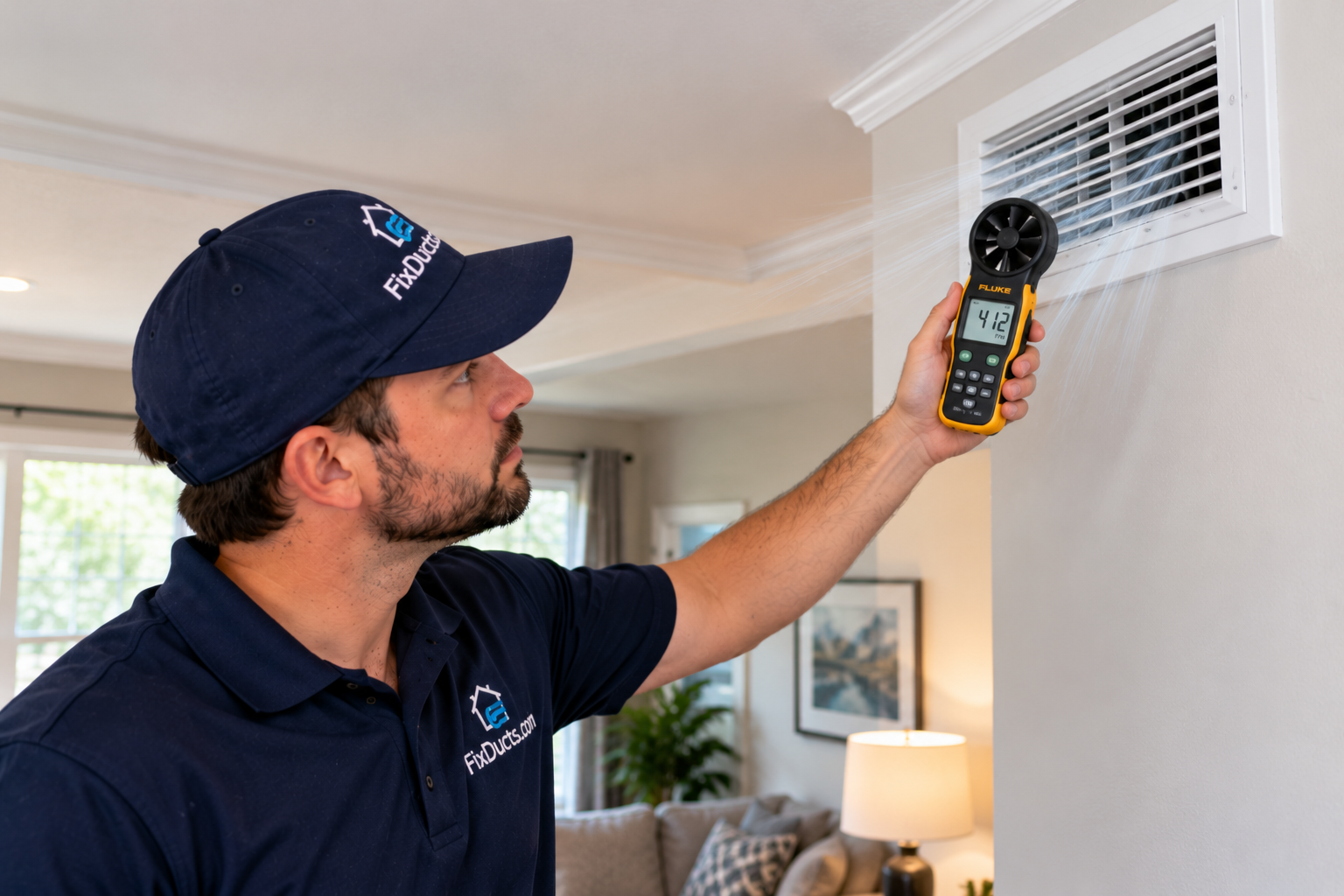
Weak airflow from your home vents can make some rooms feel uncomfortable, even when your heating and cooling system is running. You may notice that one bedroom stays warm in summer, a living room takes too long to heat in winter, or certain vents barely release any air.
These problems can have several causes, including a dirty HVAC filter, blocked vents, leaking ductwork, restricted ducts, or an issue with the system’s blower. The right solution depends on identifying the cause rather than simply increasing the thermostat setting.
In this guide, you will learn how to improve airflow from your home vents, which checks you can safely perform yourself, and when to contact an HVAC professional.
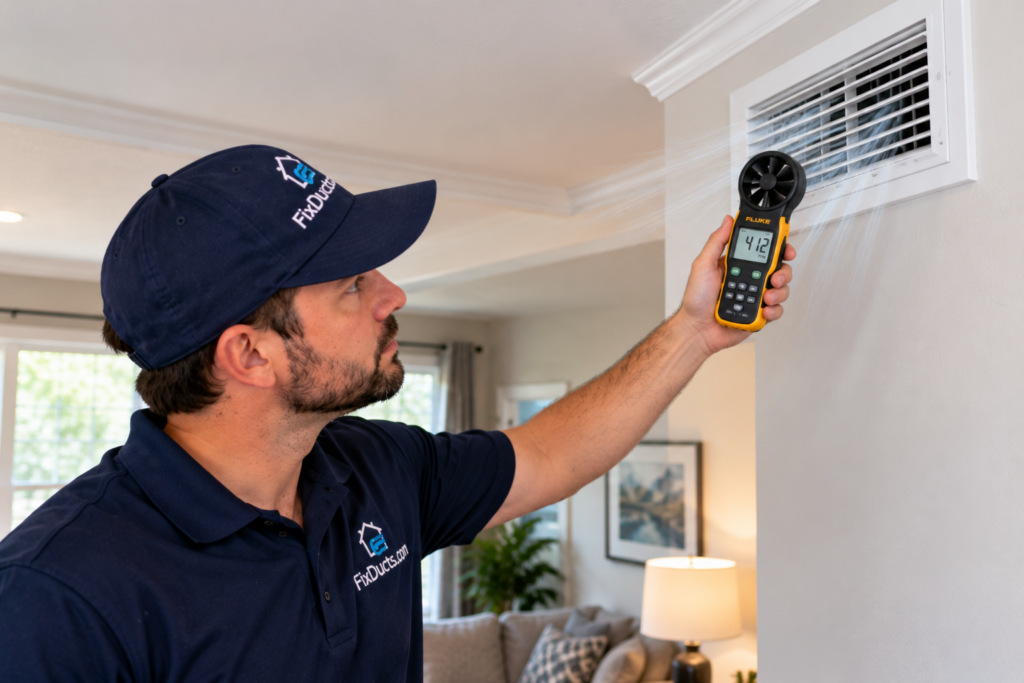
What Causes Weak Airflow From Home Vents?
Your HVAC system uses a blower to move conditioned air through the ductwork and into your rooms. Air then returns through designated return grilles so the system can circulate it again.
If any part of this process is restricted or damaged, airflow may decrease.
Common causes include:
- A clogged or incorrectly installed air filter.
- Furniture or curtains blocking supply vents.
- Closed or obstructed return-air grilles.
- Leaking, disconnected, or crushed ductwork.
- Dirty blower components or coils.
- A malfunctioning blower motor.
- Ductwork that is poorly designed or improperly balanced.
- An HVAC system that requires professional maintenance or repair.
The U.S. Department of Energy explains that restricted airflow can result from issues such as dirty filters and ductwork problems. Its HomeCooling101 guide provides additional information about common cooling-system issues and maintenance.
1. Check and Replace Your HVAC Air Filter
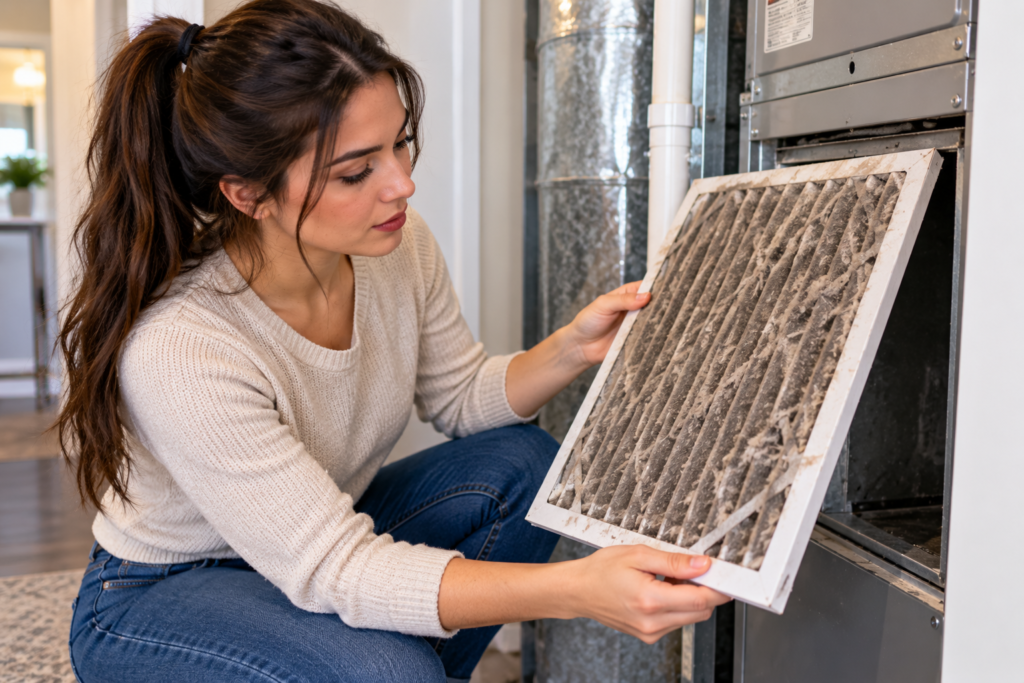
A dirty air filter is one of the first things to check when airflow becomes weak.
As dust and other particles accumulate, a filter can become restrictive. The effect depends on the filter type, its condition, and the design of your HVAC system.
How to Check Your Filter
- Turn off the system if required by the manufacturer’s instructions.
- Locate the filter compartment.
- Remove the filter carefully.
- Check for visible dust buildup, damage, or incorrect installation.
- Replace a disposable filter or clean a reusable filter according to the manufacturer’s instructions.
- Make sure the replacement fits correctly and follows the required airflow direction.
Do not operate the system without the required filter simply to increase airflow. The filter helps protect equipment from dust and debris.
Choose a filter compatible with your system. A filter with higher particle-capture efficiency is not automatically the best choice if the equipment cannot accommodate its airflow resistance.
For more information about selecting and maintaining filters, consult the EPA’s Guide to Air Cleaners and Air Filters in the Home.
2. Make Sure Supply Vents Are Open and Unblocked
Supply vents deliver heated or cooled air into your rooms. When furniture, rugs, curtains, or other objects obstruct them, air may not circulate as intended.
Walk through your home and check each accessible supply register.
Look for:
- Sofas placed directly in front of vents.
- Curtains covering wall-mounted registers.
- Rugs obstructing floor vents.
- Dust or debris accumulating around register openings.
- Registers that have been accidentally closed.
Move obstructions away from the vents and ensure that the registers are open according to the system’s design.
Avoid closing large numbers of supply vents in unused rooms to force more air into other areas. Many residential HVAC systems are not designed to operate with numerous vents closed, and doing so can affect system pressure and performance.
If airflow remains weak after you clear the vents, investigate other possible causes.
3. Check the Return-Air Grilles
Supply vents deliver air into rooms, while return-air grilles allow air to flow back toward the HVAC equipment.
If a return grille is blocked, the system may struggle to circulate air properly.
Check whether furniture, storage boxes, curtains, or dust buildup is obstructing accessible return grilles. Keep the area around each grille clear.
Do not cover a return grille simply because it seems to release cool air or creates a draft. Return grilles are an important part of the air circulation system.
If your home has a room that is frequently uncomfortable and its return-air path seems restricted, an HVAC technician can assess whether the system has adequate return airflow.
4. Inspect Accessible Ductwork for Leaks or Disconnections
Ductwork carries conditioned air from the HVAC equipment to your rooms. If a duct has a significant leak or has become disconnected, some air may escape before reaching the intended space.
Leaks in return ducts can also draw air from unwanted locations, depending on where the duct is situated.
Signs of a possible duct problem include:
- A noticeable drop in airflow from one or more vents.
- Rooms that are consistently harder to heat or cool.
- Visible gaps or disconnections in accessible ductwork.
- Damaged flexible ducts.
- Unusual dust around a damaged duct connection.
You can visually inspect ductwork in safely accessible areas, such as an open utility room. Do not enter unsafe attics or crawl spaces, disturb insulation, or attempt repairs near electrical or combustion equipment.
If you find a damaged connection, arrange a suitable repair. Duct sealing should use materials and methods appropriate for the duct type and application.
The U.S. Department of Energy provides guidance on heating and cooling maintenance through its Energy Saver resources.
5. Look for Crushed or Restricted Flexible Ducts
Some homes use flexible ductwork to carry air through attics, crawl spaces, or ceiling cavities.
Flexible ducts can become compressed, sharply bent, or damaged if they are improperly installed, poorly supported, or disturbed during other work.
A crushed section can restrict the amount of air reaching a room. Simply increasing the fan setting may not solve the underlying problem.
If flexible ductwork is visible and safely accessible, look for obvious compression, severe bends, or disconnected sections. Do not crawl into a confined space to inspect it.
A qualified HVAC professional can determine whether the duct needs to be repositioned, supported, repaired, or replaced.
6. Consider Whether the HVAC System Needs Maintenance
Weak airflow is not always caused by the vents or ducts themselves. The HVAC equipment may have a problem that prevents it from moving air effectively.
Potential causes include dirty coils, blower problems, or other mechanical faults.
Routine maintenance can help identify these issues before they become more serious.
ENERGY STAR’s Heating and Cooling Maintenance Checklist explains several maintenance tasks and highlights the importance of checking system operation and airflow-related components.
Homeowners can perform basic tasks, such as maintaining filters and keeping vents clear. Internal equipment cleaning, electrical work, refrigerant service, and mechanical repairs should be handled by appropriately qualified professionals.
If the airflow suddenly becomes much weaker, the system makes unusual noises, or it repeatedly shuts down, arrange an inspection rather than continuing to run it without understanding the problem.
7. Check Whether the Problem Affects One Room or the Entire House
The location of the airflow problem can help narrow down the possible causes.
If Only One Room Has Weak Airflow
Possible causes include:
- A blocked or closed supply register.
- A restricted or disconnected branch duct.
- A duct leak affecting that room.
- An airflow-balancing issue.
- An inadequate return-air path.
Check the register for obstructions first. If the problem continues, a technician can inspect the duct serving that room and evaluate the air distribution.
If Several Rooms Have Weak Airflow
When multiple rooms experience weak airflow, the cause may involve a shared return path, a clogged filter, the blower, or another system-wide restriction.
Start with the filter and accessible vents. If these checks do not help, arrange professional diagnosis.
If Airflow Is Weak Throughout the Home
A whole-house airflow problem may indicate a significant restriction or an HVAC equipment issue.
Possible causes include a heavily loaded filter, malfunctioning blower, dirty components, or a duct system that is not operating as intended.
Do not assume that a larger or more powerful blower is automatically the solution. A technician should evaluate the system and identify the actual cause.
8. Do Not Rely on the Thermostat to Fix Weak Airflow
Increasing the thermostat setting does not directly remove a restriction in your ductwork.
For example, setting the air conditioner to a lower temperature will not fix a blocked return grille or disconnected duct. The system may simply run longer while the room remains uncomfortable.
Use reasonable thermostat settings and investigate the airflow problem separately.
If your system runs for long periods without maintaining the desired temperature, there may be an equipment, insulation, ductwork, or system-sizing issue that requires professional assessment.
9. Consider Airflow Balancing for Uneven Rooms
Sometimes the HVAC system delivers different amounts of air to different rooms. This can happen because of duct design, duct length, room layout, or balancing problems.
Airflow balancing involves assessing how air is distributed throughout the system and making appropriate adjustments.
It is not the same as randomly closing vents. Closing registers without understanding the system can create additional pressure problems or reduce overall performance.
If one room consistently receives too much or too little air, an HVAC professional can evaluate the distribution and determine whether balancing, duct modifications, or another correction is appropriate.
10. Know When to Call an HVAC Professional
Simple problems such as a dirty filter or blocked vent can often be corrected by a homeowner. Persistent or severe airflow problems require a more thorough diagnosis.
Contact a qualified HVAC professional if:
- Airflow remains weak after you check the filter and accessible vents.
- Several rooms have suddenly lost airflow.
- You discover disconnected or damaged ductwork.
- The system makes unusual mechanical noises.
- The HVAC system frequently shuts off or struggles to maintain temperature.
- You suspect a problem with the blower or internal equipment.
- You notice moisture or suspected mold involving HVAC components.
Ask the technician to explain the diagnosis and distinguish necessary repairs from optional improvements.
A reliable assessment should identify the cause of the problem before recommending duct cleaning, duct replacement, equipment upgrades, or other costly services.
How to Maintain Good Airflow Over Time
Regular attention to a few basic tasks can help you recognize developing problems.
- Inspect HVAC filters regularly and replace them as directed.
- Keep supply vents and return grilles unobstructed.
- Avoid placing furniture directly in front of registers.
- Check safely accessible ductwork for obvious damage.
- Schedule equipment maintenance according to the manufacturer’s recommendations.
- Address unusual changes in airflow promptly.
- Keep records of recurring comfort problems and previous repairs.
These steps do not guarantee that airflow will always be perfect, but they can help prevent simple restrictions and make it easier to identify when professional service is necessary.
Frequently Asked Questions
Why is there barely any air coming out of one vent?
A blocked register, restricted branch duct, disconnected connection, or airflow-balancing issue may be responsible. Check that the vent is open and unobstructed. If the problem persists, have the duct inspected.
Can a dirty air filter reduce airflow?
Yes. A heavily loaded filter can restrict airflow, depending on the filter and system design. Check and replace it according to the manufacturer’s recommendations.
Should I close vents in rooms I do not use?
Generally, do not close numerous supply vents without guidance specific to your HVAC system. Closing vents can affect system pressure and performance. Ask a qualified technician if you want to adjust airflow between rooms.
Can duct cleaning improve airflow?
It may help when substantial debris inside the ductwork is restricting airflow. However, weak airflow can also result from leaks, crushed ducts, blocked returns, dirty filters, or mechanical problems. Cleaning is not a universal solution.
Why is my upstairs airflow weaker than downstairs?
Possible causes include duct layout, system balancing, restrictions, or differences in the building’s heating and cooling loads. A technician can assess the distribution and determine which changes, if any, are appropriate.
Does a bigger HVAC fan always improve airflow?
No. The blower must be compatible with the system’s design and ductwork. Increasing fan capacity without addressing restrictions or other design issues may not solve the problem and could create additional problems.
How often should HVAC vents be cleaned?
Clean accessible vent covers and surrounding surfaces when dust accumulates. This is different from professional duct cleaning, which is generally considered when specific conditions justify it rather than on a universal fixed schedule.
Final Thoughts
Improving airflow from your home vents starts with identifying the cause of the problem. Check your HVAC filter, clear blocked supply registers, and make sure return grilles are unobstructed.
If airflow remains weak, inspect safely accessible ductwork for visible damage and consider whether the HVAC system needs professional maintenance. Persistent problems may involve leaks, restricted ducts, balancing issues, or equipment faults that require a qualified technician.
Avoid expensive repairs or cleaning services until the underlying issue has been identified. A targeted solution is more useful than guessing at the cause.
Sources