
Indoor air quality plays an important role in the comfort and health of everyone living in your home. Dust, smoke, cooking fumes, excess moisture, cleaning products, and outdoor pollution can all affect the air inside a house. In some homes, poor ventilation and neglected HVAC maintenance may allow pollutants to accumulate.
The good news is that improving indoor air quality does not always require expensive equipment. Simple steps, such as controlling moisture, changing HVAC filters when needed, ventilating appropriately, and reducing pollution sources, can make a meaningful difference.
In this guide, you will learn 10 practical ways to improve indoor air quality at home, how your HVAC system can help, and when additional action may be necessary.
What Is Indoor Air Quality?
Indoor air quality (IAQ) refers to the condition of the air inside a building and how it may affect the comfort and health of its occupants.
Indoor air can contain various pollutants, including:
- Dust and airborne particles
- Pet dander and pollen
- Smoke from cigarettes, fireplaces, or cooking
- Volatile organic compounds (VOCs) released by certain products and materials
- Mold spores associated with damp environments
- Carbon monoxide from malfunctioning fuel-burning appliances
- Outdoor pollution that enters through doors, windows, and ventilation systems
Not every home has the same indoor air quality problems. The most effective solution depends on the source of the pollution, the ventilation available, and the condition of the home.
10 Ways to Improve Indoor Air Quality at Home
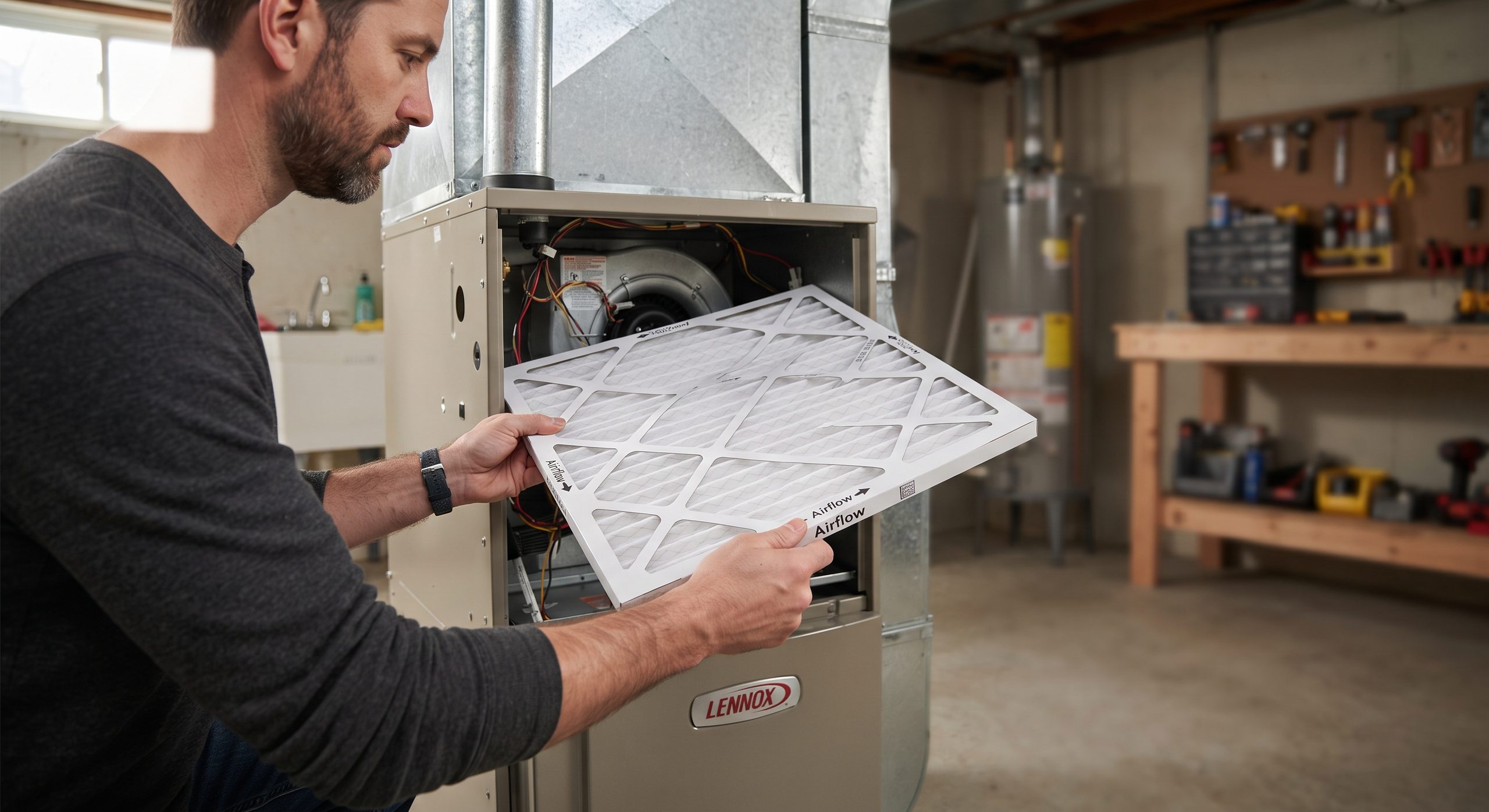
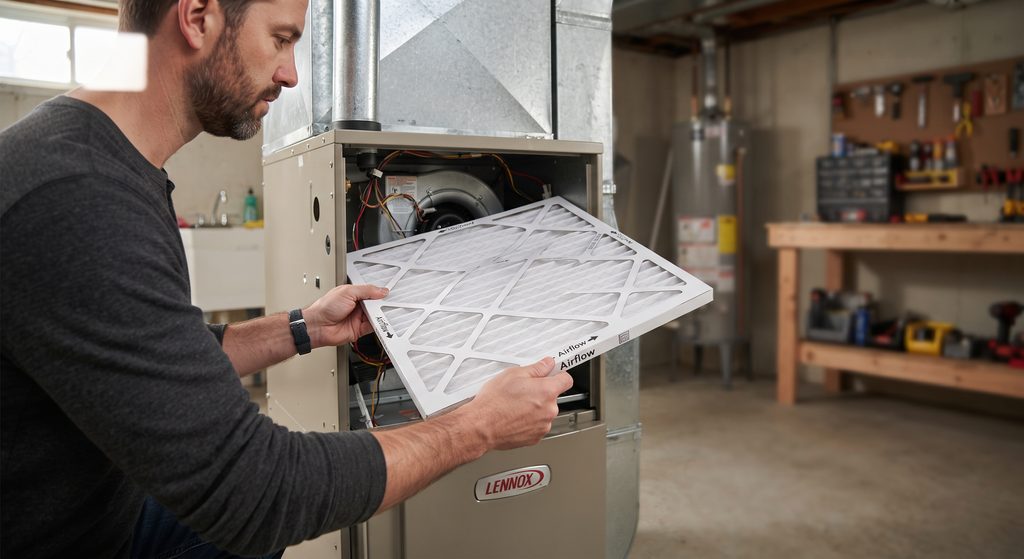
1. Replace Your HVAC Air Filter Regularly
Your heating, ventilation, and air conditioning (HVAC) system may help capture airborne particles as air passes through its filter. However, a dirty, incorrectly installed, or unsuitable filter can interfere with proper system operation.
Check your HVAC filter according to the manufacturer’s instructions. Many filters need replacement every one to three months, but the correct interval depends on the filter type, household conditions, system usage, and manufacturer recommendations.
You may need to check the filter more frequently if you have pets, experience heavy dust, or operate your heating and cooling system for long periods.
When replacing a filter:
- Confirm the correct size for your system.
- Check the airflow arrow and install the filter in the proper direction.
- Choose a filter compatible with your HVAC equipment.
- Avoid using a filter with a higher resistance than your system can handle.
A clean filter can support proper airflow and particle filtration, but it cannot remove every indoor pollutant.
2. Control Moisture and Indoor Humidity
Excess moisture can encourage mold growth and create conditions that attract dust mites. Bathrooms, basements, kitchens, and areas around plumbing leaks are common places where moisture problems develop.
The U.S. Environmental Protection Agency generally recommends keeping indoor relative humidity below 60%, ideally between 30% and 50% when practical.
To manage moisture in your home:
- Repair leaking pipes, roofs, and windows promptly.
- Use bathroom exhaust fans during showers and afterward.
- Vent cooking moisture outdoors when possible.
- Use a dehumidifier in persistently damp areas.
- Dry wet materials quickly and investigate recurring condensation.
If you notice a persistent musty smell, visible mold, or repeated dampness, identify and correct the moisture source. Simply cleaning visible mold without addressing the underlying problem may allow it to return.
3. Improve Ventilation When Outdoor Air Is Suitable
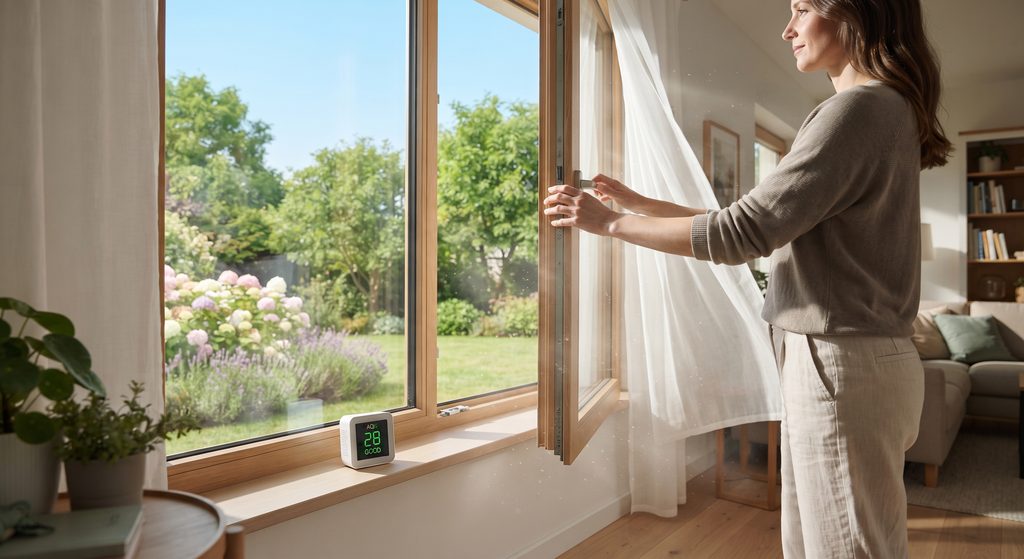
Ventilation helps replace stale indoor air with outdoor air. This can reduce the concentration of some indoor pollutants, especially when activities such as cooking, cleaning, or painting release contaminants.
When outdoor air quality, temperature, and humidity are suitable, open windows or doors to create a safe cross-breeze. Use kitchen and bathroom exhaust fans that discharge outdoors rather than into an attic or another indoor space.
However, opening windows is not always the best option. Outdoor smoke, wildfire pollution, heavy traffic pollution, high pollen levels, and extreme humidity can make outdoor air less suitable.
When outdoor pollution is elevated, keep windows closed as appropriate, reduce indoor pollution sources, and consider a suitable air cleaner.
4. Keep Your Home Clean to Reduce Dust
Household dust can contain a mixture of skin flakes, fabric fibers, soil, pollen, and other particles. Regular cleaning helps reduce the amount of dust that accumulates on surfaces and may become airborne again.
For a practical cleaning routine:
- Dust surfaces with a damp microfiber cloth.
- Vacuum carpets and rugs regularly.
- Clean floors and areas underneath furniture.
- Wash bedding according to its care instructions.
- Clean around supply vents and return-air grilles.
- Maintain a consistent cleaning schedule in rooms used most often.
A vacuum cleaner equipped with an effective filtration system can help reduce the amount of fine dust released back into the room.
Cleaning is particularly useful in homes with pets, carpets, or occupants who are sensitive to airborne particles.
5. Reduce Smoke and Other Indoor Pollution Sources
One of the most effective ways to improve indoor air quality is to prevent pollution from entering the air in the first place.
Indoor smoke can come from cigarettes, cigars, fireplaces, candles, incense, and cooking activities. Some household products also release chemicals into the air.
Consider these preventive measures:
- Keep smoking and vaping out of indoor spaces.
- Use kitchen exhaust ventilation when cooking.
- Avoid burning candles or incense excessively.
- Follow product labels when using cleaning chemicals.
- Never operate a charcoal grill or portable fuel-burning generator indoors.
- Avoid running a vehicle in an attached garage, even with the garage door open.
If you use paints, solvents, adhesives, or other products that release strong fumes, follow the label instructions and provide appropriate ventilation.
Reducing pollution at its source is often more effective than relying on an air purifier alone.
6. Use an Air Purifier When Appropriate
A portable air purifier can help reduce certain airborne particles in a room. A model with a properly sized HEPA filter may capture particles such as dust, pollen, and pet dander.
When choosing an air purifier, consider the following:
- Room size: Select a unit suitable for the area where it will operate.
- Clean Air Delivery Rate (CADR): A higher appropriate CADR generally allows faster particle removal in a given room.
- Filter replacement: Check the cost and availability of replacement filters.
- Noise level: Choose a model you can comfortably operate as needed.
- Pollutant type: Particle filters do not necessarily remove gases and odors effectively.
Some units use activated carbon to reduce certain gases and odors, although performance varies with the amount and type of carbon.
Avoid devices that intentionally produce ozone. Ozone can irritate the lungs and is not a safe substitute for controlling pollution sources or using appropriate filtration.
Remember that an air purifier supplements, rather than replaces, proper ventilation and source control.

7. Maintain Your Air Ducts and HVAC System
Your HVAC system circulates air throughout the home, so its condition matters. Poorly maintained equipment, damaged ductwork, clogged filters, or moisture problems can affect system performance and indoor comfort.
Routine HVAC maintenance may include:
- Inspecting and replacing air filters.
- Checking accessible ductwork for damage or disconnected sections.
- Keeping supply registers and return grilles unobstructed.
- Scheduling professional HVAC inspections as recommended.
- Investigating unusual odors, persistent airflow problems, or signs of moisture.
Air duct cleaning is not automatically necessary in every home. According to the EPA, it may be worth considering when there is substantial visible mold in appropriate parts of the system, a pest infestation, or excessive dust and debris being released from the registers.
Cleaning ducts alone will not resolve every indoor air quality problem. If moisture, combustion pollutants, or another pollution source is responsible, that underlying issue must also be addressed.
8. Choose Household Products Carefully
Certain paints, aerosol sprays, air fresheners, cleaning products, adhesives, and furnishings may release volatile organic compounds (VOCs) or other chemicals.
To reduce unnecessary exposure:
- Read product labels before use.
- Follow the manufacturer’s ventilation and safety instructions.
- Store chemicals in their original, properly closed containers.
- Keep products away from living areas when appropriate.
- Use low-emission products when practical.
- Avoid mixing cleaning products, particularly bleach with ammonia or acids.
A strong fragrance does not necessarily mean a product is dangerous, and an unscented product is not automatically free of harmful chemicals. The best approach is to minimize unnecessary emissions and use products according to their instructions.
9. Keep Pets and Allergens Under Control
Pets can introduce dander, hair, and outdoor particles into the home. Pollen and other allergens may also enter through clothing, shoes, open windows, and pets’ coats.
If allergens are a concern, consider these steps:
- Wash pet bedding regularly.
- Groom pets in an appropriate area.
- Vacuum carpets and upholstery regularly.
- Wash your hands after handling pets if needed.
- Keep bedroom bedding clean.
- Use an appropriate air purifier in frequently occupied rooms.
If symptoms persist, try to identify the specific trigger rather than assuming that dust or air ducts are always responsible. Indoor allergens can come from several different sources, and the right solution depends on the cause.
10. Install and Maintain Carbon Monoxide Alarms
Indoor air quality is not only about dust and odors. Carbon monoxide (CO) is a colorless, odorless gas that can cause serious illness or death.
It may be produced by improperly operating fuel-burning appliances, fireplaces, or generators. Because you cannot reliably detect it by smell, a carbon monoxide alarm is an important safety measure in homes with potential CO sources.
For better protection:
- Install CO alarms according to local requirements and manufacturer instructions.
- Test alarms and replace batteries or units as directed.
- Have fuel-burning appliances inspected and maintained appropriately.
- Never use outdoor generators, charcoal grills, or camping stoves indoors or in enclosed spaces.
If a CO alarm sounds, or you suspect carbon monoxide exposure, leave the building immediately and contact emergency services from a safe location. Do not re-enter until authorities say it is safe.
Signs Your Indoor Air Quality May Need Attention
Some indoor air problems have visible or noticeable warning signs. Look for:
- Persistent musty or chemical odors.
- Recurring condensation on windows or walls.
- Visible mold or repeated moisture damage.
- Excessive dust accumulating soon after cleaning.
- Smoke or cooking fumes that linger.
- Poor ventilation in bathrooms or kitchens.
- HVAC airflow problems or unusual odors from the system.
These signs do not automatically prove that your air is unsafe. For example, dust can have several causes, and symptoms such as coughing or headaches may be associated with many different conditions.
If several people experience similar symptoms indoors, symptoms repeatedly improve when they leave the building, or a serious pollutant is suspected, investigate promptly and seek appropriate professional advice.
Does Cleaning Air Ducts Improve Indoor Air Quality?
Air duct cleaning may help in specific situations, but it is not a universal solution for poor indoor air quality.
The EPA explains that evidence does not establish that routine duct cleaning prevents health problems in all homes. Its value depends on the condition of the system and the specific problem being addressed.
Cleaning may be appropriate when ducts or HVAC components contain substantial visible mold, pests, or excessive debris under relevant circumstances. However, a home with high humidity may need moisture control, while a home affected by cooking fumes may need better exhaust ventilation.
Before arranging duct cleaning, consider whether the actual problem is related to the filter, ventilation, moisture, a pollution source, or the ductwork itself.
For more information, see our guide to air duct cleaning and our guide to signs of leaky air ducts. Replace these internal links with your published article URLs if the slugs on your site differ.
A Simple Indoor Air Quality Checklist
Use this checklist to build a practical maintenance routine:
- Check the HVAC filter and replace it when needed.
- Keep supply vents and return grilles unobstructed.
- Use kitchen and bathroom exhaust fans when appropriate.
- Address plumbing leaks and damp areas promptly.
- Vacuum and dust regularly.
- Reduce indoor smoke and unnecessary chemical emissions.
- Use a suitable air purifier if your household needs one.
- Check accessible ductwork for obvious damage.
- Test smoke and carbon monoxide alarms as instructed.
- Investigate persistent odors, visible mold, or recurring moisture.
You do not need to complete every task every day. Some are routine cleaning activities, while others should be performed only when an inspection reveals a problem.
Frequently Asked Questions
What is the fastest way to improve indoor air quality?
Start by reducing pollution at its source. Stop indoor smoking, use exhaust ventilation when cooking, address moisture problems, and replace a dirty HVAC filter when necessary. A correctly sized portable air purifier may also reduce airborne particles in the room where it operates.
Do houseplants improve indoor air quality?
Houseplants can be attractive additions to a home, but ordinary numbers of houseplants have not been shown to reliably clean indoor air to a meaningful extent under typical household conditions. Ventilation, source control, and appropriate filtration are more dependable strategies.
How often should I change my HVAC air filter?
The correct schedule depends on the filter, HVAC equipment, household conditions, and manufacturer’s instructions. Some filters require replacement more frequently than others. Check your filter regularly instead of relying on a single schedule for every home.
Can a dirty air filter make indoor air quality worse?
A dirty filter can restrict airflow and reduce HVAC performance. Its ability to capture particles also depends on its design and condition. Replace it according to the manufacturer’s recommendations and make sure it is installed correctly.
Should I open windows every day to improve indoor air quality?
Not necessarily. Opening windows can improve ventilation when outdoor air is suitable, but it may bring in smoke, pollen, traffic pollution, or excess humidity. Consider local outdoor air conditions before deciding.
Does an air purifier remove mold?
A suitable particle air purifier may capture some airborne mold spores, depending on its filtration performance. However, it will not fix a water leak or remove mold growing on a surface. Moisture control and appropriate mold remediation are essential.
Final Thoughts
Improving indoor air quality at home begins with understanding where pollutants and excess moisture come from. Regular HVAC filter maintenance, effective ventilation, careful product use, routine cleaning, and moisture control can help create a cleaner and more comfortable indoor environment.
Air purifiers and duct cleaning can be useful in certain circumstances, but neither should be treated as a complete solution for every air quality problem. Focus first on the source of the issue, maintain your HVAC system appropriately, and seek professional help when you discover persistent moisture, suspected combustion hazards, or serious ventilation problems.
Small, consistent improvements can make indoor air management easier and help you maintain a healthier home environment over time.
References
- U.S. Environmental Protection Agency (EPA): Indoor Air Quality
- EPA: A Guide to Air Cleaners in the Home
- EPA: Should You Have the Air Ducts in Your Home Cleaned?
- EPA: Mold and Moisture
- Centers for Disease Control and Prevention (CDC): Carbon Monoxide Poisoning