
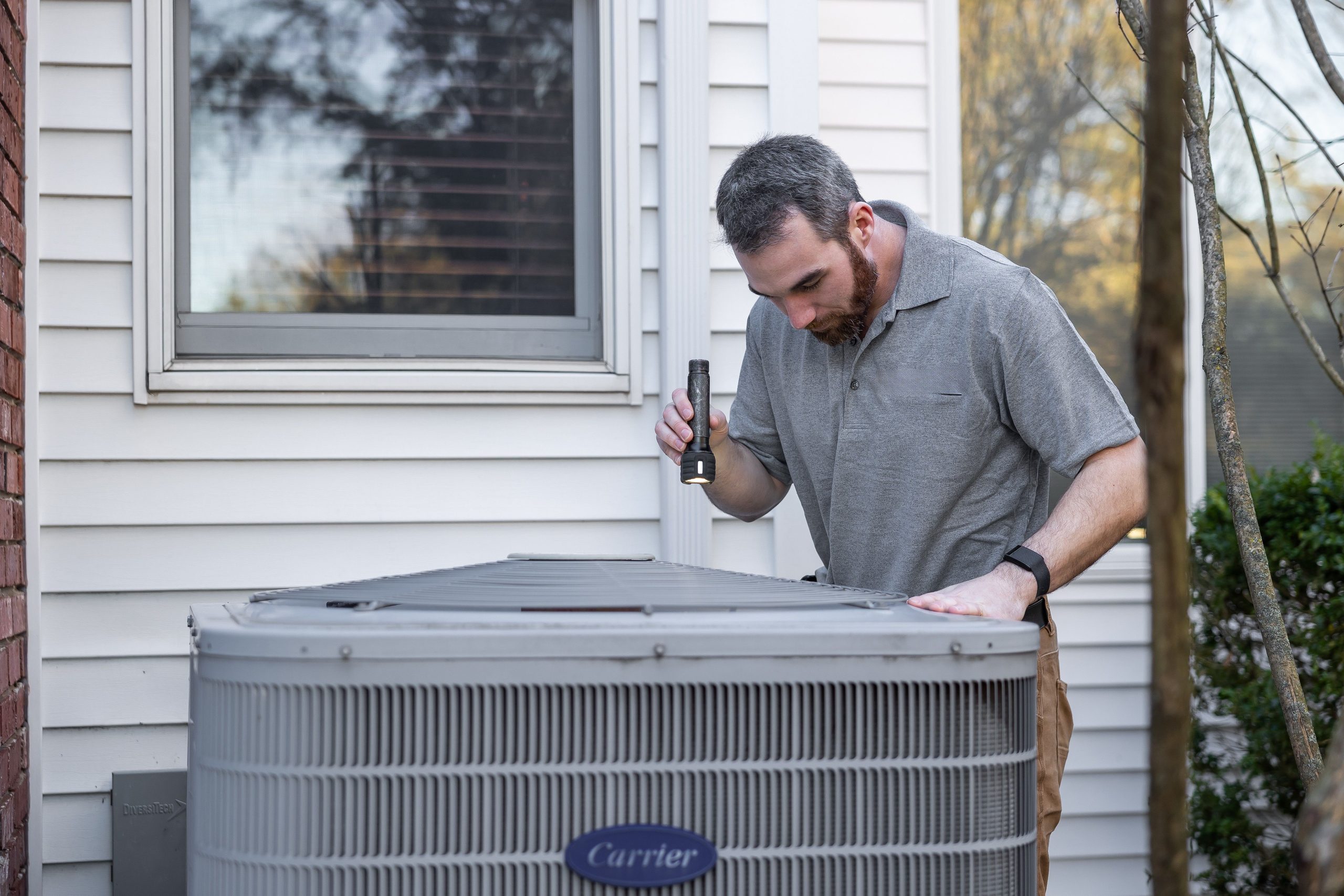
Your HVAC air filter plays an important role in maintaining your home’s heating and cooling system. It captures airborne particles such as dust, lint, and pollen before they can accumulate inside the equipment. However, as the filter collects particles, it gradually becomes dirty and may restrict airflow.
One of the most common questions homeowners ask is how often they should replace their HVAC air filter. The answer depends on the type of filter, the manufacturer’s recommendations, how frequently the system operates, and conditions inside the home.
In this guide, you will learn how often to change an HVAC air filter, which warning signs to watch for, how to choose the correct replacement, and how to avoid common maintenance mistakes.

How Often Should You Change an HVAC Air Filter?
For many residential HVAC systems, a practical starting point is to inspect the filter every month and replace it according to the manufacturer’s instructions. Many common filters are replaced every 60 to 90 days, although some systems require more frequent changes.
The U.S. Environmental Protection Agency (EPA) recommends following the filter manufacturer’s replacement guidance and changing filters more frequently when they become heavily soiled. The U.S. Department of Energy also advises homeowners to check filters regularly because dirty filters can reduce airflow and make heating and cooling systems work harder.
There is no single replacement schedule that works for every home. A thin disposable filter in a frequently used system may need replacement sooner than a thicker filter designed for a longer service interval.
Use the following table as a general starting point, not a substitute for your equipment manual.
| Filter or household condition | Suggested approach |
|---|---|
| Standard disposable filter | Check monthly; many are replaced every 1–3 months |
| Thick, pleated filter | Follow the specified service interval; some last longer than standard filters |
| Pets in the home | Inspect more frequently and replace when needed |
| Dusty environment or renovation work | Check frequently; replacement may be needed sooner |
| Heavy heating or cooling use | Inspect more often because the system operates longer |
| Filter visibly clogged or heavily soiled | Replace it according to the manufacturer’s instructions rather than waiting for the usual date |
These intervals are general guidance. Always prioritize the recommendations for your specific HVAC equipment and filter.
6 Factors That Affect How Often You Need a New Filter
1. Filter Type and Thickness
Not all HVAC filters have the same construction or service life. Basic disposable filters, pleated filters, and thicker media filters can have different replacement requirements.
A thicker filter may hold more particles before reaching its recommended replacement point, but thickness alone does not guarantee a particular lifespan. The filter design, airflow, dust loading, and manufacturer’s specifications all matter.
Before buying a replacement, check the filter label and equipment manual. If the filter packaging provides a recommended service interval, use it as your starting point.
2. Pets in the Home
Dogs and cats can contribute hair, dander, and other particles to indoor air. These particles may accumulate on the HVAC filter, particularly in homes with several pets.
If you have pets, inspect the filter more frequently than you would in a home with fewer indoor particle sources. You may need to replace it sooner if it becomes visibly dirty or airflow begins to decline.
Pet ownership does not automatically mean that every filter must be changed monthly. Let the filter’s condition and the manufacturer’s guidance determine the schedule.
3. Dust and Indoor Activities
Dust levels can vary considerably between homes. Frequent cleaning, open windows, nearby construction, household projects, and everyday activities can introduce particles into the indoor environment.
During renovations, fine dust may accumulate more quickly than usual. Protect the HVAC system as appropriate during dusty work and follow the equipment manufacturer’s instructions before restarting it.
After renovation work, inspect the filter and replace it if it has become heavily contaminated. Do not assume that a new filter alone will resolve all dust problems if other sources remain.
4. How Often Your HVAC System Runs
An HVAC system that operates for many hours each day moves more air through its filter than one that runs infrequently. More operating time can cause the filter to collect particles more quickly.
For example, a home experiencing prolonged summer heat may use its air conditioner heavily for weeks. A similar home in a mild climate may operate its cooling system for much shorter periods.
Check the filter more often during periods of heavy heating or cooling. Do not extend the replacement interval simply because the calendar date has not arrived if the filter is already heavily soiled.
5. Local Air Conditions
Outdoor conditions can affect how quickly a filter becomes dirty. Dusty surroundings, nearby construction, seasonal pollen, and wildfire smoke may increase the particle load entering a home.
During periods of unusually poor outdoor air quality, inspect the filter frequently and follow public-health guidance and the filter manufacturer’s instructions. A filter exposed to heavy smoke or dust may need replacement sooner than usual.
A higher-efficiency filter may help capture smaller particles, but it must be compatible with the HVAC system. Consult the equipment manual or an HVAC professional before upgrading to a more restrictive filter.
6. Filter Efficiency and Design
Filters are available in different efficiency ratings. In the United States, the Minimum Efficiency Reporting Value (MERV) indicates how effectively a filter captures particles within specified size ranges.
A higher MERV rating generally means the filter captures a greater proportion of certain particles under standardized testing. However, choosing the highest available rating is not automatically the best decision for every system.
Some HVAC equipment cannot accommodate certain high-efficiency filters without airflow problems. Choose a filter that meets the manufacturer’s specifications and is appropriate for the system’s fan and filter compartment.
The MERV rating also does not tell you exactly how many days a filter will last. Replacement frequency depends on the filter design and how much material it collects during use.
Signs Your HVAC Air Filter Needs Replacing
A regular inspection can help you identify a filter that needs attention.
Visible Dirt and Dust Buildup
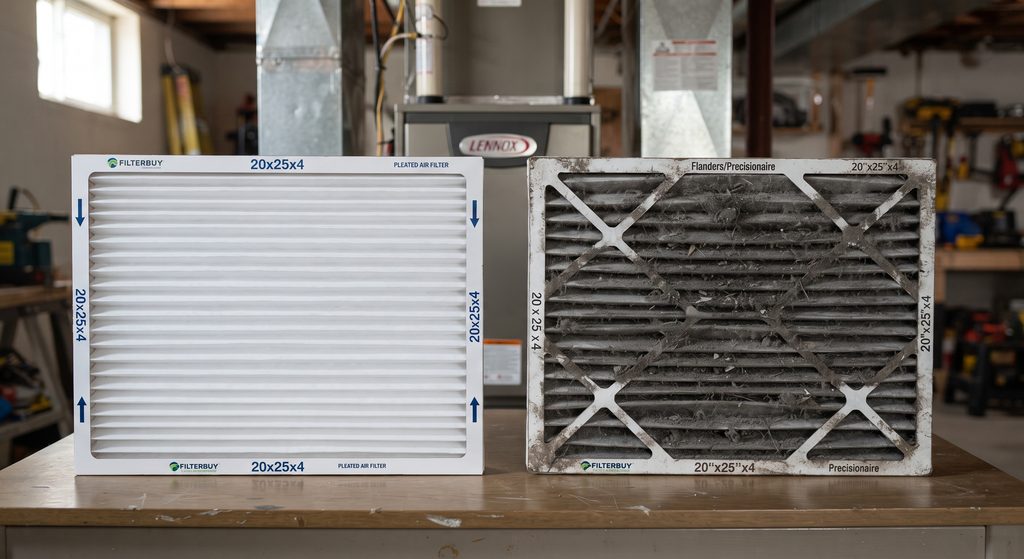
Remove the filter according to the equipment instructions and examine it in good lighting. If the filter media is heavily covered with dust or appears clogged, it may need replacement.
Some filters naturally darken as they collect particles, so color alone is not a precise measurement of remaining service life. Compare the filter’s condition with the manufacturer’s guidance.
Reduced Airflow
A clogged filter can restrict the amount of air moving through an HVAC system. You may notice weaker airflow at supply vents or changes in how the system operates.
However, reduced airflow can also result from blocked vents, duct problems, blower issues, or other equipment faults. Replacing a dirty filter is a sensible first maintenance step, but persistent airflow problems deserve further investigation.
Longer Heating or Cooling Cycles
If your system seems to run longer than usual to maintain the thermostat setting, inspect the filter. A dirty filter may be one contributing factor, although outdoor temperatures, insulation, equipment condition, and thermostat settings can also affect runtime.
If changing the filter does not improve the situation, consider having the system inspected.
A Filter That Has Reached Its Recommended Service Interval
Even if a filter does not look extremely dirty, follow its specified replacement schedule. Fine particles may not always be obvious during a quick visual inspection.
Keeping a record of replacement dates makes routine maintenance easier and helps you recognize whether your home needs a different inspection frequency.
How to Choose the Correct Replacement HVAC Filter
Selecting the right filter is just as important as changing it on time.
Check the Filter Size
Look at the dimensions printed on the existing filter. Common measurements include the nominal width, height, and thickness.
Do not rely on appearance alone. Filters that look similar may have different dimensions. The replacement must fit the designated slot without bending, crushing, or leaving gaps around the edges.
A poor fit can allow air to bypass the filter rather than pass through the filter media.
Follow the Equipment Manufacturer’s Recommendations
Consult your furnace or HVAC system manual for the recommended filter type and efficiency rating.
If you want to upgrade to a higher-efficiency filter, confirm that the system can accommodate it. The EPA advises homeowners to choose the highest-efficiency filter their system can handle, with professional guidance when compatibility is uncertain.
A filter that is too restrictive for the equipment can interfere with airflow, so do not choose a replacement based on its rating alone.
Check the Airflow Direction
Some filters have an arrow printed on the frame to indicate airflow direction. When installing one of these filters, orient the arrow as directed by the equipment or filter instructions.
An incorrectly positioned filter may not perform as intended. If you are uncertain about the airflow direction or filter location, consult the manual rather than guessing.
How to Change an HVAC Air Filter Safely
Many homeowners can replace an accessible residential HVAC filter by following the equipment instructions.
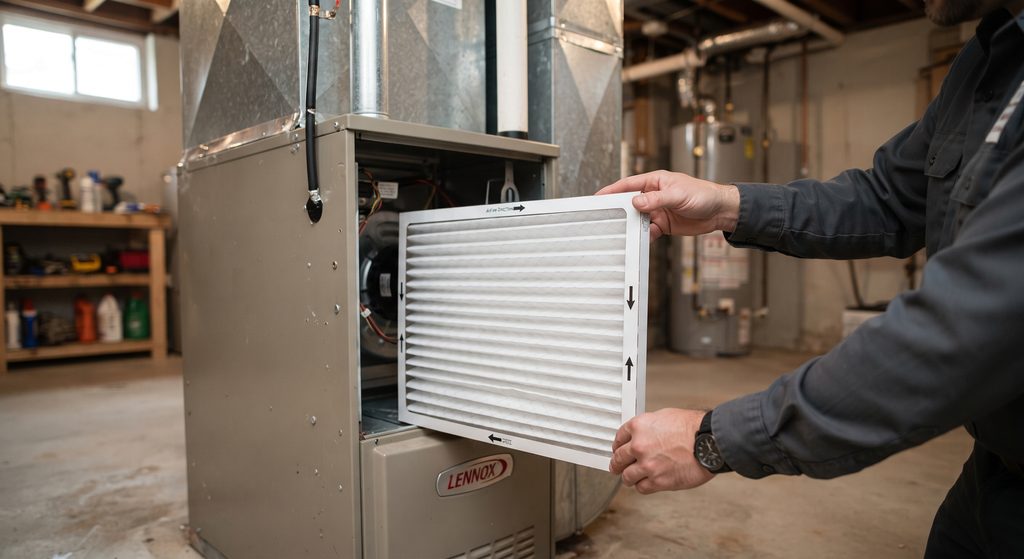
- Locate the filter. It may be in a return-air grille, a furnace compartment, or a dedicated filter slot.
- Turn off the system if instructed. Follow the equipment manual and any safety directions before opening an access panel.
- Remove the old filter carefully. Avoid shaking it, which can release accumulated dust.
- Check the dimensions and orientation. Confirm that the replacement is the correct size and that its airflow arrow points in the required direction.
- Insert the new filter. Make sure it sits securely and fits snugly without being bent or crushed.
- Close the access panel and restart the system as directed. Make sure the filter compartment is properly closed.
- Record the replacement date. Use a calendar reminder or maintenance log to schedule the next inspection.
If the filter is difficult to reach, the equipment is unfamiliar, or replacement requires opening a section you are not qualified to service, contact an HVAC technician.
Common HVAC Air Filter Replacement Mistakes
Waiting Until the Filter Looks Completely Blocked
A filter does not need to be completely covered in dust before you inspect it. Regular checks help you identify excessive buildup before it becomes severe.
Using the Wrong Filter Size
An incorrectly sized filter may leave gaps or fail to sit securely in the compartment. Air can then bypass the filter, reducing its effectiveness.
Choosing a Higher MERV Rating Without Checking Compatibility
A higher-efficiency filter may capture more particles, but the HVAC system must be able to accommodate its airflow resistance. Check the equipment specifications before making a change.
Forgetting to Replace the Filter After Dusty Work
Renovation, sanding, and other dusty activities can load a filter more quickly. Inspect it after such work and replace it if necessary.
Assuming Filter Replacement Solves Every Air Quality Problem
HVAC filters can reduce certain airborne particles, but they do not remove every pollutant or correct every indoor air quality issue. Controlling pollutant sources and providing appropriate ventilation are also important.
Frequently Asked Questions
Should I change my HVAC filter every month?
Not necessarily. Monthly inspection is a useful habit, but the correct replacement interval depends on the filter, system usage, and household conditions. Follow the manufacturer’s instructions and replace the filter sooner if it becomes heavily soiled.
Can a dirty HVAC filter increase energy use?
Yes. A dirty filter can restrict airflow and make heating or cooling more difficult. However, higher energy use can have other causes, so a filter replacement is not guaranteed to solve every efficiency problem.
Can I wash and reuse a disposable HVAC filter?
No. A standard disposable filter should not be washed and reused unless its manufacturer explicitly states that it is washable. Washing can damage the filter media and affect its performance. Reusable filters must be cleaned according to their specific instructions and allowed to dry fully before reinstallation.
Should I use a MERV 13 filter in my home?
A MERV 13 filter can capture a greater proportion of certain small particles than lower-rated filters, but not every HVAC system can accommodate it. Check your equipment specifications or consult a qualified technician before upgrading.
Does changing the HVAC filter improve indoor air quality?
A properly selected and maintained filter can help reduce airborne particles that pass through the HVAC system. Its effectiveness depends on the filter, how well it fits, and how the system operates. Filtration should be combined with source control and appropriate ventilation.
What happens if I forget to change my HVAC filter?
A heavily loaded filter may restrict airflow and reduce system performance. If you discover that a filter is overdue, inspect it and replace it when needed. If the system continues to perform poorly afterward, arrange an inspection.
Final Thoughts
Changing your HVAC air filter on a suitable schedule is one of the simplest ways to maintain a residential heating and cooling system. For many homes, checking the filter monthly and following a replacement interval recommended by the manufacturer is a practical approach.
The right schedule depends on filter design, household activity, pets, outdoor conditions, and how often the system operates. Choose the correct size and efficiency rating, install it in the proper direction, and investigate persistent airflow or comfort problems instead of assuming the filter is always the cause.
A consistent filter maintenance routine can support reliable HVAC operation and help manage airborne particles without unnecessary replacements.
References
- U.S. Environmental Protection Agency — Guide to Air Cleaners in the Home
- U.S. Environmental Protection Agency — What Is a MERV Rating?
- U.S. Environmental Protection Agency — Should You Have the Air Ducts in Your Home Cleaned?
- U.S. Department of Energy — Tips to Help You Save on Energy Bills
These trusted resources provide additional guidance on HVAC filters, indoor air filtration, and routine home maintenance.